
Imagine your brilliant team is at a company that suddenly goes bust. The doors are locked, your project is dead, and everyone is out of a job. Then, at the last possible second, a manager buys the entire operation for just one pound. Armed with a skeleton crew and almost no budget, you have a single chance to show the world what you built. In late 2008, this wasn’t a hypothetical; it was the reality for the hundreds of engineers and mechanics at the Honda team in Formula 1—the highest and most expensive class of global motorsport.
Just months before the new season, the automotive giant abruptly quit the sport, leaving its team for dead. That team was saved from extinction when its revered technical director, Ross Brawn, refused to let a potentially revolutionary car design die. In a now-legendary management buyout, he purchased the entire operation for a single symbolic pound. Overnight, the ghost of Honda became Brawn GP, a brand-new team—or “constructor,” as they’re known in the sport—with a world-class factory but an empty bank account.
This set the stage for one of motorsport’s greatest David-and-Goliath battles. Brawn GP, running on fumes and goodwill, was about to compete against titans like Ferrari and McLaren. These are corporate behemoths with legacy, glamour, and budgets stretching into the hundreds of millions, dedicated to finding every last thousandth of a second. The common wisdom in the paddock, the exclusive behind-the-scenes world of F1, was that the Brawn GP fairytale story would be over before it even began.
What followed, however, was a season that defied all logic and expectation. This is the story of how a team that shouldn’t have existed, using a clever loophole in the rulebook that no one else saw, showed up to the first race and obliterated the competition. It’s a masterclass in strategy and a testament to human ingenuity, a championship fight that all came down to one chaotic, rain-soaked afternoon in Brazil.
What Was Brawn GP’s “Legal Loophole”? The Secret of the Double Diffuser
So how does a team with almost no money build a car, the BGP 001, that obliterates billion-dollar giants like Ferrari and McLaren? The answer wasn’t a bigger engine or a radical new shape; it was a single, ingenious idea hidden in plain sight, a clever interpretation of the sport’s dense technical rulebook. This one innovation was so powerful that it decided the championship before the other teams even knew what hit them.
To understand their secret, you need to know about one of the most important concepts in Formula 1: aerodynamics. Simply put, F1 cars are designed like upside-down airplane wings. Instead of creating lift to fly, they use the rushing air to create downforce, a powerful force that pushes the car onto the track. This invisible grip allows drivers to take corners at speeds that would be impossible in a normal car. A key part responsible for this is at the rear of the car’s floor, called the diffuser.
The engineers at Brawn GP discovered a loophole. The rules for 2009 were brand new, and while reading the fine print, they found a way to create a second, smaller diffuser stacked on top of the main one. This double diffuser acted like a super-powered vacuum cleaner, sucking the back of the car to the asphalt with incredible force. While other cars slid through high-speed corners, the Brawn car felt like it was glued to the road. This was the answer to the question, “How did Brawn GP win the F1 title?”—they were playing a different game entirely.
Naturally, the established teams were furious. They immediately protested, claiming the design was illegal. For weeks, the fate of Brawn’s secret weapon hung in the balance. But when the sport’s governing body finally ruled the double diffuser legal, the paddock was stunned. The giants of the sport were forced into a desperate, multi-million-dollar race to copy the design of the tiny upstart team. The “empire” had been caught sleeping, and now they had to play catch-up.
How Did the Empire Strike Back? When the Money Started to Matter
Winning the first few battles doesn’t guarantee you’ll win the war, especially in Formula 1. An F1 season is a relentless, high-tech arms race. While Brawn GP had a genius head start, their rivals—teams like Red Bull and McLaren—had something Brawn didn’t: astronomical budgets. As soon as the double diffuser was declared legal, these powerhouse teams poured hundreds of millions of dollars into cracking the code. Their factories ran day and night to design, build, and fly in their own versions of Brawn’s secret weapon. Brawn GP, running on fumes and a shoestring budget, couldn’t respond. They had built a masterpiece, but they had no money left to improve it.
The comeback from the bigger teams was swift and brutal. Brawn’s once-unbeatable car was suddenly just one of the pack. The season effectively split into two halves, with a dramatic reversal of fortune that showed just how much money matters in the end.
- The Underdog’s Sprint: Brawn GP won an incredible six of the first seven races.
- The Empire’s Revenge: Rival teams, led by Red Bull and McLaren, won six of the next eight.
This engineering turnaround brought a new challenger to the forefront: a ferociously quick and ambitious young German driver from the Red Bull team named Sebastian Vettel. While Brawn’s lead driver, Jenson Button, had built up a huge lead in the championship standings early on, his results began to fade as his car lost its edge. Vettel, in his newly competitive car, started winning race after race, closing the gap with alarming speed. The narrative had shifted from an underdog’s domination to a desperate defense.
Suddenly, the championship picture had flipped. The title is decided by a points system where drivers score based on their finishing position in each race. Button’s seemingly untouchable lead, built on his stunning early victories, was now shrinking with every passing weekend. Vettel was hunting him down, and the fairytale was on the verge of collapsing. The entire nine-month season, the impossible dream of the one-dollar team, would all come down to one final, chaotic showdown.
What Were the Stakes at the Brazilian Grand Prix?
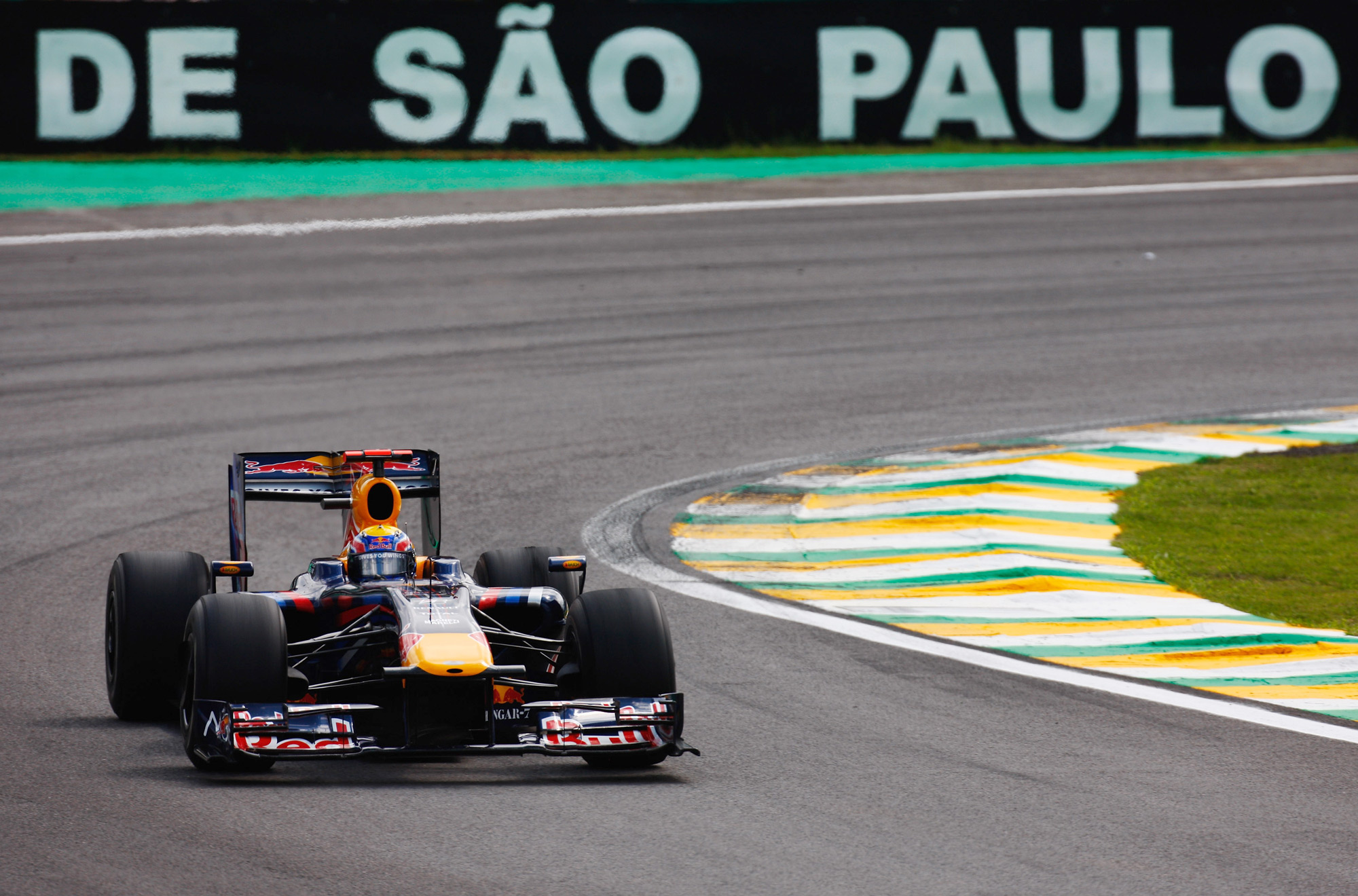
The championship fight arrived in Brazil for the second-to-last race of the year, a track called Interlagos famous for its passionate fans and unpredictable weather. For Jenson Button, the equation was beautifully simple, yet terrifyingly difficult. After leading the championship all year, he just needed to finish the race in 5th place or higher to secure the title. It didn’t matter what his rivals did; if he could just drag his car across the line in the top five, the impossible dream of the one-dollar team would become reality.
Adding a layer of Hollywood drama, his main challenger was now his own teammate, the veteran Brazilian driver Rubens Barrichello. It was a fascinating internal conflict: the two men drove for the same underdog team, but only one could be crowned champion. For Barrichello, this race was everything. Not only was it his best chance to snatch the title from Button, but it was also his home Grand Prix, in front of his adoring local crowd. He had the perfect storybook ending in his sights.
Before the main race on Sunday, however, teams must battle it out in a crucial session called qualifying. This is a high-stakes showdown where drivers push their cars to the absolute limit to set the fastest time possible. The results of qualifying determine the starting grid for the Grand Prix, and starting at the front is a massive advantage. The driver who goes fastest wins pole position—the first spot on the grid, with a clear track ahead of them.
Just as qualifying began, the heavens opened. A torrential downpour turned the track into a treacherous, watery skidpan, making it less about pure speed and more about survival. It was a complete lottery. In the chaos, Barrichello masterfully navigated the wet conditions to take a sensational pole position, putting himself in the perfect place to win. Button, however, was caught out by the unpredictable weather and struggled for grip. The result was a catastrophe: he would start the race from a miserable 14th place. His simple goal of finishing 5th now seemed like a mountainous climb, with his main rival sitting at the very front.
How Did Button Fight Through the Chaos?
As the race began, Jenson Button drove with the fury of a man whose dream was being snatched away. Starting from the anonymous middle of the pack, he knew caution would cost him everything. While his teammate Rubens Barrichello led from the front, hoping for a clean and simple victory, Button was a man on a mission. He immediately went on the attack, weaving his Brawn GP car through a storm of spray and chaos, picking off rivals in a series of breathtakingly aggressive moves. This wasn’t the calm, smooth driver the world knew; this was a fighter refusing to let his one shot at glory slip away.
The opening laps were a masterclass in controlled aggression. Button sliced his way past car after car, gaining five positions almost immediately. His fight for the championship was visible in every daring lunge into a corner, showing a level of risk-taking he had kept in reserve all season. While the mayhem of the wet track claimed other drivers, Button seemed to thrive in it. Each successful overtake was another step up the mountain, moving him from an impossible 14th place into the top ten, with his target of 5th place inching ever closer.
A crucial part of Formula 1 strategy is the pit stop—a frantic, perfectly choreographed pause where a car gets fresh tires and fuel in just a few seconds. A well-timed stop can allow a driver to leapfrog competitors without ever having to pass them on the track. The Brawn GP team called Button in at the perfect moment. He dove into the pits, his crew performed their high-speed ballet, and when he re-joined the race, he had gained even more ground. The combination of his aggressive driving and a brilliant strategy call had put him on the verge of the championship positions.
Then, fate delivered its final, dramatic twist. Just as Button was closing in on his goal, disaster struck his teammate. A slow puncture—a gradual loss of air from a tire—began to rob Barrichello’s car of its speed. The Brazilian driver, who had driven a perfect race in front of his home crowd, was helpless. He was forced into an extra pit stop, and his dream of a hometown victory and a world title evaporated. For Button, his rival’s heartbreak was the final piece of the puzzle.
With his main challenger out of contention, Button’s path was clear. He fought his way into 5th place and from there, all he had to do was bring the car home. After what felt like an eternity, he crossed the finish line, pumping his fist in the air. He wasn’t just a race finisher; he was the World Champion. The man who had started in 14th place had completed the impossible climb. On the team radio, overcome with emotion, he began singing “We Are the Champions” in a tearful, cracking voice. The fairytale was complete.
Why Was the Paddock Shocked? The Moment a Fairytale Became Real
As Jenson Button’s car rolled to a stop, the world heard the sound of a dream becoming real. Over the team radio, the usually composed Brit’s voice cracked with a decade of pent-up emotion. He wasn’t just speaking; he was singing, tearfully and triumphantly, the iconic chorus to Queen’s “We Are the Champions.” In that single, raw moment, the immense pressure of the season gave way to pure, unscripted joy. This wasn’t just a win; it was a release. For Button, and for every member of the Brawn GP team who had faced unemployment just months earlier, this was the impossible climax to a story that should never have happened.
Back in the paddock—the exclusive, behind-the-scenes world of F1—the reaction was one of stunned admiration. The titans of the sport, teams like Ferrari and McLaren with budgets hundreds of times larger than Brawn’s, had been comprehensively beaten. There was no anger, only a collective tip of the cap. They had thrown millions of dollars at their own cars to catch the upstart team, and it still wasn’t enough. Ross Brawn, the quiet genius who had orchestrated the whole thing, was swarmed by cameras and rival team bosses offering handshakes. They all understood the magnitude of what they had just witnessed: a tiny, independent team had out-thought, out-driven, and out-maneuvered the global giants.
But the celebration was for more than just Button’s personal victory. In Formula 1, there isn’t one championship, but two. Alongside the Drivers’ Championship is the Constructors’ Championship, a prize awarded to the team that builds the best overall car. Think of it as the ultimate award for engineering and teamwork, recognizing the organization that performed best across the entire season. For the engineers and mechanics who had worked for free to save their jobs, winning the Constructors’ title was validation that their creation, the Brawn BGP 001, was truly the best car in the world.
By securing 5th place, Button hadn’t just won his own title; he had guaranteed that Brawn GP would win the Constructors’ Championship as well. A team that didn’t exist a year ago, bought for a symbolic one British pound, had won both of the sport’s highest honors in its first and only attempt. It was a grand slam, a clean sweep that has never been repeated. The fairytale wasn’t just that David beat Goliath; it was that he took all the treasure home, leaving the rest of the world to wonder how the impossible had just been made real.
What Is the Legacy of the Brawn GP Story?
The world of Formula 1 can appear to be an impenetrable blur of speed and noise. But behind the cars lies the heart of the drama: the human strategy, the financial gambles, and the brilliant engineering that powers a championship fight. This story reveals a race not just as a competition, but as a narrative with heroes, villains, and seemingly impossible stakes.
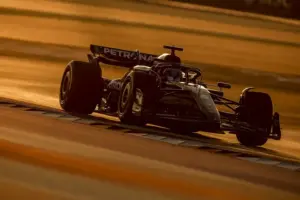
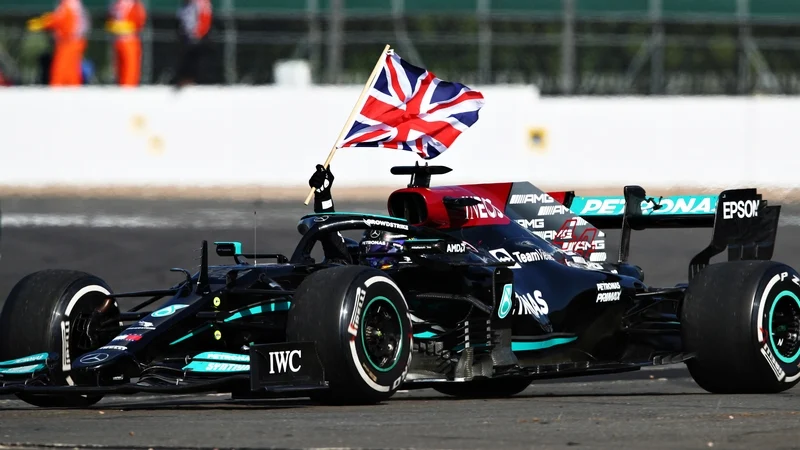
So, was Brawn GP a one-season wonder? In a way, yes. The team existed for a single, magical year before being purchased by Mercedes-Benz. But its ghost became an empire. The factory, the people, and the leadership of Ross Brawn himself laid the foundation for the Mercedes-AMG team that would go on to dominate the next decade with another British icon, Lewis Hamilton. The ultimate underdog created the next dynasty.
For Jenson Button, the victory was a complete career transformation. No longer just a talented driver plagued by bad luck, he was now a World Champion, his name etched alongside the legends of the sport. His emotional drive through the chaos in Brazil cemented his legacy, proving that perseverance, paired with one perfect opportunity, is the ultimate formula for success.
This story is a timeless lesson in the battle of Underdog vs. Empire. The next time you watch a sport, follow a business rivalry, or see a startup challenge an industry giant, look for the “Brawn GP” in the story—the team with the clever loophole, the limited budget, and the unbreakable spirit. It proves that even in the most complex, high-stakes arenas, a little bit of genius and a whole lot of heart can still shock the world.