
Imagine two rivals, locked in a bitter, season-long battle for a world championship. After 21 grueling races across the globe, they arrive at the final event, the 2021 Abu Dhabi Grand Prix, with the exact same number of points. It was the sporting equivalent of the World Series going to a single, final at-bat in the bottom of the ninth—a true winner-take-all showdown for the ages. The pressure was immense, the stakes historical.
On one side was Lewis Hamilton, a seven-time champion chasing a record-breaking eighth title to officially become the most decorated driver in the sport’s history. On the other was Max Verstappen, a ferocious and aggressive young challenger desperate to win his very first crown. The intense Lewis Hamilton vs Max Verstappen rivalry had captivated audiences all year, setting the stage for a final confrontation that promised high drama.
For 57 of the race’s 58 laps, the outcome seemed certain. Hamilton had taken the lead from the start and was masterfully controlling the pace, cruising toward his historic victory. The championship was his. Then, a late crash triggered a sequence of events that put the entire result in the hands of a single official. One controversial decision in the final minutes would flip destiny on its head and ignite a firestorm that still burns today.
The fury and confusion that followed transcended Formula 1. Understanding what truly happened requires a breakdown of the rules, the race-altering call, and the subsequent fallout. Only then can the central question be addressed: was the result fair?
Why Was This One Race a Winner-Take-All Showdown?
The immense pressure of that day stemmed from how a Formula 1 champion is crowned. Throughout the season, drivers collect points for where they finish in each Grand Prix—the winner gets 25 points, second place gets 18, and so on. After a grueling 21-race battle across four continents, Lewis Hamilton and Max Verstappen had fought to a perfect, unbelievable stalemate. For the first time in nearly 50 years, the two title contenders arrived at the final race with the exact same number of points.
The math, therefore, became brutally simple: whoever finished ahead of the other in this last race would be the world champion. The entire season, all the travel, risk, and effort, had been distilled into a single head-to-head duel on the desert asphalt of Abu Dhabi.
However, a crucial tie-breaker rule added another layer of tension. In the unlikely event that neither driver finished the race—perhaps from a crash involving both of them—the championship would go to the driver with more wins on the season. That advantage belonged to Verstappen, nine to Hamilton’s eight. For Hamilton, there was no safety net. He didn’t just have to finish; he had to beat his rival on the track to claim his historic eighth title.
Setting the Scene: Why Hamilton Was Cruising to a Record-Breaking Victory
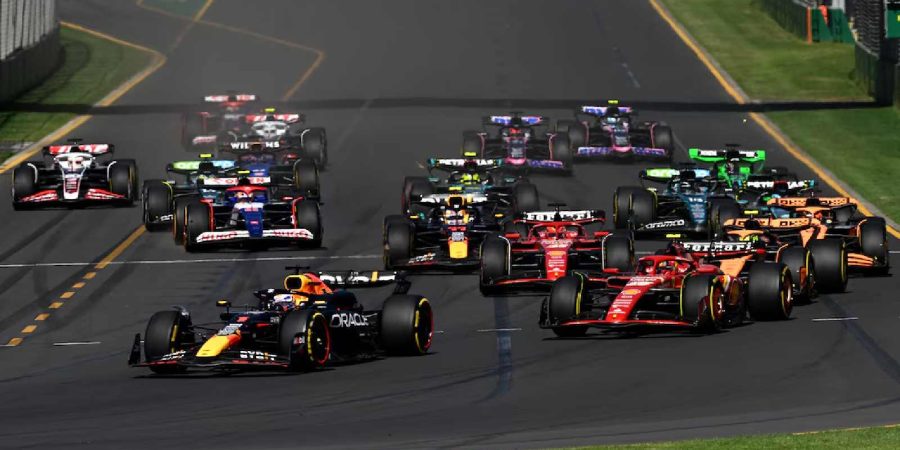
From the moment the race began, Lewis Hamilton was in a class of his own. He had a perfect start, snatching the lead from Max Verstappen in the very first corner and immediately pulling away. For the next hour, he drove flawlessly, building a comfortable, seemingly insurmountable gap between himself and his rival. The high-stakes, winner-take-all duel that had been promised was quickly turning into a one-sided masterclass. Hamilton wasn’t just winning; he was dominating.
The race felt so settled that even Verstappen’s own team began to lose hope. Over the team radio, a broadcast heard by millions, his team principal admitted they would need a “miracle” from the “racing gods” to have any chance. This wasn’t just a competitor’s frustration; it was an admission of defeat. With only a handful of laps remaining, the championship looked decided. The cameras were already focused on Hamilton’s team, poised for a historic celebration.
As the final minutes ticked down, Hamilton was serenely cruising toward the finish line and into the history books as an eight-time world champion, a feat no driver had ever achieved. The narrative was written. His legacy was about to be cemented. But in motorsport, a race isn’t over until the checkered flag waves, and the racing gods were, in fact, listening.
The Crash That Triggered Chaos: Introducing the Safety Car
Then, with just five laps left, the “miracle” Verstappen’s team had been hoping for arrived in a shower of sparks and broken carbon fiber. Far behind the leaders, a driver for one of the smaller teams, Nicholas Latifi, lost control and slammed his car into the wall. While he was unhurt, his wrecked vehicle was stranded on the track, creating a dangerous obstacle. In Formula 1, an incident like this triggers a specific safety procedure.
This procedure calls for the deployment of a “Safety Car”—a high-performance street car that enters the track and leads the field of racers at a reduced speed. Think of it like a pace car in American racing. Its job is to neutralize the race, bunching all the cars up into a slow-moving line behind it so that track marshals can safely clear away debris. Overtaking is forbidden, and the entire race is effectively paused.
For Lewis Hamilton, this was a disaster. The massive, 11-second lead he had spent the entire race building was instantly erased. As he dutifully slowed down to line up behind the Safety Car, his rival, Max Verstappen, was suddenly right on his tail. The comfortable buffer was gone, and the race that had been a foregone conclusion was now reset. This pause in the action also presented Verstappen’s team with a golden opportunity—a strategic gamble that Hamilton could not afford to take.
The Critical Tire Dilemma: Why One Driver Got a “Free” Advantage
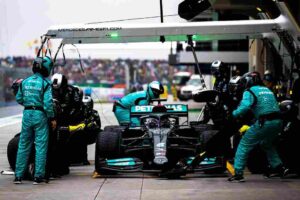
With the race neutralized, Verstappen’s team seized the moment. They called him in for a “pit stop,” a lightning-fast stop to swap his old tires for a brand-new set. In Formula 1, tire age is everything. Hamilton had been on his for over 40 laps; they were worn down and losing grip. Verstappen’s new tires were fresh and sticky. The performance difference is staggering—it’s like forcing one runner to finish a marathon in worn-out dress shoes while their competitor gets to put on fresh running spikes for the final sprint.
This created an impossible dilemma for Hamilton and his Mercedes team. If Hamilton also pitted for new tires, he would surrender the lead to Verstappen. Should the race finish behind the Safety Car—a very real possibility—he would lose the championship. He was forced to stay out on his old tires to keep his position on the track. For Verstappen, who was already in second place, the stop was a no-brainer. He could get fresh tires and come back out on track still in second place, losing nothing but gaining a massive advantage. It was a free gamble.
The result was a deeply unequal setup for a potential restart. Hamilton, the race leader, was now a sitting duck on ancient tires. Right behind him, his only rival was on the fastest possible tires, ready to pounce. Even so, Hamilton had one last line of defense. Between his car and Verstappen’s, there were five slower “lapped cars” from other teams, creating a physical buffer that should have protected him.
The “Human Shield”: How Lapped Cars Should Have Protected Hamilton
Those five cars acting as a buffer were known as “lapped cars.” In a long race like this one, the leaders are so much faster that they eventually overtake the slowest cars at the back of the field, putting them a full lap behind. While they are still part of the race, they are no longer competing for the win. During a Safety Car period, these cars get sandwiched in the queue wherever they happen to be, creating obstacles between the front-runners.
The order of the cars on track at that moment is central to the controversy. At the front was Lewis Hamilton, the leader. Then came the five lapped cars, a mix of drivers from slower teams. Only after that group came Max Verstappen. This wasn’t a mistake; it was simply the order the cars were in when the race was paused. For Hamilton, this traffic was a godsend.
This buffer of cars was Hamilton’s de facto shield. If the race were to restart, Verstappen—even on his fresh, fast tires—would have to waste precious time and energy fighting his way past those five cars. Each overtake would cost him seconds, likely making it impossible to catch Hamilton in the single lap that remained. Standard procedure and the physical barrier on track meant Hamilton was safe. But the Race Director was about to make a call that would vaporize that shield in an instant.
“No, Mikey, No!”: The Unprecedented Decision That Decided the Championship
Overseeing this entire situation was the Race Director, Michael Masi. In Formula 1, the Race Director is the ultimate authority—part referee, part air-traffic controller. He is responsible for safety and the application of the sport’s rules, and his word is final. With millions watching and a championship on the line, the pressure fell squarely on his shoulders to follow procedure and ensure a fair outcome. As Hamilton’s team principal, Toto Wolff, pleaded over the radio, “No, Mikey, no!” he was begging the Race Director not to bend the very regulations that govern the sport.
The established rules gave Masi two clear options. The first was to let all the lapped cars un-lap themselves, a process that would have taken more than the single lap remaining, causing the race to end anticlimactically behind the Safety Car. The second option was to leave all lapped cars in place, maintaining Hamilton’s protective buffer. While less dramatic, this would have preserved the race order as it stood. In either of these scenarios, Lewis Hamilton would have been crowned champion.
Instead, in a move that sent shockwaves through the sport, Masi made an entirely different and unprecedented call. He ordered only the five lapped cars between Hamilton and Verstappen to pass the Safety Car. He effectively reached into the race and selectively cleared a path for Verstappen, while leaving all other lapped cars in place. This was not a recognized procedure; it was a bespoke solution created on the fly, seemingly with the goal of engineering a final-lap showdown.
The consequence was immediate and devastating for Hamilton. His shield was gone. His rival, armed with fresh, faster tires, was now planted directly on his gearbox. The race had been fundamentally altered not by a driver or a team, but by an official’s decision. It set the stage for a one-lap sprint to the finish—a manufactured duel where one competitor was given an almost insurmountable advantage.
A One-Lap Sprint: The Inevitable Conclusion to a Manipulated Finish
As the Safety Car’s lights went out and it peeled back into the pits, the race was live again for one final, frantic lap. Lewis Hamilton led the field, but the protective buffer he had spent the entire race building was gone. In his mirrors, he saw Max Verstappen, armed with those brand-new, grippy tires, ready to pounce. It was the exact scenario the Race Director’s controversial decision had manufactured: a winner-take-all shootout for the world title.
The fight, if you could call it that, lasted only a few seconds. On his 44-lap-old tires, Hamilton was a sitting duck. It was the sporting equivalent of forcing a marathoner to finish the last 100 meters in worn-out dress shoes against a rival in fresh running spikes. Verstappen easily swept around the outside of Hamilton, his superior tires giving him a massive advantage to complete the pass. With just a few corners remaining, the lead—and the championship—had changed hands.
A few moments later, Max Verstappen crossed the finish line, screaming in elation as he became a first-time world champion. The race was over, but the controversy was just beginning. As Hamilton completed his final, defeated lap, his own radio message to his team captured the feeling of injustice. There was no rage, just a quiet, damning assessment that would echo around the world: “This has been manipulated, man.”
Protests and Silence: The Immediate Fallout of the Final Lap
While Max Verstappen’s team erupted in celebration, a different kind of battle was brewing behind the scenes. Believing the championship had been unjustly decided, Lewis Hamilton’s Mercedes team refused to let the result stand. They immediately filed two official protests with the race officials, a panel of judges known as the stewards. In essence, they were taking the fight from the racetrack to the courtroom, arguing that the sport’s own rules had been broken in the final, decisive moments.
Mercedes’ case wasn’t based on emotion, but on specific articles in the Formula 1 rulebook. Their main argument centered on the lapped car procedure. The regulations stated that if lapped cars were to be moved out of the way, all of them should be allowed to pass the Safety Car. By ordering only the five cars between Hamilton and Verstappen to do so—and no one else—the Race Director had created a special condition that wasn’t supported by the rules. He had, in their view, improvised a rule to manufacture a Hollywood ending.
After hours of deliberation in the Abu Dhabi paddock, the stewards delivered their verdict. They dismissed both protests. While acknowledging the unique circumstances, they ultimately concluded that the Race Director had “overriding authority” regarding the use of the Safety Car, a clause they felt gave him the power to make the final call. For the night, the result stood and Verstappen was officially the champion. But the controversy was far from settled; the questions raised by Mercedes had ignited a firestorm that would soon force the sport’s highest governing body to step in.
Was the Championship Fixed? The Official Verdict and Lasting Consequences
The dismissal of Mercedes’ protests in Abu Dhabi did little to quiet the global outcry. The core question remained: if the rules weren’t followed, how could the result be legitimate? In response to the intense pressure from fans, teams, and the media, Formula 1’s highest governing body, the FIA (Fédération Internationale de l’Automobile), launched a full-scale investigation into the final laps of the race. The world was watching to see if officials would admit a mistake had been made.
Months later, the FIA released its report, and the findings were stunning. While it stated the championship was not “fixed,” it publicly acknowledged that “human error” was to blame for the controversial ending. The report concluded that the Race Director had misinterpreted the rulebook under immense pressure, prioritizing a dramatic, racing finish over the correct, established procedure for the Safety Car. It was an official admission that the rules had, in fact, not been applied properly.
The most immediate and visible consequence of this finding was a change at the top. The Race Director responsible for the unprecedented calls, Michael Masi, was removed from his position ahead of the next season. This was a clear signal from the sport’s leadership that the errors in Abu Dhabi were unacceptable and that such a situation could not be repeated. For many, this was a necessary step to begin rebuilding trust in the role of the “referee.”
And yet, for all the admissions of error and changes in personnel, one thing did not change: the result. The FIA declared the 2021 championship outcome “valid, final and cannot now be changed.” Much like a bad refereeing call in the final seconds of a Super Bowl, the mistake was acknowledged, but the final score remained. Max Verstappen was officially the world champion, but his victory would forever be linked to one of the most debated officiating decisions in sporting history.
The Legacy of F1’s Day of Infamy
The 2021 Abu Dhabi Grand Prix left an indelible and complex mark on Formula 1, forever remembered for the chain of events that unfolded in its final minutes. It highlighted a fundamental conflict between following established rules and the desire to provide entertainment—a conflict that culminated in an unprecedented official’s call.
The outcome carries a complicated legacy for both drivers in the legendary Hamilton vs Verstappen rivalry. Max Verstappen’s brilliant, season-long fight for his first World Championship was an undeniable display of talent and determination. Yet, the victory will always be linked to that final lap, a moment of gifted opportunity that adds a permanent footnote to his historic achievement.
Conversely, Lewis Hamilton’s conduct in defeat is often cited as a mark of his character. Faced with the sudden, public loss of a record-breaking eighth title under such debatable circumstances, his immediate composure became a defining moment of its own, demonstrating a level of sportsmanship as remarkable as his driving.
Ultimately, the controversy of that day serves as a stark reminder that a championship is more than just who crosses the line first. It is a delicate balance of human performance, immense pressure, and the rules that are meant to ensure the fight is always fair. When that balance is broken, the consequences can echo for years, becoming a permanent part of the sport’s history.