
You think you’ve seen sports drama? A last-second touchdown? A buzzer-beater? Imagine that feeling, but at 200 mph, with a year’s work on the line. What if a championship was won, celebrated, and then lost in just 38 seconds? In 2008, Formula 1 delivered the most brutal, unbelievable finish in racing history, a story of triumph and heartbreak decided on the final corner of the final race.
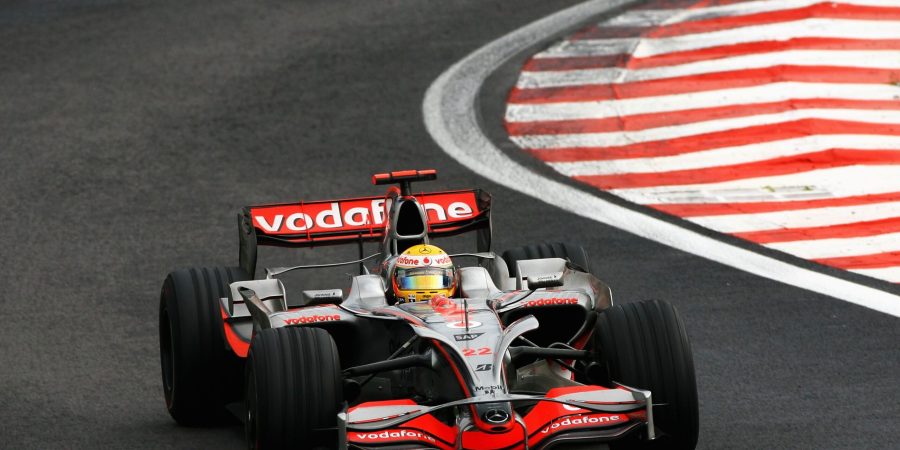
To crown its champion, Formula 1 uses a points system. The season is a tournament spread across roughly 20 races, where drivers earn points based on where they finish. At the end of the year, the driver with the most points wins the title. Coming into that final race, the battle for the 2008 championship was down to two men: the young British prodigy Lewis Hamilton for McLaren and the experienced Brazilian driver Felipe Massa for Ferrari. Hamilton had a small points advantage, meaning Massa not only had to perform perfectly but also needed a bit of luck to go his way.
Making the stakes even higher, the race was in São Paulo, Brazil—Felipe Massa’s home country. For a driver, this is the equivalent of a football team playing the Super Bowl in their own stadium, with tens of thousands of screaming fans willing their hero to victory. The stage was set for either a national fairytale or the ultimate public heartbreak. Nobody could have predicted it would somehow become both.
The Billion-Dollar Gamble: Why Rain and Tires Decided Everything
Unlike most sports, a Formula 1 race includes planned interruptions. During a race, drivers can make a rapid detour into an area called the pit lane for a pit stop. Here, a crew of over a dozen mechanics swarms the car to change all four tires in less than three seconds. While it’s a chance for a fresh set of tires, it’s also a high-stakes strategic move. Stopping costs valuable time, but not stopping can cost you the race, especially when the weather turns.
F1 cars have two fundamentally different types of tires, and choosing the right one is like picking the right shoes for the weather. The wrong choice can be disastrous.
- Dry ‘Slick’ Tires: These are completely smooth, like a drag racer’s tire. On a dry track, their massive, flat surface provides incredible grip and allows for breathtaking speed. In the rain, however, they’re dangerously slippery.
- Wet ‘Treaded’ Tires: These have deep grooves, just like the tires on your road car. The grooves are designed to cut through standing water, providing grip and control when it rains. They’re essential for safety but are much slower on a dry track.
As the rain began to fall in Brazil, every team faced a monumental gamble. Do they call their driver in for a pit stop to switch to the safer wet tires, losing track position but gaining control? Or do they stay out on the fast dry tires, hoping the rain is just a passing shower? This single, crucial decision, made in a split second, was about to create the most dramatic finish in sports history.
The False Climax: For 38 Seconds, Felipe Massa Was the World Champion
Driving a flawless race in treacherous conditions, Felipe Massa rocketed across the finish line in first place. As he passed the iconic black-and-white chequered flag—the universal symbol for the end of a race—he had done everything he needed to do. He had won his home Grand Prix, the most important race of his life. In that instant, the crowd erupted in a wave of sound, a nation celebrating its hero.
The scene in the Ferrari garage was pure, unfiltered ecstasy. Team members leaped over barriers, weeping and embracing. Massa’s family, watching from the sidelines, exploded with joy, believing their son had just achieved his lifelong dream. It was a picture-perfect ending, the kind movies are made of. Based on the information they had, with his rival Lewis Hamilton stuck further back in the pack, Felipe Massa was the Formula 1 World Champion.
For 38 unforgettable seconds, this was reality. The celebrations were real, the tears were real, and the championship title belonged to the man in the red Ferrari. He had conquered the rain, the pressure, and a season of brutal competition. But on a different part of the track, half a minute behind the winner, the final, unbelievable twist in the story was just beginning to unfold.
“Is That Glock?”: The Last-Corner Twist That Rewrote History
While the Ferrari garage celebrated, Lewis Hamilton was fighting for his life just a few corners from the end. As the rain intensified, he’d been passed and pushed down to 6th place—a position that would hand the championship to Massa. On his team radio, he was told he had to get past the car in front to reclaim 5th place. With only two corners left in the entire season, his dream was evaporating. The championship, which had been his to lose, was gone.
The car he was desperately chasing wasn’t a rival, but a German driver named Timo Glock in a Toyota. Glock was not involved in the championship fight, but he was about to become its most important character. Earlier, when the rain began, nearly every front-running car had made a pit stop to switch to wet-weather tires. Glock and his team, however, made a colossal gamble. Betting the rain was just a brief shower, they chose to stay out on their “dry” tires, which are completely smooth and dangerously slick on wet pavement.
For a few laps, the gamble seemed to be paying off. But in the final minute of the race, the heavens opened up. Glock’s dry tires had no grip, turning his high-tech race car into a sled on ice. It was like trying to sprint across a frozen lake in dress shoes. He was losing over 15 seconds a lap, powerless as his car slid around the circuit, just trying to survive and make it to the finish line.
As Hamilton rounded the final, sweeping left-hand corner, he saw Glock’s struggling Toyota ahead. The TV commentator, barely believing his eyes, famously exclaimed, “Is that Glock?! Is that Glock going slowly?!” Hamilton didn’t need a second invitation. He swept past the crawling Toyota just 500 meters from the finish line. The move bumped him from 6th to 5th place, securing him the one extra point he needed. By the slimmest of margins, Lewis Hamilton, not Felipe Massa, was the World Champion.
Heartbreak and History: The Most Powerful Podium in Formula 1
Back in the pits, the emotional whiplash was brutal. The Ferrari team’s euphoric celebration, captured on live television, collapsed into stunned silence and tears as the final timing screen updated. Felipe Massa’s family, who had been hugging and screaming in joy just seconds earlier, now stood in disbelief. Across the paddock, the McLaren garage, which had been consoling a defeated Hamilton, exploded in a delayed, disbelieving roar of their own. In the space of half a minute, elation had turned to agony, and resignation had turned to ultimate victory.
Minutes later, Felipe Massa had to step onto the podium in front of his heartbroken home crowd. In F1, the top three finishers of the race celebrate, and Massa had indeed won the Brazilian Grand Prix. As he stood on the top step, the man who had been World Champion for 38 seconds could no longer hold it together. With tears streaming down his face, he bravely thumped the Ferrari logo on his chest, acknowledging the thunderous applause from the Brazilian fans who chanted his name.
The 2008 Brazilian Grand Prix podium is remembered not for the champagne-spraying celebration, but for this profound display of character. It was a raw, human moment that transcended sport. Lewis Hamilton celebrated his first world title, but Felipe Massa, in losing with such incredible grace and dignity, won the respect of millions around the globe. That afternoon, he lost the championship but secured his place as one of the sport’s most beloved figures.
Why Brazil 2008 Remains the Benchmark for F1 Drama
The 2008 Brazilian Grand Prix revealed the hidden ingredients of a sporting legend. A championship isn’t just won with speed, but with strategy, chance, and a high-stakes gamble on the right tires for a sudden storm. The chaos of those final laps tells a clear and heartbreaking story of a title won, celebrated, and lost in 38 unbelievable seconds.
This perfect storm of factors—a title fight at the final corner of the final race, a home hero on the brink of glory, and last-minute rain—is what makes the event unique. While other famous finales, like the intense Abu Dhabi 2021 showdown, were defined by a head-to-head battle influenced by an official’s call, Brazil 2008 was a purer drama. It was one driver against the elements, where the ultimate opponent wasn’t another car, but the rain itself.
The human drama at the heart of the machine, the emotional whiplash felt by two teams, and the incredible sportsmanship shown in defeat are why, for sheer, unscripted sporting theatre, Brazil 2008 remains the benchmark against which all others are measured.