
It was a legend backed into a corner. Ayrton Senna, the mystical genius of Formula 1, was in a car that shouldn’t have been leading. Behind him, closing in with terrifying speed, was Nigel Mansell—a relentless British bulldog in a machine so advanced it was famously nicknamed ‘a car from another planet.’ For seven laps, the unstoppable force met the immovable object around the tightest, most glamorous, and most dangerous streets in motor racing. This was a chase that should have been over in seconds, but it never ended. The two men at the heart of this duel could not have been more different. Senna was the artist, a driver who seemed to operate on a higher plane of instinct and feel, often leaving competitors to wonder if he was playing an entirely different game. Mansell, by contrast, was all grit and brute force. His driving style was a full-throttle assault on the track, a testament to overpowering circuits and rivals through sheer, unyielding aggression. That season, Mansell’s aggression was paired with overwhelming power. His Williams car was a technological marvel, equipped with a computer-controlled system that kept it perfectly glued to the road. In the hands of a driver like Mansell, it was considered practically unbeatable. Senna’s McLaren was a brilliant car in its own right, but against the Williams, it was like bringing a masterfully crafted sword to a gunfight. By every measure of speed, he had no right to be in the lead. But this fight wasn’t happening just anywhere. It was at Monaco, the one track where the normal rules of racing seem to bend. A glittering paradox of speed and confinement, the circuit is so narrow it’s often compared to flying a helicopter in a living room. Here, pure skill can build a wall that even the fastest car cannot break through. This is the story of how Ayrton Senna did the impossible, transforming a desperate defense into the One Lap to Immortality: 1992 Monaco Grand Prix and the Chase That Never Ended. Meet the Master: Who Was Ayrton Senna, the “King of Monaco”? For many, Ayrton Senna wasn’t just a race car driver; he was an artist searching for the absolute limit. The Brazilian drove with a spiritual intensity, famously describing a perfect qualifying lap as an almost out-of-body experience. This mystical approach, combined with breathtaking car control, made him one of the most compelling figures in all of sports. He didn’t just want to win; he sought a deeper connection with his car and the track, pursuing a level of perfection others couldn’t even see. Nowhere was his genius more apparent than on the streets of Monaco. The narrow, winding circuit is a tightrope walk at 180 mph, a place where pure driver skill can overcome a faster car. Senna mastered it like no one else, winning the prestigious race a record six times and earning the undisputed title, “King of Monaco.” His ability to place his car with millimeter precision, corner after corner, while inches from unforgiving steel barriers, felt less like driving and more like a supernatural feat. This on-track aggression was balanced by a quiet, introspective personality and a deep sense of national pride. To the people of Brazil, Senna was more than a champion; he was a symbol of hope and excellence during a time of national difficulty. His victories were their victories. But in 1992, this master of precision would be hunted by a rival who was his polar opposite: a man who relied on pure, relentless force. The Relentless Challenger: Why Nigel Mansell Was a “British Bulldog” on Wheels If Ayrton Senna was the precise artist of Formula 1, Nigel Mansell was its heavyweight brawler. Nicknamed “the British Bulldog” for his incredible tenacity, Mansell drove with a raw, physical aggression that was the complete opposite of Senna’s delicate touch. He was famous for his all-or-nothing commitment, muscling his car through corners and refusing to ever back down from a fight. This do-or-die attitude created a phenomenon known as “Mansell Mania” back home in Britain, where fans adored his blue-collar, never-say-die spirit. He wasn’t subtle; he was a force of nature. Coming into Monaco in 1992, Mansell wasn’t just a challenger; he was an inevitability. He had achieved something staggering: winning the first five races of the season, a clean sweep that left the rest of the field fighting for scraps. His dominance was so absolute that victory seemed less a question of if and more a question of by how much. He was the undisputed favorite, armed with not only his own ferocious determination but also a car that was years ahead of its time. The impending race at Monaco was therefore a perfect clash of philosophies. It pitted Senna’s surgical precision against Mansell’s brute force; the master of the tight streets against the titan of the 1992 season. While Senna had a history of making magic at Monaco, Mansell arrived with the momentum of a perfect record and a machine that was in a class of its own. It was the ultimate test: could a driver’s genius overcome a car’s sheer, undeniable power? What Was a ‘Car from Another Planet’? The Secret Behind Williams’s 1992 Dominance Nigel Mansell’s success in 1992 wasn’t just down to his aggressive driving; he was piloting a machine so advanced it was often called “a car from another planet.” That car, the Williams FW14B, possessed a technological ace up its sleeve that left every other team, including Ayrton Senna’s McLaren, struggling to keep up. The difference wasn’t a bigger engine or a sleeker design, but a revolutionary piece of electronics hidden within. The secret was a system called active suspension. Think of a high-end camera with image stabilization that keeps the picture steady even if your hands are shaking. Active suspension did the same thing for a two-ton race car at 180 mph. Instead of just reacting to bumps, a computer-controlled system anticipated the forces of cornering and acceleration, keeping

The Rivalry That Split a Team: 2016 Spanish Grand Prix and Mercedes vs Itself
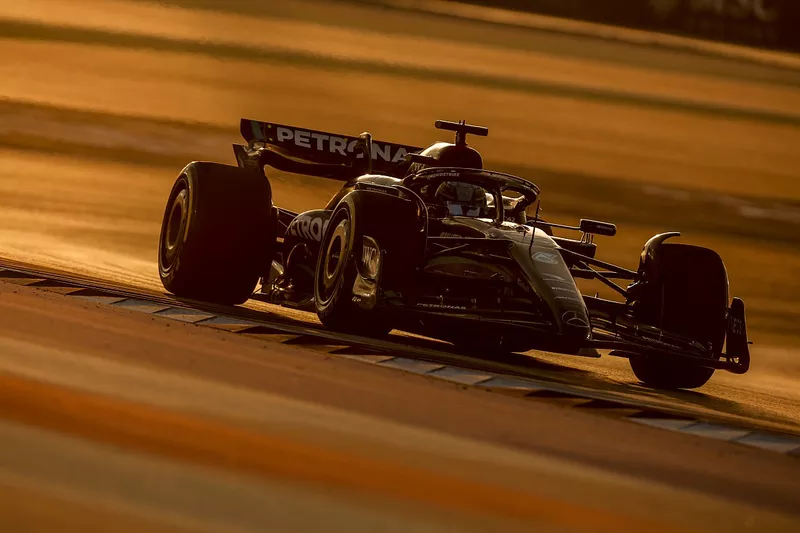
Long before they were bitter rivals, Lewis Hamilton and Nico Rosberg were friends. As teenagers racing karts across Europe, they shared pizzas, hotel rooms, and an improbable dream of one day competing in Formula 1. Hamilton was the raw, natural talent; Rosberg was the studious, analytical thinker. They were two sides of the same ambitious coin, pushing each other to be better, certain their bond was strong enough to survive anything. That bond, however, was never tested like it would be at the absolute peak of motorsport. When they both found themselves driving for the dominant Mercedes team, the dynamic shifted from friendship to an intense workplace competition. With a car so fast it left all rivals in the dust, the only person each driver had to beat was the one on the other side of the garage. The prize wasn’t just a race win; it was the Formula 1 World Championship, and only one of them could have it. The question of what happened between Lewis Hamilton and Nico Rosberg began to take shape long before their infamous 2016 clash. The trust first publicly fractured during qualifying for the 2014 Monaco Grand Prix. On his final, decisive lap, Rosberg made a mistake that brought out warning flags, preventing Hamilton from setting a faster time and securing the best starting position for himself. Whether it was a genuine error or a calculated move, Hamilton was convinced it was deliberate. The warmth was gone, replaced by a chilling suspicion. This incident ignited a cold war inside Mercedes, creating a tense Hamilton vs Rosberg rivalry timeline that team advisors like the legendary Niki Lauda struggled to contain. The unspoken #1 rule in Formula 1 is simple: you do not hit your teammate. It’s the ultimate sin, a self-inflicted wound that costs the team millions in potential prize money and damages priceless equipment. But as the pressure built over two years, that rule began to bend. And on a hot afternoon in Spain in 2016, it was about to shatter completely. Why Mercedes Was Its Own Worst Enemy in 2016 The explosive rivalry between Hamilton and Rosberg was rooted in one simple fact: during the 2016 F1 season, their Mercedes team was in a league of its own. While teams like Ferrari and Red Bull were fighting for scraps, Mercedes had built a car so fast and so reliable that victory was all but guaranteed. For them, a race wasn’t a battle against 20 other drivers; it was a private duel fought in front of millions. The only real question on any given Sunday was which of their two drivers would stand on the top step of the podium. This absolute dominance created a strange and uniquely intense dynamic. Imagine being up for the biggest promotion of your life, but the only other candidate is the person sitting at the desk next to you. That was the reality for Hamilton and Rosberg. With no outside threats, the World Championship was guaranteed to be won by one of them. Every point gained or lost wasn’t just about a single race; it was a direct hit against their one and only rival. The Mercedes F1 intra-team battle wasn’t just part of the show—it was the show. For the team management, led by boss Toto Wolff, this was both a dream and a nightmare. While their cars were collecting trophies, the atmosphere in the garage was becoming toxic. Every strategic decision was scrutinized, with each driver paranoid that the team was favoring the other. The two sides of the garage effectively became two separate teams, sharing a name but little else. This immense psychological pressure created a ticking time bomb, where the #1 rule in racing—”don’t hit your teammate”—was stretched to its breaking point. It was no longer a question of if it would all go wrong, but when. 43 Seconds of Chaos: A Moment-by-Moment Breakdown of the Crash It all unraveled in less than a minute. As the lights went out for the 2016 Spanish Grand Prix, Nico Rosberg got a better start, snatching the lead from Lewis Hamilton into the first corner. For a few brief seconds, it looked like a standard racing maneuver. But as the two silver cars rocketed down the long straight that followed, a tiny, unseen error was about to trigger a multi-million-dollar disaster. Coming out of the third corner, Rosberg’s car was in the wrong engine mode. Think of it like a video game where your “turbo boost” isn’t active when you expect it to be. For a crucial moment, his car was on a lower, power-saving setting, making him unexpectedly slow—over 100 mph slower than his full potential. He was a sitting duck, and the fastest driver in the world was right behind him, preparing to pounce. For Hamilton, this was a golden opportunity. He saw his rival’s car decelerate and a tempting gap open up on the right-hand side of the track. In the high-stakes world of F1, a driver’s instinct is to attack any weakness. Hamilton didn’t hesitate; he committed his car to the opening, assuming his teammate had made a mistake and was leaving the door open for an easy pass. Rosberg, however, instantly realized he was vulnerable. Seeing Hamilton’s car surge alongside him, he made a sharp, decisive move to the right to defend his position and close the gap. But it was too late. Hamilton, already committed and traveling much faster, had nowhere to go. His right-side wheels were pushed onto the grass, causing him to lose all control. In a sickening, inevitable spin, his car careened back across the track, collecting Rosberg’s car and sending both of them into the gravel pit. The result was a perfect storm, over in an instant. A small technical error had created a massive speed difference. One driver’s aggressive instinct met another’s defensive reaction, and the immense pressure of their rivalry left no room for caution. Both cars were out of the race on the
The Rain Masterclass: 1993 European Grand Prix and a Drive That Rewrote What “Great” Means
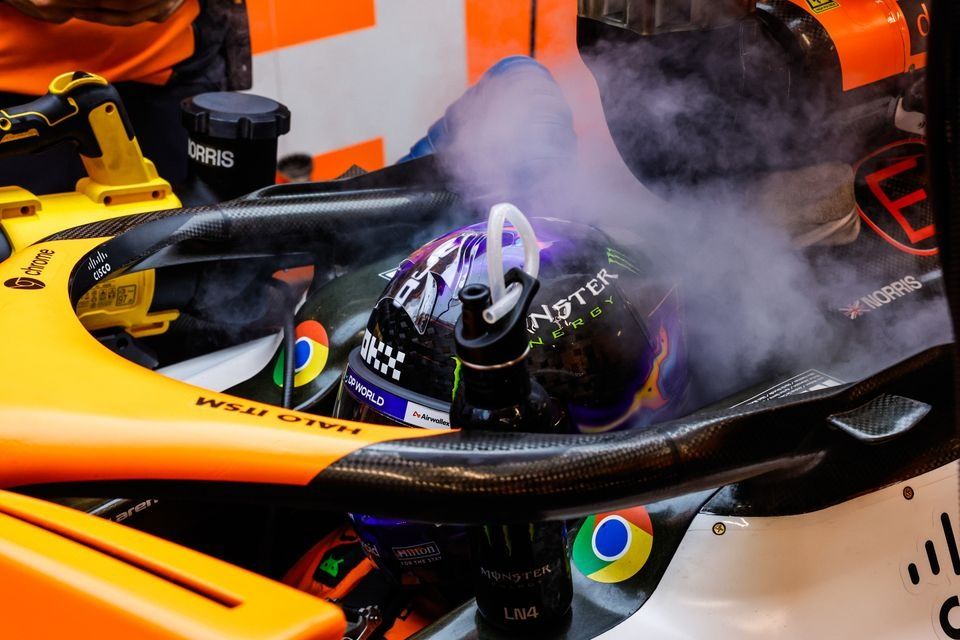
The most legendary lap in racing history began with a mistake. On a rain-soaked track at England’s Donington Park in 1993, the red and white McLaren of Ayrton Senna was shoved from fourth place to fifth as the lights went out. Water streamed across the asphalt, turning the course into a treacherous ribbon of black ice. For any other driver, it would have been a disastrous start. For Senna, it was the opening note of a symphony. What he did in the next three minutes is now the stuff of sporting folklore. That single opening lap wasn’t just about speed; it was a masterclass in intuition, improvisation, and courage under extreme pressure. One driver saw a path that the rest of the world’s best missed entirely, turning a catastrophic start into a drive that redefined the very meaning of genius. The Unbeatable Car and the Great Equalizer In 1993, the Williams team had built a car so advanced it felt like a cheat code. It featured a revolutionary “active suspension,” a smart computer that kept the car perfectly flat and stable through any corner, at any speed. Experts compared it to a modern fighter jet competing against propeller planes. While other drivers wrestled with their cars, the Williams was a rocket ship on rails. On a dry, predictable track, it was simply unbeatable. At the helm of this technological marvel was Alain Prost, Senna’s arch-rival. Known as “The Professor” for his calculated approach, Prost was the perfect pilot for the perfect car. For Senna, stuck in a good-but-not-great McLaren, the season was a story of an artist trying to compete with a masterpiece of engineering. He was outgunned, and he knew it. But then, the rain fell. Rain is the great equalizer in motorsport. It washes away the advantages of computer-controlled perfection, turning a machine’s greatest strengths into liabilities. The race was no longer about which car was fastest, but which driver could feel the grip, dance on the edge of control, and find a path where others only saw water. Paradoxically, the treacherous downpour was Senna’s only hope. From Disaster to Dominance: The Opening Seconds As the starting lights went out, the pack of cars exploded into a plume of blinding spray. In the chaos, Senna’s race seemed to unravel before it even began. Squeezed by a rival on the wet, slick asphalt, he was forced to back off, watching helplessly as another car shot past him. Starting in fourth, he was now in fifth place. Ahead of him was a wall of the world’s best drivers: Alain Prost and Damon Hill in their untouchable Williams cars, Karl Wendlinger, and a ferocious young German talent named Michael Schumacher, who had just barged his way past. To pass even one of them in these conditions would be a challenge. Passing all four seemed impossible. For anyone watching, the race for the lead was already over. But they weren’t just watching the start of another race—they were witnessing the opening moments of the greatest first lap in F1 history. Anatomy of a Miracle: Four Cars in One Lap What followed was less a series of overtakes and more a blur of instinctual genius. Senna immediately latched onto the back of Michael Schumacher. Coming into a fast, sweeping corner, Senna did the unthinkable: he swung his car to the wide, outside part of the track and simply drove around the German driver as if he were standing still. One down, three to go. With Schumacher dispatched, the McLaren seemed to come alive. Senna instantly caught Karl Wendlinger and, with barely a moment’s hesitation, dove past him on the inside. It wasn’t a battle; it was an inevitability. Senna was operating on a different plane, seeing a path through the storm that was invisible to everyone else. In just two corners, he had climbed from fifth to third. Now, only the two “unbeatable” Williams cars remained. First was Damon Hill. Senna hunted him down through a series of twisting turns, his red and white car a predator stalking its prey. He pressured Hill into a defensive position before slicing past him with breathtaking ease. The propeller plane was now flying past the fighter jets. Finally, there was only Alain Prost. Senna closed the gap in seconds and, in a move of stunning audacity, out-braked his arch-rival into a tight hairpin turn, taking the lead before the lap was even over. In just over two minutes, Ayrton Senna had gone from fifth to first, dismantling the world’s best drivers in the world’s best cars. The Ghost Road: Finding Grip Where Others Saw None To understand Senna’s supernatural performance, you have to understand the secret of the “racing line.” In dry conditions, drivers follow a single, perfect path around the circuit that becomes coated in a thin, invisible layer of rubber and oil. When wet, this polished surface becomes incredibly slick, like black ice. The other drivers were skating on this slippery ribbon, following the rules of a dry track in a world that had completely changed. But Senna wasn’t following the rules; he was reading the environment. He deliberately took his car to the wider, outer edges of the corners—the “dirty” parts of the track that drivers normally avoid. Using a technique from his early days in go-karts, he knew these forgotten patches of asphalt were rougher and offered far more grip in the rain. This wasn’t just bravery; it was a profound act of creative intelligence. Senna was solving a complex physics problem in real-time, at 150 miles per hour. He had found a “ghost road,” a completely different, grippier racetrack that only he could see. By abandoning the conventional path, he made his “inferior” car superior. Why the First Lap Was Only the Beginning of the Masterclass As astonishing as that first lap was, it was merely the opening act of a 76-lap performance. While other drivers spun out or struggled to stay on the circuit, Senna looked as if he

When Ferrari Cracked Under Pressure: 2019 Bahrain Grand Prix and the New Order
Imagine you’re 21 years old. You’ve landed your dream job at the most famous company in your field, and in only your second week, you are on the verge of a legendary success. The world is watching. Victory is seconds away. Then, in an instant, it’s all snatched away by a problem you can’t control. This isn’t a hypothetical; it’s exactly what happened to Charles Leclerc at the 2019 Bahrain Grand Prix. For the iconic F1 Ferrari team, anything less than victory is considered a failure. As the most historic and pressure-filled name in motorsport, they arrived in the deserts of Bahrain desperately needing to prove their new car was a winner after a disappointing season start. The expectation from millions of fans, and from within the team itself, wasn’t just to compete; it was to dominate. At the heart of this high-stakes drama were two drivers representing the team’s past and its future. On one side was Sebastian Vettel, the decorated four-time world champion hired to bring glory back to Ferrari. On the other was the man in the second car, Charles Leclerc, a brilliant young prodigy in only his second race for the team who was already challenging the established order. What unfolded under the floodlights was therefore more than just a car race. It was a public stress test that exposed a deep crack in the team’s foundation, forcing a confrontation between a proven champion and a rising star. This was the moment the old order began to crumble, changing the sport forever. The Red Rocket Ignites: How Leclerc Stunned the F1 World Before the Race Even Started A Formula 1 weekend isn’t just about the Sunday race. The day before, during a high-pressure session called “qualifying,” drivers get one hour to prove who has the fastest car in a flat-out sprint. The prize for the quickest lap is pole position—the coveted first spot on the starting grid, which offers a clear track and a massive advantage. It’s the best seat in the house, and in Bahrain, the 21-year-old Charles Leclerc was about to claim it in spectacular fashion. This wasn’t just any pole position. For a driver in only his second race with the legendary Italian team, beating a four-time world champion teammate was a seismic event. Leclerc’s performance under the desert floodlights was a raw display of talent, proving that Ferrari’s new red rocket, the SF90, was genuinely the car to beat. He had not only earned the top spot but had also fired a clear warning shot to the entire grid—and, more importantly, to the other side of his own garage. Ferrari suddenly had a wonderful, yet terrifying, problem. Their young prodigy was outperforming their established champion before the first corner of the race had even been turned. The team had arrived in Bahrain expecting Sebastian Vettel to lead their championship assault. Instead, the spotlight was stolen by the new kid who was simply, undeniably faster. This set the stage for a fascinating internal battle: what happens when a team’s designated future arrives a little ahead of schedule? A Tale of Two Teammates: What Happens When the ‘Future’ Is Faster Than the ‘Present’? When the five red lights went out to start the race, Leclerc’s dream start from pole position evaporated. A poor getaway saw him swamped by the cars behind, and he fell to third place, watching his teammate Sebastian Vettel sweep past him. The advantage he had fought so hard for was gone in an instant. All his brilliant work from the day before was seemingly undone, and the established champion was back in front. But the young driver’s initial fumble was temporary. Demonstrating incredible composure, Leclerc used the raw speed of his Ferrari to hunt down the leaders. Within a few laps, he was looming in Vettel’s mirrors, clearly the faster of the two. This created the exact scenario the team bosses dreaded: their young star was being held up by their veteran champion, and a difficult decision had to be made. This is where Formula 1’s most controversial tactic comes into play: team orders. It’s an instruction from the pit wall telling one driver to let their teammate pass for the good of the team. While it sounds simple, it’s a politically explosive move, akin to a company publicly asking a senior executive to step aside for a junior colleague who is performing better on a critical project. It signals a shift in power. After a tense few moments, the call came. Ferrari informed Vettel that Leclerc was faster, and the four-time champion moved aside. With that, Leclerc stormed back into the lead, proving his qualifying pace was no fluke. The team had been forced to publicly admit their prodigy was outperforming their champion. The internal hierarchy at Ferrari had just been flipped on its head, and the pressure on Vettel was now immense. The Champion Cracks: How a Simple Mistake Revealed a Deeper Problem Having already lost the lead to his own teammate, Sebastian Vettel’s night was about to take another disastrous turn. Now, his main rival, Lewis Hamilton, was hunting him down in the relentless silver Mercedes. For a four-time world champion who was supposed to be Ferrari’s undisputed leader, being overtaken by both his prodigy teammate and his arch-nemesis in the same race would be a crushing psychological blow. The pressure was visibly mounting. As Hamilton prepared to pass, Vettel found himself wrestling with an invisible force known as “dirty air.” Think of it like the turbulent, choppy water behind a large boat. A Formula 1 car creates a similar wake in the air behind it. When a car follows too closely, it’s driving through this disturbed air, which prevents its own wings from working properly. The car loses grip and stability, feeling skittish and unpredictable, almost like trying to walk on ice. Under the immense strain of holding off Hamilton while fighting the physics of his own car, the champion finally cracked. As the two
