
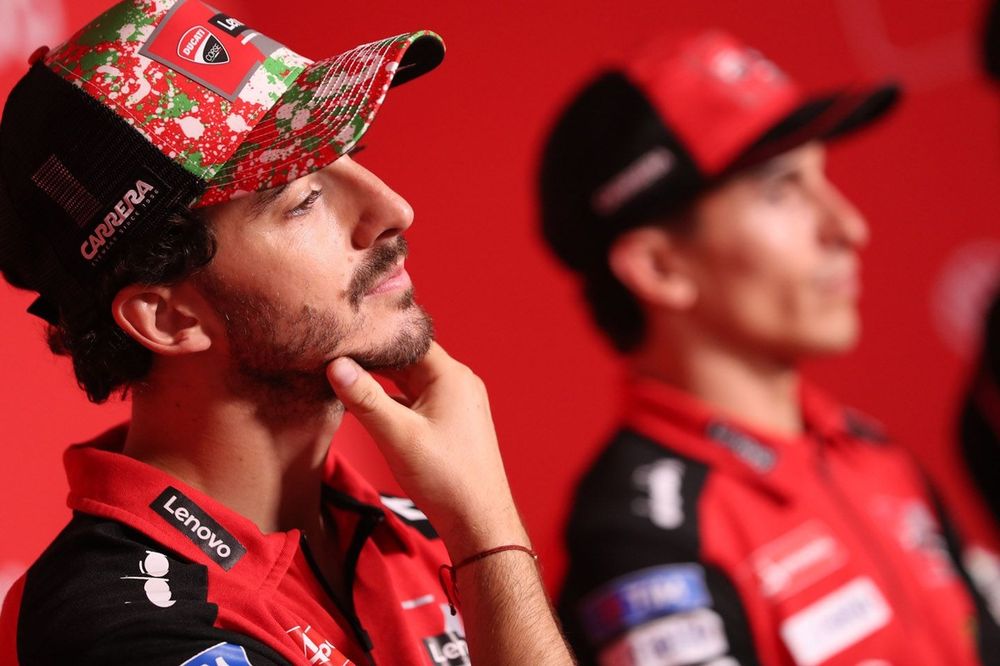
Ducati’s Star Under Pressure Francesco Bagnaia has been the face of Ducati. The champion in power made the team a powerhouse, as he won two consecutive titles and spearheaded a golden age. With the 2025 MotoGP season entering its decisive stage, there are questions. Will Ducati protect him against rider reshuffling, competition performances, and team priorities? Since he rose to the summit, it is possible, as never before, that Bagnaia is beyond the immediate reach of the engineers and strategists of Bologna. The Emergence of Domestic Competition. The Ducati team is among the most loaded teams in MotoGP. The brand developed a depth chart that would be the envy of any manufacturer in history with Jorge Martin, Enea Bastianini, Marc Márquez, and a generation of satellite talent. This group power is awe-inspiring, but it also gave rise to an internal battlefield. Bagnaia used to be the unquestioned leader, but now Márquez is coming back and Martín is unstoppable, and those lines are becoming blurred. Ducati management is torn between supporting their long-time star and supporting the rider who provides the best cutthroat edge on race day. Why Ducati Can No Longer Control the Narrative. Ducati dominated the championship image in the past seasons, as it provided almost half the grid with its equipment. The influence provided Bagnaia with a safety net, as he could outscore competitors with strategy and team cohesion. However, with the introduction of stricter competition rules in MotoGP and the fast progress of such competitors as KTM and Aprilia, the control margin of Ducati has been reduced. They are no longer able to determine results with the help of pure numbers. In case Bagnaia slips against Márquez or a foreigner, the team can do little to stop it. Form and Mental Battle of Bagnaia. Bagnaia still exhibits glimpses of brilliance on track. His accuracy in braking and his coolness during stressful situations are unparalleled. But already cracks are starting to form. Errors in qualifying, a few mid-race crashes, and difficulties in sprint races indicate that pressure is even more significant than ever. His mental strength has never been a weakness, yet with his aura being eroded by his competitors, it appears less safe. Ducati engineers themselves acknowledge that confidence rather than machinery can now determine his title chances. The Marquez Factor The transfer of Marc Márquez to Ducati was a paradigm shift that changed the paddock dynamic. Márquez has been seen as having been initially considered a dangerous gamble considering his injury-ridden years with Honda but has since been revived on Italian equipment. His aggressive nature is relentless, as is his fearless attitude to wheel-to-wheel combat, which disrupts the rhythm of Bagnaia. The management of Ducati never thought that internal conflicts would compromise their chances of winning the championship, but with the entry of Márquez, that has been the case. The future dominance of Bagnaia is no longer something that Ducati can be assured of since Márquez does not act within a strategy that favors one rider over the other. Changing the Focus of Manufacturers. The corporate objectives of Ducati make it difficult. The brand is also more oriented to the development of its image on the international level, as riders such as Martín attract younger viewers and Márquez offers enormous commercial potential. Bagnaia is still an ambassador, but he is threatened to be included in a rotation instead of being the single star. Ducati used to be the world of Valentino Rossi and his shadow before stabilizing in Bagnaia. At this point the pendulum can swing once more, and it is not known whether corporate interests are in line with saving Bagnaia through the troubles he is experiencing on the track. The Position of Competitors External to Ducati. As Ducati inter-company rivalry attracts headlines, there are other manufacturers lurking in the background. KTM Brad Binder and Pedro Acosta are gradually reducing lap-time gaps, and Aprilia has also polished its own package to be a regular podium contender. Yamaha, through its new V4 project, also has a brighter future. The battles of Bagnaia are no longer confined to the Ducati garage, i.e., even an ideal strategy will not offer him security. When a KTM or Aprilia rider takes the lead, then Ducati loses even more of its capacity to defend Bagnaia. MotoGP Historical Parallels. This is reminiscent of the past when teams were finding it difficult to deal with several elite riders. The same tension was experienced in Repsol Honda when Márquez and Dani Pedrosa were at loggerheads. Yamaha has once struggled between Valentino Rossi and Jorge Lorenzo, and the tension within the company created a new chapter in the championship. Ducati is currently treading that thin line. History demonstrates that in case a team attempts to handle more than one alpha, the results are out of control of the management, and the riders determine their own fate. Fan Attitudes towards the Struggles of Bagnaia. The changing dynamic has been criticized by fans. Proponents of Bagnaia claim that he is the reason Ducati is dominant in modern times and that the company should be rewarded with loyalty. Others embrace the uncertainty that comes with Márquez and Martín, as it is an indicator of the well-being of MotoGP. The buzz on social media shows a division, with one side calling on Ducati to save their champion and the other side celebrating the madness. This split opinion highlights why Ducati can no longer control the narrative—it is being rewritten by fans. The Path Forward for Bagnaia The salvaging of Bagnaia is no longer a matter of Ducati but of his flexibility. He needs to find the vicious effectiveness that characterized his previous campaigns in order to win another title. It implies faster qualifying laps, better performances in sprint races, and psychological stability to withstand the aggression of Márquez. The tools can be supplied by Ducati, and it is up to Bagnaia to perform. The future of his career will not be determined by the corporate strategy or collaboration
Pirelli Praises Key Takeaways from MotoGP Debut With Sprint Simulation
MotoGP Tires Enter a New Era. The new chapter of MotoGP began at Misano as Pirelli officially became the tire supplier of the sport. The Italian company introduced a new philosophy to the grid after decades of being under the control of Michelin. With a history in Formula 1 and World Superbike, Pirelli had the challenge of establishing itself on the two-wheel platform at the pinnacle. After its initial test and sprint-race simulation, the company pointed out what it termed as the most appreciated features of its tires. There was a touch of curiosity, of optimism, of guarded skepticism, but the atmosphere in the paddock was generally one of anticipation. Why the Switch Matters MotoGP did not decide to invite Pirelli to their sport lightly. Michelin had developed a reputation of consistency and balance but occasionally experienced controversies regarding durability and grip. The transfer to Pirelli aimed to bring a new dynamic to the game that would bring unpredictability and excitement to racing by Dorna and the FIM. Pirelli has long been envied for its aggressive compounds and broader operating windows, which have been the case with riders in Superbike over the years. The MotoGP switch was not only a technical challenge but also an opportunity to transform the way in which races are run. Pirelli’s Early Impressions Pirelli engineers reported that they were happy with the initial data. Thermal consistency was one of the outstanding positives. The tires sustained grip levels over longer stints, particularly in the Sprint simulation, where the performance drop-off was not so dramatic as anticipated. Sharper feedback was also observed by the riders during corner turns. This is in line with the design emphasis of Pirelli on the rider feel, which provides more confidence during braking and acceleration. Nevertheless, some riders expressed worries regarding the wear of rear tires, saying that more effort is needed on abrasive circuits. Rider Reactions from Misano Francesco Bagnaia, who tried the Pirellis following his Misano weekend, claimed that the tires offered predictable grip, which made handling easier in the medium-speed corners. Similar sentiments were echoed by Marc Márquez, who noted that the front tire was a good communicator even during heavy braking. However, other riders such as Fabio Quartararo were more reserved and observed that the front was good but the rear grip was wearing out faster than expected. Jorge Martini commented that the equilibrium of the compounds would be of great importance when the championship enters tracks of different temperatures and surfaces. Sprint Race Simulation: A Proving Ground. The Sprint simulation played a significant role in the testing of the performance of the tires in race conditions. Pirelli emphasized that the tires were not only developed to be fast in a single lap but also to be durable in multiple acceleration zones. The lap times were found to be constant across several laps in the simulation, indicating that there was low degradation. This is particularly applicable since MotoGP Sprints require tires that provide maximum grip without the luxury of controlling wear after 25-30 laps. The riders were able to complete the session with the confidence that the tires were capable of coping with the intensity of these shorter races. Technical characteristics that were outstanding. The most valued attributes of Pirelli were based on three aspects. To begin with, the braking stability of the front tire provided the riders with confidence when they were deep into corners. Second, the heat-management system was used to prevent unforeseen drop-offs, which used to bother Michelin sometimes. Lastly, the flexibility of the compounds in varying conditions of the track was commended. Pirelli emphasized the long history of motorcycle racing in which it had been involved and that its World Superbike data had already proven to be easily transferred to MotoGP. Implication on the Championship Picture. The tire change has the potential to change the competitive level of MotoGP. Riders who love to ride aggressively around corners, such as Márquez, might enjoy the front-end confidence provided by Pirelli. On the other hand, riders who are heavily dependent on rear traction might be subject to modification. Teams will have to retune bike arrangements to get the maximum out of the tires. Engineers emphasized that the electronics and suspension settings will be more important in the optimization of tire usage. Flexibility might determine the championships as the season goes on. Business and Marketing Perspectives. Commercially, Pirelli is entering MotoGP at a strategic point. The brand is already a worldwide force with its Formula 1 presence, and MotoGP is another opportunity to demonstrate the innovation. The crossover between car and motorcycle racing makes it more appealing to the fans. In addition, Dorna enjoys the connection with a high-end brand that is associated with prestige and new sponsorship opportunities. Fan engagement initiatives may also result as a result of the MotoGP-Pirelli partnership, as Pirelli has a history of interactive promotions in motorsport. Fan Reactions and Expectations. There was passionate debate amongst fans over the tire change. Others celebrated the change, which they considered a needed progression to make MotoGP competitive and unpredictable. Other people were concerned about possible discrepancies as teams and riders evolve. The Misano test buzz on social media indicated that optimism was to be taken cautiously, with many noting the credibility of Pirelli in Superbike. To the average viewer, the distinction might not be obvious, but to the hardcore fans, lap times, tire-wear patterns, and the manner in which various riders adapt will be analyzed. The Future of Pirelli in MotoGP. The Misano test was not the end. Pirelli has admitted that the development will go on during the season and the track-specific compounds are coming up. The company will also be able to hone the rear-tire life and keep the front-end confidence that riders were impressed by. Further testing will be carried out by the teams in other circuits such as Sepang and Phillip Island, where the high temperatures and surface roughness will be more demanding. Pirelli hopes to achieve a full range
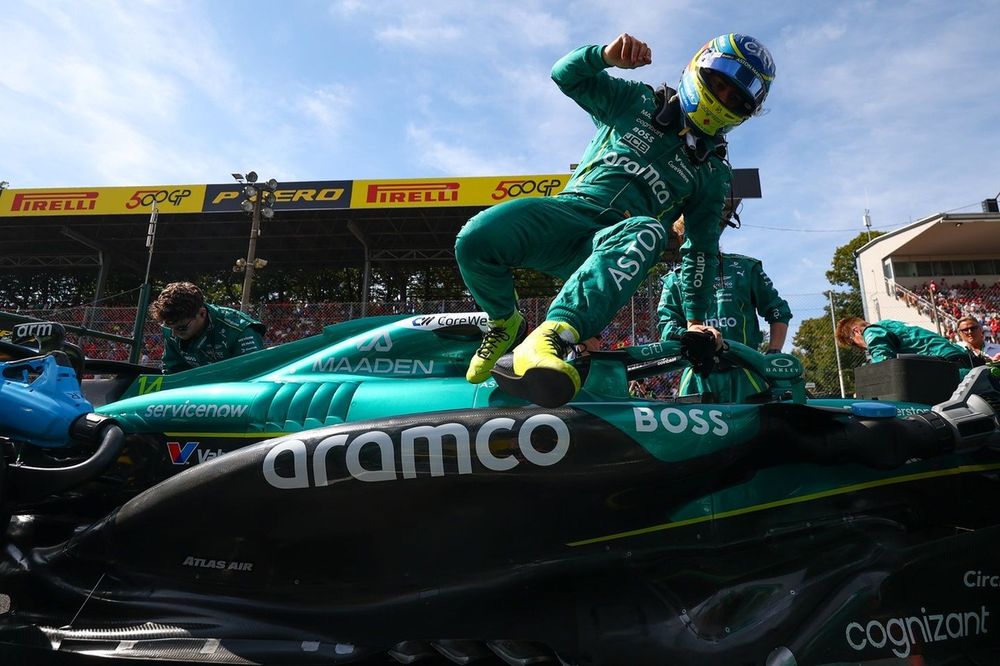
Aston Martin Reveals Rare Material Flaw Behind Alonso’s Suspension Failure
A Stunning Setback to Aston Martin. Aston Martin was shocked when the car of Fernando Alonso abruptly became stuck in a test run. The failure also compelled Alonso to cut his session short, which immediately cast doubt on reliability. The crew initiated a quick investigation, and they were aware of how important the suspension integrity is in Formula 1. Initial Anxieties Indicated Reliability. First, engineers were worried about a structural flaw in the suspension system. The sudden loss of control of Alonso raised the alarm of potential design defects. In Formula 1, a suspension failure will be disastrous, both in terms of safety and performance. Aston Martin knew he had to provide a quick clarification to appease fans and stakeholders. The Investigation Begins Following the accident, engineers of Aston Martin disassembled the car of Alonso and conducted thorough inspections with the help of advanced imaging and stress analysis. They were concerned with identifying the cause of the failure as external forces or internal weaknesses. The same parts of the car of Lance Stroll were also tested by engineers to make sure that the problem was not common. An Unusual Culprit Emerges The cause of the investigation was a surprise: it was not a flaw in the design of the core but a rare material defect. One of the suspension components had developed microscopic fractures because of irregular production. This defect in manufacturing permitted the accumulation of stress in the course of testing until the part failed. Aston Martin affirmed that the issue had been narrowed down to the component of Alonso. Relief Within the Team Although the discovery was initially a cause of concern, it was also a relief. The failure did not signify a greater design fault. Team principal Mike Krack assured the fans that the suspension problem of Alonso would not impact future races. Engineers substituted the defective component with a more reinforced component, which gave the car its full strength. Priorities of safety come first. Suspension failures are taken seriously by Formula 1 teams. High-speed failure might pose a threat to the drivers and other competitors on the road. Aston Martin also focused on safety by introducing additional inspections to the fleet. The FIA was informed about the incident, and it was confirmed that the safety standards in the regulations were met. Reaction of Alonso to the Incident. Fernando Alonso dealt with the situation in his usual calm way. The two-time world champion said he was confident in the technical staff of Aston Martin. He admitted that the failure was very serious, but he believed in the quick investigation of the team. Alonso commended the engineers who were able to determine the issue in a short period of time and avoid any future risks. Competitive Impact of Aston Martin. Performance-wise, the failure interfered with the testing rhythm of Aston Martin. Alonso lost precious track time to make adjustments. Nevertheless, the team soon came to its senses, and the rest of the test days went on without any more problems. The incident can be taken as a wake-up call, and the team will have to reinforce quality control. Context: In the Season of Aston Martin. Aston Martin went into the season with a goal of narrowing down the gap with Red Bull and Ferrari. Alonso had high expectations due to strong performances at the beginning. However, technical reliability is necessary to maintain the momentum of championships. Even small problems can derail plans in a sport that is characterized by narrow margins. This accident was a wake-up call to the team about that fact. Lessons of manufacturing oversight. The atypical reason was indicative of the significance of precision production in Formula 1. Even the microscopic errors may affect the performance. Suppliers are used to provide components with precise tolerances to teams. Aston Martin will increase control to ensure that such imperfections do not reoccur. In current Formula 1, reliability is as crucial as speed. Reaction of the fans to the Discovery. The fans were relieved to be informed that the failure was caused by a single anomaly. The social media discourse mentioned how the season of Alonso might have been under a threat in case the problem was systemic. A lot of people commended the fact that Aston Martin was transparent about the cause. Others were concerned with other invisible weaknesses in the supply chain. The Broader Reliability Debate in F1. Suspension problems are not common, but not unheard of in Formula 1. A number of teams have been unsuccessful because of design or manufacturing mistakes. Every event strengthens the thin line between innovation and reliability. The case of Aston Martin brought up the discussion once again regarding the manner in which teams can handle supplier relations when there is extreme pressure in terms of performance. The Perceptions of Rivals of the Setback. The suspension problem of Aston Martin was closely followed by rival teams. Most of them did not comment publicly, but some engineers showed interest in the findings. The rivals tend to assess the weaknesses of each other in order to make gains. Having such an unusual cause, this incident does not seem to be much of a design flaw but rather a case of bad luck. The season outlook of Alonso is still high. Although the campaign has been set back, Alonso is not pessimistic about it. His latest performances prove that he is still able to compete with younger competitors. The suspension problem is over, and Alonso is now confident of racing at the front. He does not give up because he wants to ensure that he gets podiums regularly. Aston Martin Business and Brand Implications. To Aston Martin, image is everything, and results are secondary. Unclear explanations of suspension failures may damage the perception of the people. The team reassured the sponsors and fans by discovering the strange reason behind it and solving it. Openness in managing technical issues enhances trust in a competitive market where reputation is the source of investment. Moving
