
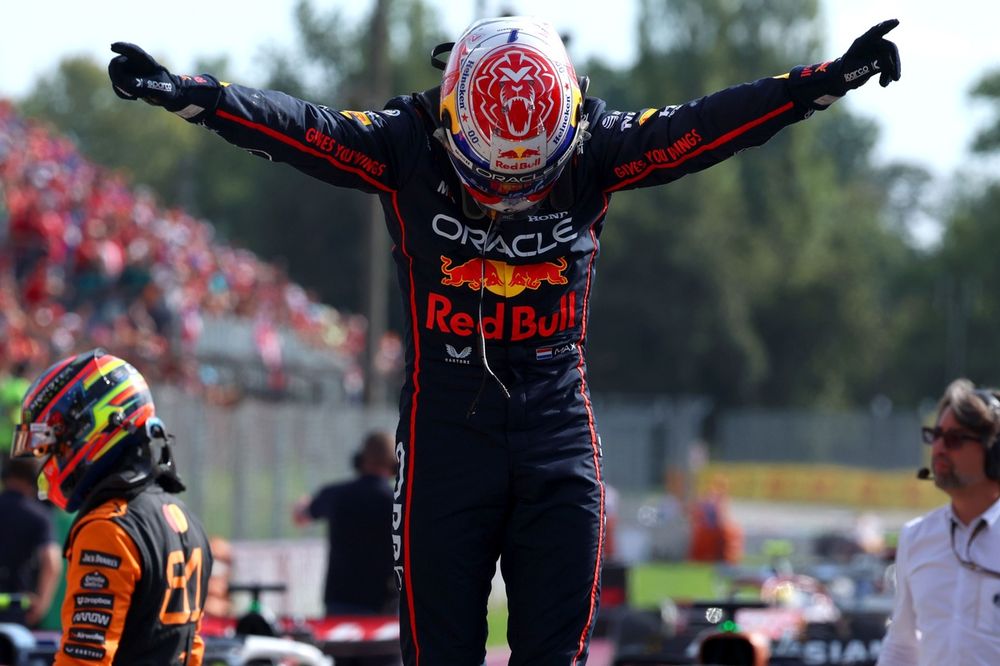
Setting the Stage at Monza The Italian Grand Prix is a race that is usually remembered as unpredictable, and the one this year at Monza gave one more twist to the story of Formula 1. Although Ferrari went into the weekend full of confidence in front of their home fans, it was Max Verstappen and Red Bull who went away with the headlines. The win of Verstappen was not achieved by pure dominance, but by a new philosophy of the team that enabled Red Bull to think and outsmart their opponents at the right time. Both fans and pundits were surprised by the tactical acuity and flexibility Red Bull showed, and the victory was less about pure speed and more about action. This change of direction may re-establish the manner in which the current champions approach future races. Red Bull’s Shift in Mentality During the majority of the title-winning years of Verstappen, Red Bull was using a car that was faster than the rest with better aerodynamics and engine performance. At Monza they were not to be the out-and-out fastest. Ferrari was fast in practice, and McLaren threatened to make an issue of their straight-line performance. This was acknowledged by Red Bull, which changed. The team did not concentrate on the creation of a qualifying advantage but rather on consistency of race pace, tire management, and strategic flexibility. Team principal Christian Horner later explained, “We knew Monza wasn’t going to play to our traditional strengths, so we had to think differently. The emphasis was on balance and making sure Max had a car that could respond in all scenarios.” This attitude was a slight yet significant shift in their philosophy of domination by speed. Verstappen’s Execution Verstappen, on his part, did not fail. He began far behind the Ferraris and waited his time instead of making premature overtures. His patience coupled with the faith of Red Bull in their tire management strategy was decisive. Verstappen took his chance when the strategy of Ferrari started to collapse under the pressure of dealing with degradation. After the race, Verstappen reflected, “It wasn’t about pushing flat out every lap. It was of dominating the race, of taking care of the tires, and of being prepared to strike when the time should come. That’s what we did today.” The remark was a demonstration of the maturity that has since characterized the transformation of Verstappen from an aggressive young driver to a calculated champion. Strategy Over Sheer Pace The turning point was the middle of the race when Ferrari chose an aggressive strategy in the pit stop in which he hoped to undercut Red Bull. Red Bull did not react instantly, but instead held their nerve, extending the stint of Verstappen and relying on their long-run simulations. The risk was rewarded because Verstappen was back on the track with new tires, and he was able to make an assault in the final stages. This strategy emphasized the thoroughness of the data analysis of Red Bull and their readiness to make calculated risks. Previously, the team could have banked on Verstappen to simply outpace the competition. At Monza, patience, faith in the numbers, and a perfect execution were the combination that brought the win. A Blow to Ferrari at Homecoming. In the case of Ferrari, it was a pill to swallow. The Scuderia had over-hyped their own home win, only to be outwitted in front of the rabid Tifosi. Their car was fast, but they were again exposed to strategic mistakes and increased tire wear. The difference between the reactive decision-making of Ferrari and the calm execution of Red Bull narrated the race. Red Bull managed to win even in the circumstances that should have been in favor of Ferrari. Lessons for Red Bull’s Rivals The implications of the new philosophy of Red Bull at Monza are for the rest of the grid. They have demonstrated that few teams can match their versatility by demonstrating that they can win races even when they do not have the fastest car. McLaren, Mercedes, and Ferrari might have to re-evaluate their own strategies and learn that it is not merely a matter of bridging the gap in performance but also of matching their strategic flexibility to Red Bull. As one analyst noted during post-race coverage, “Red Bull didn’t just beat Ferrari on the track. They thumped them in the garage, on the pit wall, and in the manner in which they read the race. That’s what makes them so dangerous.” Verstappen’s Growing Legacy This victory is another addition to the legacy of Verstappen. His past victories were mostly dominated, but this one demonstrated that he could be patient and precise to win. That aggression/composure ratio is what makes great drivers and great legends. Verstappen himself acknowledged the importance of the victory, saying, “Winning here is always special, especially when you’re not the favorite. It demonstrates the power of the entire team. We can win in different ways, and that’s a good sign for the future.” His words were full of pride in the flexibility of Red Bull and a belief that they have opened another chapter to their championship-winning formula. Looking Ahead The Italian Grand Prix was not the quickest or the most glittering victory of Verstappen in his career, but it was one of the most important. It highlighted the fact that Red Bull could be developed, could think beyond pure speed, and could make wins with brains as well as with legs. With the season approaching its last leg, competitors will be on the alert. Should Red Bull manage to triumph at Monza when Ferrari and McLaren are pressurizing it, there can be not many circuits where they will not be able to adjust to a winning formula. Conclusion The surprise Italian GP win of Max Verstappen was not based on brute force but on a new Red Bull philosophy of strategy, patience, and adaptability. By outwitting Ferrari on their own field, Red Bull made a
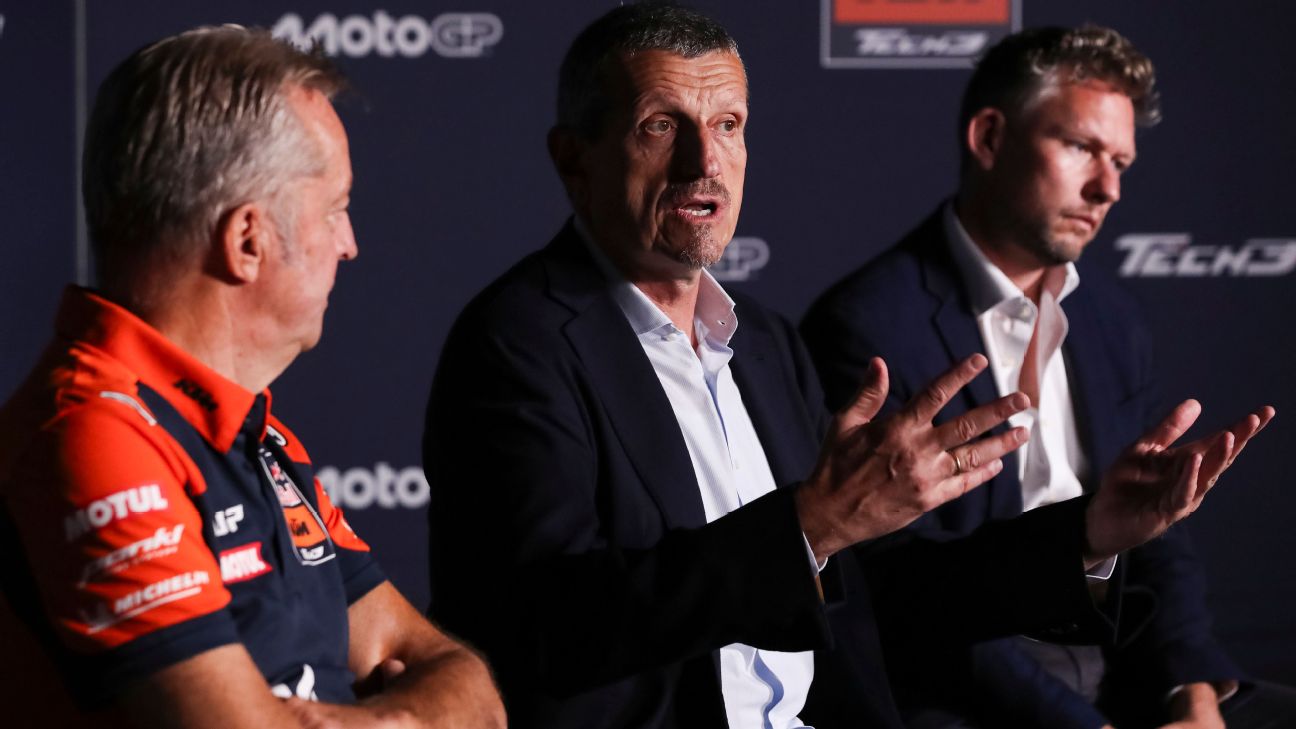
Guenther Steiner Buys Tech3 MotoGP Team from Hervé Poncharal
In a shocking but noteworthy turn of events in MotoGP, ex-Haas F1 Team principal Guenther Steiner has acquired the Tech3 MotoGP team of Herve Poncharal, who has long been its owner. The news has rocked the racing scene, uniting the high-performance paddocks of Formula 1 and MotoGP in a manner few people could have ever expected. Tech3 has been a symbol of independence, strength, and raising young riders over the decades, and Steiner has been one of the most vocal and the most colorful figures in Formula 1. This will not only be a personal renaissance for Steiner since he left Haas but also a new dawn for Tech3 as the company seeks to compete with more resources and new leadership. The Tech3 Under Poncharal’s Legacy. Herve Poncharal has over three decades of service in MotoGP. Tech3 under his leadership became a respectable and competitive satellite team, which was once a small independent outfit. It was never about glitzy budgets but about the Frenchman taking the most out of what they could with them and helping riders at the edge of greatness. Throughout the years, Tech3 has produced stars like Cal Crutchlow, Bradley Smith, and most recently Miguel Oliveira and Pol Espargaro. Poncharal did not make a light decision to sell. It has been reported that he wanted to ensure that the team was stable in the long term in a fast-changing MotoGP world where independent teams are increasingly finding it difficult to compete with factory-sponsored giants. For many fans, Poncharal’s departure from the helm feels like the end of an era, but his assurance that the team is “in safe hands” under Steiner offers some consolation. Steiner’s Second Act This acquisition by Guenther Steiner is not just a business transaction. Having been surprisingly sacked by Haas F1 earlier this year, it was a question whether he would retire from motorsport altogether. Rather, Steiner has reinvented himself in the two-wheeled world. Steiner is a man of strong character and a blunt and sometimes humorous commentator who adds a new taste to MotoGP. Speaking at the announcement, Steiner said, “I’ve always admired MotoGP and the passion of its people. Taking over Tech3 is not about changing everything overnight, but about adding resources, experience, and a bit of my own style to help the team reach new heights.” The quote is both pragmatic and his trademark bluntness, which made him a favorite among the fans in Formula 1. His entry will bring a more aggressive management style that may stir up the MotoGP paddock the way he did in F1. MotoGP Strategic Implications. This deal could not be timed any worse. MotoGP is undergoing a revolution, where technical rules, sustainability programs, and a growing interest in international growth are at work. The independent teams such as Tech3 are confronted with the dual challenge of competing with factory machines and at the same time dealing with the increasing costs of operation. The Formula 1 connections that Steiner has might lead to new sponsorship opportunities and technical relationships. His experience of managing a midfield F1 team on a shoestring budget can also be directly relevant to MotoGP, where the resources/performance balance is a daily challenge. An insider opined that the entry of Steiner would also help to facilitate more crossover between F1 and MotoGP fanbases. The sport has been eager to expand its audience, and Steiner’s popularity—especially after his portrayal in the Netflix series “Drive to Survive”—could be a valuable marketing asset for MotoGP. Rider Reactions The most interesting thing about this transition is, perhaps, how the riders will adjust. The present range of Tech3, which has been maturing during the nurturing leadership of Poncharal, now finds itself in the hands of a man who is known to be a no-nonsense leader. Whereas Poncharal was perceived to be a mentor-like leader, Steiner is more goal-oriented and is said to be an accountable leader. When asked about the change, one rider reportedly said, “It’s going to be different, no doubt. Hervé was like a father figure, but Guenther has a reputation for being tough. That might be what we need to push the team forward.” This open admission indicates that the transition process might be difficult, but there is hope that the leadership style of Steiner might be able to open up new performance frontiers. Industry Reactions In MotoGP, the action has raised eyebrows and optimistic apprehension. There are insiders who view the arrival of Steiner as a fresh breath of fresh thought. Others caution that his experience in motorcycle racing may be a stumbling block since he has not been directly involved in the sport. But Steiner himself seems unaffected. “At the end of the day, racing is racing. Whether it’s four wheels or two, the principles are the same—commitment, teamwork, and the will to win,” he explained during the press conference. According to industry observers, the acquisition is indicative of a wider trend of crossover leadership in motorsport. Due to the increasing commercial pressures, the boundaries between various racing categories are becoming blurred. Organizational- and sponsorship-savvy executives are becoming more and more valuable, whether their history is cars or bikes. Fans’ Perspective As a fan, the deal has brought about a sense of excitement and skepticism. The paternal figure of Poncharal in the paddock has become a favorite of many MotoGP fans, so the roughness of Steiner is a sharp contrast. But still others are fascinated with the prospect of additional drama and high-profile exposure to Tech3. Social media is already awash with videos of the legendary F1 rants by Steiner, and fans are already joking about how his angry team radio replies would work in the MotoGP scene. The Road Ahead Going forward, Steiner has indicated that he is more concerned with stability, as opposed to grand changes. His immediate concern is to see that Tech3 will run smoothly in the handover period. He has, however, also suggested that he has plans to make Tech3 a more competitive player, and this
Alex Márquez Shocks Marco With Catalan GP Win, Ends Brother Marc’s Unbeaten Run
A Stunning Turn in Barcelona The Catalan Grand Prix provided one of the most exciting episodes in recent MotoGP history. Riding with Gresini Racing, Alex Marquez gave a masterclass on his home soil to beat his overpowering brother, Marc, to win a breakthrough victory. The win was the culmination of a 15-race winning streak of Marc, which shocked the Barcelona crowd and changed the momentum of the season. It was not another race victory. It was the second premier-class win of Alex and a strong story of redemption. Only a day before, he had gone off in the lead in the sprint race. The highs and lows of disappointment to victory underscored his toughness and the narrowest of margins in elite sport. Revenge in Turn 10: Turning Pain into Power. The first real test of Alex came when he crashed at the same corner (Turn 10) during the sprint on Saturday. The error was a burden on his mind, and it was a sharpener of his attention. “That mistake is still painful in my head, but it was the best way to forget that,” Alex said. “Also, that mistake helped me win today because I was braking so late in that corner when I did that mistake.” Alex was confident and calculated and executed his race with precision. Once he lost the initial lead to Marc, he leapt in lap four and never turned back. He was composed and handled tires and pace with a lot of pressure as a world champion brother. A Brother’s Duel with High Stakes. The appearance of the Marquez brothers fighting to win the victory was a rare emotional touch to an already tense weekend. Marc had come near to securing his seventh title in Misano. Rather, the charge by Alex made the championship fight continue beyond the San Marino race. Marc acknowledged his brother’s performance graciously, admitting, “He was faster and I just tried to follow him, but on that last lap I was a bit on the limit. I was struggling a bit. But I’m happy for Alex, happy for Ducati, happy for me because in a difficult circuit I finished second.” The championship scenario was tightened as well. Marc was reduced to a lead of 182 points and could not celebrate the title until at least the Japanese Grand Prix. Strategy, Speed, and Smarts With the race progressing, the intelligence of Alex was as evident as his pace. He handled the tricky Barcelona surface with aplomb. Marc attempted to pass towards the end of the race, but Alex gradually pulled ahead, and he won by 1.74 seconds. The audience cheered at the victory, which few people had expected, and was amazed and excited at the same time. It was an elite combination of expectation and action, and Alex demonstrated that he is a fit to be at this stage. Party with a Purpose. The celebration of the race by Alex was symbolic and unapologetic. He pulled up at Turn 10, pulled into the gravel, and lifted both middle fingers to signify his emotional return. “The most special moment was Turn 12, for sure, because it was in front of the fans,” he said. “But at Turn 10, I said I need to take revenge. I did the roll, and [showed] both middle fingers, like, ‘you are here, but today I won’.” The contradictions of that moment spoke volumes, defiance at the corner that betrayed him a day earlier and gratitude toward the fans at the next turn. Redemption in Full Circle That Turn 10 scene was completed over the weekend. Alex turned his heartbreak into euphoria and made a painful mistake his triumph. Not only is he mentally strong but also mature enough to face failure and convert it into motivation. “It’s not easy to have Marc behind you for 24 laps… he will always try. So you are never relaxed when you have Marc behind,” Alex said. “I was just trying to manage the tyres, manage everything. I did a perfect race, no mistakes. I’m so happy for that and it was the best way to come back to our level.” Reaction and Legacy The victory was a sign of maturity as a race car driver. His calmness, speed, and skill to learn through mistakes were notable. He proved that the top of MotoGP can be achieved with the proper attitude. The outcome was celebrated by fans and analysts as one of the best moments of the weekend. In a sport that is all about extreme margins, the weekend that Alex had demonstrated that mental fortitude could be just as important as the machine. Conclusion: A Victory That Means More. The win of Alex Marquez at the Catalan Grand Prix was more than just winning the race by finishing first. It was a symbol of redemption, strength, and a statement of capability. It was a landmark moment in the career of Alex to beat Marc on his best weekend before a home crowd that was passionate. The victory halted the winning streak of Marc, delayed his title celebration, and rekindled the championship fight. To Alex, it was the best way of transforming the pain of yesterday into the glory of today. There have been few victories in MotoGP that have such narrative value—this one will be remembered as much by its drama as its outcome.
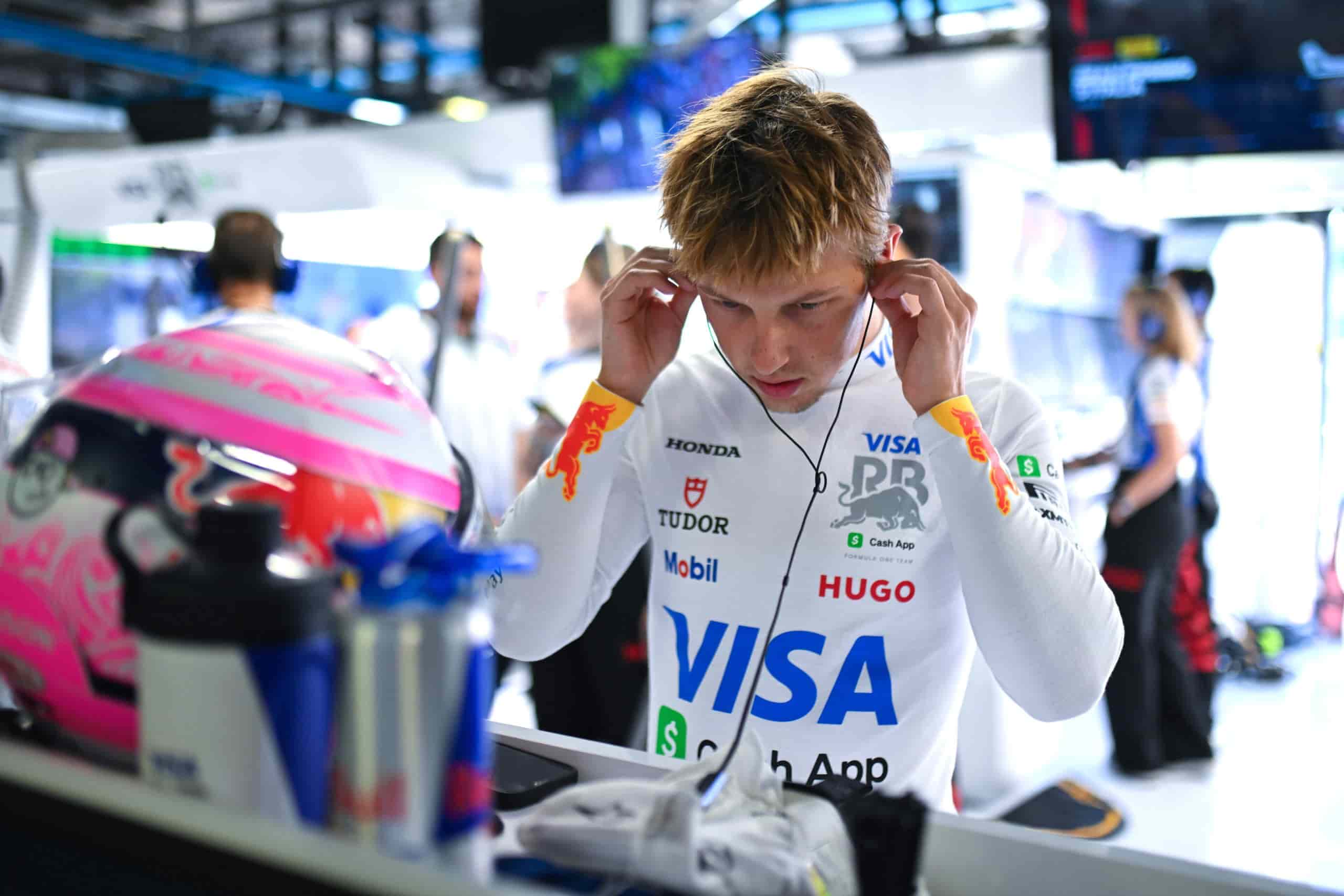
Liam Lawson Frustrated After Qualifying Last For Italian Grand Prix At Monza
A Weekend of Promise That Ended in Disappointment The Italian Grand Prix at Monza, commonly referred to as the Temple of Speed, is a circuit where reputations are built and ruined. In the case of Liam Lawson, it turned out to be a weekend that started with a lot of hope and ended with a lot of frustration following his last place on the grid. The Racing Bulls driver, who had demonstrated a good rate in practice, was privately optimistic that he would make at least the second round of qualifying. Rather, an expensive mistake in Q1 saw him at the very rear of the grid, transforming what might have been a breakthrough into a painful lesson of how unforgiving Formula 1 can be. The Error That Altered All Things. His last flying lap in Q1 ruined the hopes of Lawson. Bringing speed into the Lesmo corners, he took up dirty air in one of the cars before him, which disturbed his balance and produced understeer. That was a squealer, and all four wheels were on the wrong side of the white line. The lap, which could have won his session, was instantly removed because of going over the track limits. Had he not, Lawson would have been in 20th place with a time of 1:20.279, which is nowhere near the Q2 cut-off. In his post-speech interview, Lawson was frank on what had gone awry. “A very underwhelming session,” he said. My lap was ruined because I picked up dirty air and understeered in the middle of Turn 6, and this made me run off the track. He admitted that the car was competitive, and he added, “It is a shame since the car has been very fast throughout the weekend. We had some problems, but the guys in the garage labored, and everything was sorted in time for qualifying. His emotional honesty was remarkable. “It is soul-destroying when you only make a silly mistake and run away,” said Lawson. It was a shame; the car was fast this weekend, but we were trying to get it all on that last lap, and it cost us. He was disappointed, but he also showed his will to fight back and to recuperate. The Mountain Ahead It is not easy to qualify last at Monza. The long straights and heavy braking zones provide chances to overtake, yet the circuit is also known due to its small margins and uncontrolled battles in the midfield. Beginning with the twentieth leaves Lawson has but little margin to spare, and must depend to progress through the field, by strategy, patience, and opportunism. Lawson himself admitted the hardness of the task. I have a long way to pass cars, starting where I am. It will not be easy, but I will do my best to proceed. It was a realistic evaluation of the task ahead and, at the same time, a declaration of purpose by a driver who was not going to allow one slip to characterize his weekend. In the case of the Racing Bulls, the outcome was also frustrating. The crew had toiled hard to come up with a car that seemed powerful through practice sessions. They had been steadily building up their optimism, and then one slip in qualifying had ruined it. The Constructors’ points battle is very close, and each missed chance counts. Fans and Paddock Response The reaction in the paddock was both sympathetic and understanding of the inexorable nature of Formula 1. Both teams and drivers are aware of the fineness of the margins, and Lawson was respected because of his honesty in confronting his mistake. The fact that he was ready to be open about the disappointment was mature and accountable, which is highly appreciated by the teams. The response was ambivalent among fans. Several sympathized with this, citing his good pace of practice as testimony to the fact that the car and the driver could have achieved a much better outcome. Others mentioned that these errors are the growing pains of a young driver still learning his feet in Formula 1. There was a lot of frustration and support in social media discussions, some even stating that Lawson was more relatable than some of the established stars of the grid due to his candor and desire to fight back. Race Day: The Unlucky Gamble. Lawson and his team tried to turn bad into good on race day by throwing dice with strategy. They chose to switch to soft tires early on in the hope that they could undercut their competitors and recover the ground. Lawson subsequently recapped the strategy in crude terms: “We made a gamble, and it failed. The plan did not bring the desired rewards, and Lawson had to fight his way into the middle ground before finally crossing the line in the fourteenth position. It was not the outcome that Lawson had desired, but it was an indication of a strong rebound from a weakened starting point. His long-run rate was not bad, and although he could not get points, he demonstrated once again that he has the character to fight on even when the odds are stacked against him. Summary: Lesson in Formula 1 Reality, Harsh. Liam Lawson to qualify at Monza was a painful experience of how easily fortunes can shift in Formula 1. Through encouraging drills to the devastating blow of being last to start, it was a weekend that was trying his patience as much as his speed. His reference to the error as soul-destroying was a crude emotion of a driver who is aware that he has missed a chance to grab something in his fingers. But his manner of reply was eloquent. Lawson demonstrated the traits that will make him successful in the long run by admitting his mistake, not blaming himself, and promising to continue the race. Formula 1 is as much about endurance as it is about brute speed, and Monza was another lesson in the continuing
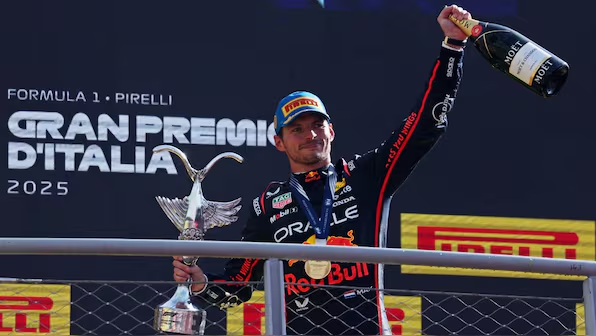
Max Verstappen Takes Pole Position At The Italian Grand Prix With Dominant Display
A Statement at Monza The Italian Grand Prix saw Max Verstappen carry on with his unstoppable domination of Formula 1 by taking pole position. The Red Bull driver once again demonstrated why he is regarded as the man to beat this season with a combination of sheer speed and perfect performance around the high-speed temple of speed in Monza. Not only does the outcome emphasize the increasing familiarity of Verstappen with all types of circuits but it also preconditions another historic weekend in his championship struggle. To the spectators crowded in the grandstands, the session was full of tension, drama, and glimpses of brilliance. Ferrari was hoping to take on Red Bull on its own soil, but it was Verstappen who stole the show with a scorching lap, which demonstrated his dominance. Verstappen’s Perfect Lap Monza is always a special challenge to qualify for. The circuit rewards a straight-line speed but requires accuracy using the chicanes and the famous Parabolica. Verstappen was able to provide the lap that was both aggressive and controlled, exploiting every corner exit to the fullest and making the most of Red Bull efficiency. His last effort was a masterpiece of concentration. Breaking the line, the timing screens illuminated with Verstappen taking the first position, sending a signal not only to Ferrari but to the whole grid. It was not merely a lap about raw speed but also a lap of confidence of a driver who is working at the maximum of his capability. Ferrari’s Home Struggles In the case of Ferrari, the Italian Grand Prix is the most significant event in a year. The rabid Tifosi crowd Monza in red, in hope of seeing their heroes in action. But again, the crew was a step behind Verstappen and Red Bull. Charles Leclerc drove it to the limit and was able to qualify towards the sharp end, but the difference to Verstappen was noticeable. Carlos Sainz too performed well, but the failure of Ferrari to keep pace with the consistency and straight-line speed of Red Bull cost the company. As the audience cheered their drivers, frustration also prevailed that Ferrari does not have the equipment to compete with Red Bull on the same level. Rivals Left Chasing Mercedes and McLaren were left to fight over the remaining positions behind Red Bull and Ferrari. Lewis Hamilton got the best out of his car but acknowledged that the team has yet to achieve balance in circuits with the characteristics of Monza. George Russell also performed consistently, but neither of the Mercedes drivers could endanger the first row. McLaren demonstrated glimpses of speed, and Lando Norris kept impressing in qualifying. His skill to take the car to the limit has been a common theme throughout this season, and once again he proved why he is considered a future star. Nevertheless, the lap of Verstappen put him in another world with the rest. Verstappen’s Monza Mission The Monza pole position has a particular meaning. The circuit has seen legends write their names in the books of Formula 1, and Verstappen is keen to write his own book. Even though he has already won several races this season, a victory at the home race of Ferrari would be an additional prestige. The Dutch driver has clarified that his emphasis is squarely on results and not records. But with every pole and every victory, he reinvents the history of supremacy in contemporary Formula 1. Another place where he can demonstrate that indefatigable consistency could be Monza. The Pressure on Ferrari As Verstappen is celebrating, Ferrari is confronted with a huge challenge. Fans’ and media expectations are always high at Monza, and anything short of a podium is considered a disappointment. In the case of Leclerc and Sainz, it will be to convert their qualifying positions into a good race performance, even when victory does not seem to be an option. Team principal Frederic Vasseur has emphasized progress, yet the failure of Ferrari to maintain a steady pace in races has been the Achilles heel. The Tifosi are not only passionate but will insist on more than merely effort. Ferrari is under direct pressure to fight at least to the podium. Pole has strategic importance. Starting on pole is not merely a symbolic accomplishment at Monza. The first chicane is frequently determined by the long run, which determines the early form of the race. Red Bull is able to set strategy and pace with Verstappen at the front. One of the best assets of the team has been its excellent tire management and pole position will provide Verstappen with the opportunity to dominate the proceedings at the beginning. But Monza is also characterized by slipstream battles and twists. A clean getaway will be essential, and Verstappen will be mindful of Ferrari’s eagerness to strike in front of their homeland fans. The race is going to be a combination of speed, strategy, and sheer willpower. What It Means to the Championship. The pole further increases the already dominating position of Verstappen in the championship table. Every race weekend is another step to another world title, and Monza is not an exception. His consistency under pressure is unsurpassed, and his capability to suit any circuit makes him an almost invincible force. The remainder of the grid is daunting. Competitors such as Leclerc, Sainz, Hamilton, and Norris keep him at the edge, but Verstappen has talent, machinery, and confidence that keep him ahead of the pack. As the season progresses, each pole and win is one step closer to him winning the title with races to spare. Fan Expectation Before the Race Day. There is no other atmosphere like Monza on the calendar. The fans come with their energy, flags and unwavering passion that resonates throughout the track. The pole by Verstappen may not be what the Tifosi desired, but it has created an interesting competition. Will Ferrari come to the occasion, or will Verstappen quiet the crowd with another masterful performance? Race day promises
