
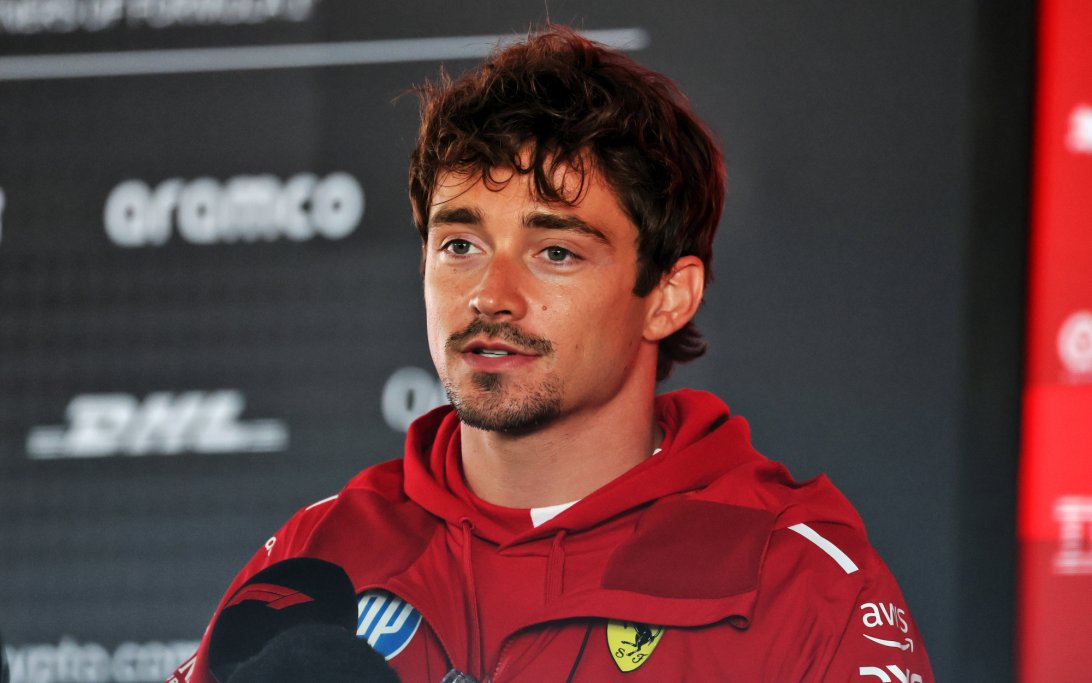
Leclerc’s Challenging Weekend at Zandvoort The Dutch Grand Prix at Zandvoort once again demonstrated how unpredictable the 2025 Ferrari season is, as Charles Leclerc suffered a patchy performance that was interrupted by bursts of brilliance and constant periods of struggle. Although the Monegasque driver has never been slow around the tight and challenging Dutch course, this year’s race became an opportunity and a reminder of the fact that Ferrari still has to fight to remain competitive in the face of the constant speed of Red Bull and McLaren. To Leclerc, Zandvoort was not about winning, but it was about fighting through the odds of the strategy, the balance of the car, and consistency. One circuit that reveals Ferrari as a weak company. The fast and flowing corners and high-banking turns at Zandvoort are notoriously unforgiving, paying off with consistent aerodynamic packages and accurate tire management to the teams. In the case of Ferrari, the circuit again showed the inadequacies of SF-25. Leclerc had issues during practice sessions getting performance out of the softer tire compounds, which has been a bane to Ferrari all season. Although the team made changes, he still was struggling with long stints, as he could not keep the tires alive and could not keep pace with competitors who were more competitive in the race. Leclerc’s Qualifying Brilliance Despite the misfortunes, Leclerc performed one of his typical qualifying efforts, extracting every drop of speed out of the car to earn a decent starting spot. The Monegasque, who has a reputation for getting the most out of a single-lap scenario, was a reminder to fans of why he is considered to be one of the best qualifiers on the grid. His aggressive effort in the final sector with a high speed was especially good, and it helped Ferrari to remain in the competition to get good points even without the capabilities of the car. However, qualifying heroics, as has always been the case in his Ferrari career, did not guarantee race-day success. Race Day Realities for Ferrari Leclerc was tested at the Dutch Grand Prix. The position at the upper part of the grid provided the opportunity to compete for a good result, yet the strategic work of Ferrari was again questioned. A doubtful pit stop call cost him precious track position, and the failure of the team to adapt soon to varying conditions on the track slowed his charge. As competitors such as McLaren and Mercedes implemented cleaner strategies, Leclerc had to catch up and not attack. His impatience towards Ferrari as a result of his tactical errors was evident in the frustration on team radio. Leclerc vs. Ferrari: A Familiar Story This has been the theme of the career of Leclerc since he has been able to do more than Ferrari with the car and be disappointed by its inconsistency. The race at Zandvoort just strengthened this story. Both fans and pundits were eager to make comparisons to the past seasons, where strategic mistakes and a slow development rate at Ferrari prevented Leclerc from using all of his raw talent. Although his fifth-place finish rescued points, it was yet another sign that Ferrari still has a long way to go to catch Red Bull and McLaren and that Leclerc is still being foiled in his championship plans. Fan responses and mounting impatience. Ferrari followers showed their appreciation and dissatisfaction following the Dutch Grand Prix. The media was also awash with applause over the will of Leclerc but also the failure of the team to give him a car that could be in a position to continually challenge at the frontline. Other fans wondered whether Leclerc could start re-evaluating his long-term commitment to Ferrari in case things do not turn around in the near future. Although he has frequently mentioned that he is loyal to the Scuderia, the increasing disconnect between his own ability and the achievements of the team makes the future difficult to anticipate. The Business and Marketing Perspective In a wider sense, the struggles of Leclerc at Zandvoort have an extra-track implication. Ferrari is still one of the most iconic brands in Formula 1, and its competitiveness is directly connected to its global marketability. Every race with both strategy failures and poor performances will undermine the Ferrari image of perfection. Leclerc, being the present and future of the team, is burdened with the task of bearing that brand identity. It is his skill to perform exemplarily in challenging situations that makes Ferrari relevant, but fans and sponsors are also in need of wins, not excuses. The Future of Leclerc and Ferrari. Leclerc took a learning lesson and a setback with the Dutch Grand Prix. Regarding future races, Ferrari needs to overcome its problem of tire degradation, pit stop performance, and long-run performance. Unless things drastically change, the season of Leclerc runs the risk of being characterized by missed opportunities as opposed to victories. The Monegasque is determined to drive the team onwards, yet time is running out as Ferrari demonstrates that it can deliver a car to match his aspiration. Conclusion A Race That Reflects a Career. The Dutch Grand Prix result of Charles Leclerc was a summary of his career with Ferrari—bursts of brilliance spoiled by inherent flaws in the system. Although Zandvoort was by no means the breakthrough moment that the fans had desired, it highlighted his strength and resolve to fight no matter the situation. Until Ferrari can get out of its habitual issues, Leclerc will be burdened by the expectations placed upon him, performing magic at times even when the wins are impossible. So far his work at Zandvoort keeps Ferrari in the game, but the question is, how long can raw talent be used to overcome intractable weaknesses?
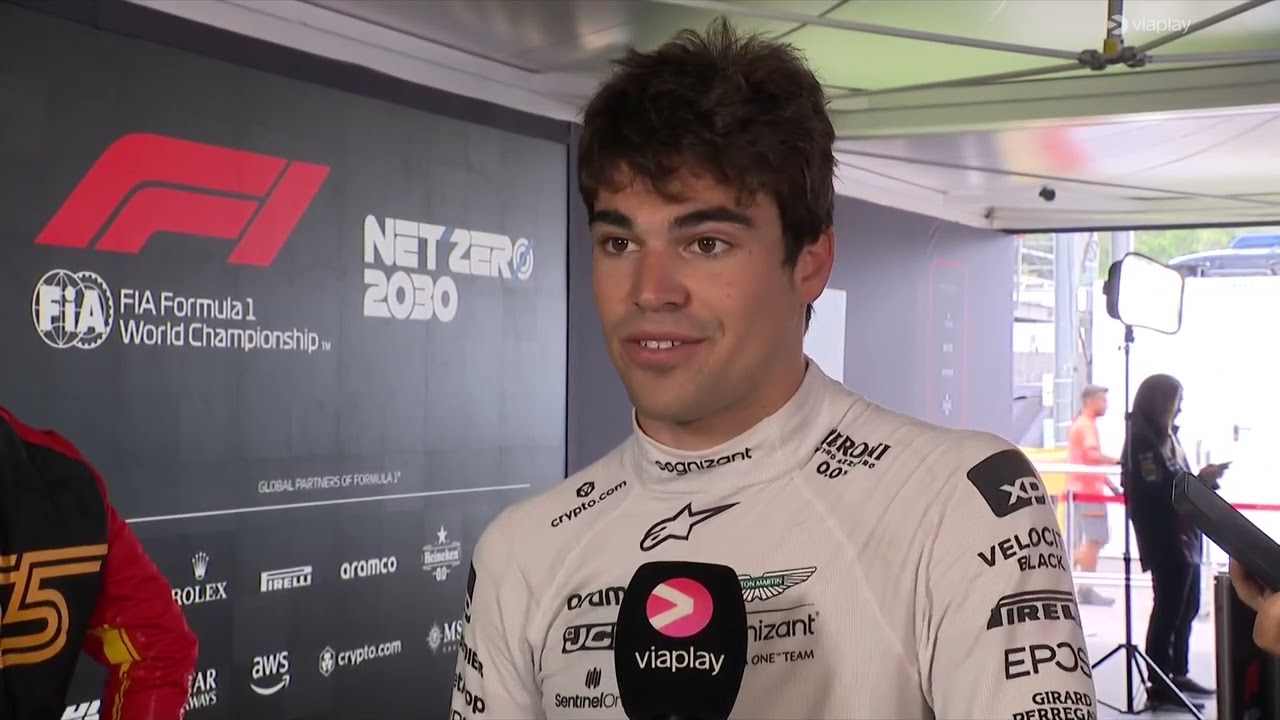
Lance Stroll’s Future In Formula 1: Can the Canadian Silence The Doubters?
A Career Built on Controversy and Potential Ever since joining Formula 1, Lance Stroll has been a lightning rod as far as the debate is concerned. In 2017, the Canadian driver, with the support of the huge resources of his father, Lawrence Stroll, made an entry into the sport with Williams as one of the youngest drivers on the grid. His career has not been a pay-driver story despite the fact that his career was fast-tracked by money support. The podium finish in Baku in his first season with Stroll demonstrated undeniable talent and demonstrated that the youngster could withstand the pressure and perform on one of the most challenging circuits in F1. Nevertheless, the voices of skepticism have never gone away, and critics have cast doubt on whether he is consistent and racecraft-wise enough to qualify as something better than a midfield runner. Life at Aston Martin and the Shadow of Fernando Alonso The transfer of Stroll to Aston Martin, which was mainly led by the ownership of the team by his father, appeared to be the ideal place where Stroll could mature into a stable contender. The entry of two-time world champion Fernando Alonso, however, has changed the dynamics dramatically. The immediate impression of the 2023 season, with immediate podium finishes and slick performances achieved by Alonso, put a microscope on the performance of Stroll. Stroll failed to get the same results as Alonso did with the same machinery. The difference between the two teammates has rekindled the debate on the position of Stroll in the grid and whether the long-term goals of Aston Martin can actually be dependent on him. Pressure from Within and Beyond the Paddock The story of Stroll is not only about speed but also about image. He is commonly seen by fans and analysts as the embodiment of nepotism in motorsport, irrespective of his bursts of brilliance. This image comes with its own burden, because all his wrongdoings become magnified, whereas all his achievements are considered to be situational. This spotlight is further intensified by the fact of the internal rivalry with Alonso as Aston Martin measures its path as a championship-contending team. Should Aston Martin decide to race regularly against Red Bull, Mercedes, and Ferrari, the team cannot afford to have a performance difference between its drivers. That puts Stroll with the burden of having to demonstrate that he is not just in it due to his name but because of his capacity to compete with the elite. Snatches of Genius Which Cannot Be Missed. Although this has been criticized, it would only be unfair to write off Stroll. He has demonstrated to be a robust performer in the rainy weather, with his pole position at the 2020 Turkish Grand Prix, where he dominated the grid under perilous conditions. His perseverance, speeding through injuries and failures, is also a sign of his desire to be more than a passenger in his father’s project. These bursts of light indicate that the talent is present; the only question is whether he can be able to discover the consistency that is needed to take him out of a midfield story and make him a real contender. Business and Brand: Why Stroll Still Matters On top of the pure performance on the track, Lance Stroll is an active participant in the commercial ecosystem of the F1 project by Aston Martin. His presence ties directly to Lawrence Stroll’s financial investment and long-term vision for both the racing team and the Aston Martin brand. To the sponsors, a Canadian driver in the grid is beneficial to grow F1 popularity in North America, where it has been pushing hard to penetrate the market. This is a strategic component that makes it difficult to talk about the future of Stroll since his worth is not just in the lap time. He embodies continuity, marketability, and a foundation of the ambitions of his father, and he can be sure of his place even in the case of on-track performances that are subject to scrutiny. Looking Toward the Future The future of Stroll’s career will be largely determined by the way he manages the next two seasons. As Aston Martin invests heavily in infrastructure such as a new state-of-the-art factory and a drive towards the most sought-after engineering talent, it is hoped that the results will follow. Alonso cannot single-handedly carry the team, and to compete in championships, Aston Martin will need Stroll to become a stable point scorer and podium contender. The sport is moving into a period of increased competition, and the time for error is minimal. The flexibility of Stroll, his capability to learn under Alonso, and his achievement of consistency will make him be remembered either as a good racer who defied the critics or as a person who had the privilege of a seat. Conclusion: A Crossroads for Lance Stroll The story of Lance Stroll in Formula 1 is still unfolding, but the next few years will determine everything. He possesses the ability to shut down critics, but time is running out to demonstrate it on a regular basis with the world-class standings. The goals set by Aston Martin are high, and in this case, for Stroll, it is to demonstrate that he is capable of lifting up with the team and not to be left behind. Whether he was a real competitor or a driver whose career was dominated by his father, it all depends on his legacy.
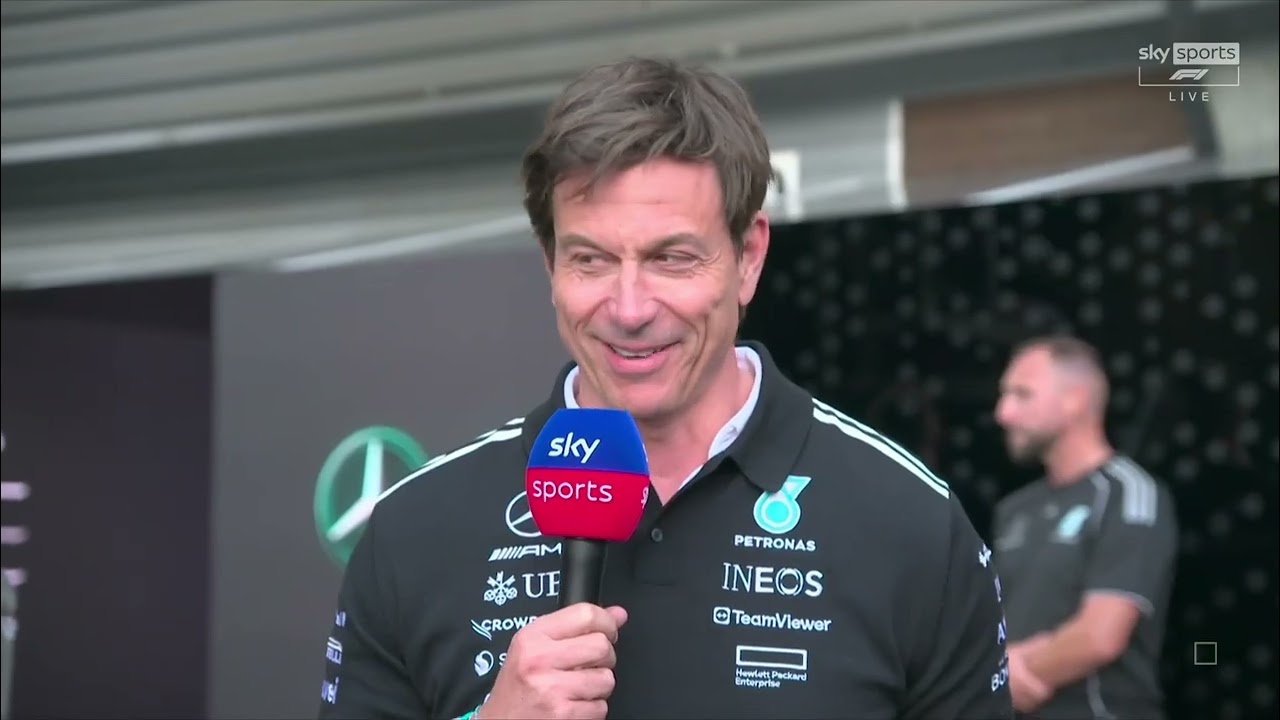
Power Struggles And Mind Games: Toto Wolff Opens Up On His Rivalry With Christian Horner
A Competition that characterizes Modern Formula 1. There is hardly a rivalry in Formula 1 that has gripped viewers as the current battle between the bosses of the Mercedes team Toto Wolff and Red Bull principal Christian Horner. What started as a strategic conflict in the turbo-hybrid era, has since turned into a psychological battle that represents the conflict of two of the most successful operations in F1. Their to and fro exchanges have not only made headlines, but also made the competitive climate of the paddock. Wolff has recently looked back on this competition, and provided some insights into the impact this competition has on the sport, as well as his own management style. A Clash of Philosophies The conflict of philosophies is at the center of the Wolff-Horner rivalry. Wolff, who has a financial and racing background, is a methodological, corporate-based approach, focusing on efficiency, data, and long-term structures. Horner on the other hand adopts a more aggressive, outspoken approach and tends to use the media as a strategic tool to mount pressure on either of the rivals or officials. Their contrasting approaches were most evident in the 2021 season, one of the most scandalous seasons in the history of Formula 1, as Mercedes and Red Bull tore each other apart in the championship. Recent comments by Wolff indicate that he regards the provocations of Horner as a challenge and an opportunity. Although he admitted that the rivalry between them was fierce, Wolff pointed out that competition at the management level is unavoidable in a sport where a tenth of a second matters. But he, too, noted that their interactions sometimes cross the border between healthy competition and personal hatred, a fact that highlights the delicate nature of passion and professionalism in Formula 1. The Rivalry Beyond the Track The feud between Wolff and Horner has passed beyond the subplot of races. It has attracted itself as a spectacle; fans are sucked into the off-track action. Their war of words was enhanced by the Netflix effect via Drive to Survive, which portrayed both Wolff and Horner as the main characters in the modern-day narrative of Formula 1. The soundbites, body language, and confrontations they give bring in an element of theater to complement the racing spectacle. Business-wise, this competition enhances the marketing value of Formula 1. Not only are sponsors, broadcasters, and fans interested in Verstappen versus Hamilton but Wolff versus Horner. The difference between the cool-headed pragmatism of Wolff and the passionate rhetoric of Horner generates stories that the media and fans are eager to attach themselves to. It is an example of the development of Formula 1 into a sports-entertainment hybrid. Fans, Media, and the Paddock The response of the fans to the Wolff-Horner rivalry is highly polarized. The Mercedes fans love the cool attitude and future-thinking of Wolff, whereas the Red Bull ones are fond of Horner bravely telling everyone everything and being ready to defend his crew by all means. In social media, each interaction between the two attracts debate, memes, and discussions that continue to buzz F1 even after the race weekends. In the paddock, though, there is the acceptance of mutual respect. On camera we can see rivalries but in the background Wolff and Horner know that their positions have joint need to be met in terms of the health and development of Formula 1. Team principals are in any case guardians of the image of the sport, and though friction is headlined, cooperation is what guarantees sustainability. Historical Context: Echoes of Past Rivalries The Wolff-Horner rivalry echoes previous managerial feuds in Formula 1. Ron Dennis vs. Frank Williams, Jean Todt vs. Flavio Briatore–this kind of conflict has always been the same as on-track battles and usually characterized periods in the sport. Wolff and Horner in many ways are the new generation of these figures with their brands of competitiveness being introduced to a new world audience. Their rivalry is, however, unlike others in that it is enhanced by the media in the digital era. Any quote, any sarcastic comment, every sideways look is immediately analyzed on the other side of the world. Future Outlook: Can This Rivalry Evolve? Moving forward, the question is whether the Wolff-Horner competition will become even more intense or soothe as Formula 1 discovers a new regulatory environment. Mercedes is still driving to get back to the top, and Red Bull seeks to cement its dominance with Max Verstappen. In the case of Wolff, it takes more than off-track drama to re-establish Mercedes as a title contender. In the case of Horner, keeping Red Bull ahead of the pack and at the same time keeping off competitors implies doubling the efforts of technical perfection as well as psychological warfare. The competition may also take a different form with the entry of new players. The revival of McLaren and the ambitions of Aston Martin might bring new dynamics, but the history of Wolff vs. Horner is not going to disappear. Their opposite strategies have been integrated into the culture of Formula 1, as they are not only the competition of the teams but also the conflict between the corporate rigidity and burning charisma. Rivalry as the Engine of Formula 1 Drama The thoughts of Toto Wolff on his competition with Christian Horner prove once again that many fans know–this is not merely a championship fight. It is a competition that is the nature of Formula 1: competition, drama and the unstopping quest to dominate. Although the cars and drivers will determine what happens on the road, the character of Wolff and Horner will build the story off the road. The Wolff-Horner saga will always be one of the most interesting plots of Formula 1 as long as the sport and spectacle are combined. It entertains the fans, sparks controversy and makes it so that even when the engines are switched off, Formula 1 remains a show.
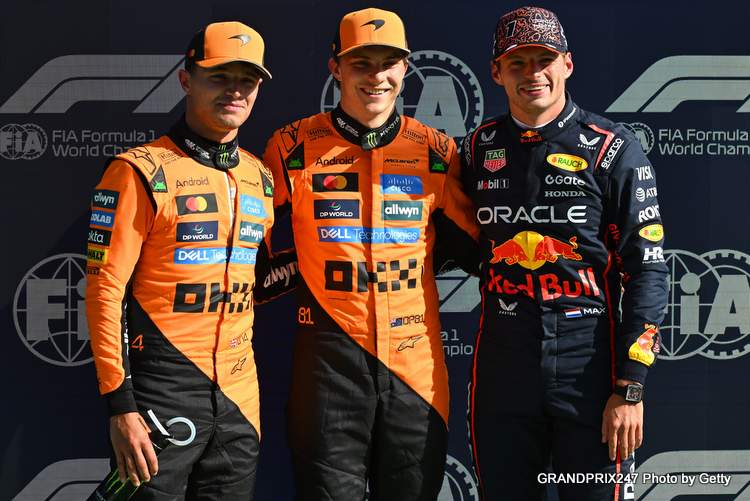
Dutch Grand Prix: Oscar Piastri Claims Fifth Pole Of The Season at Zandvoort
Qualifying drama at Zandvoort. Oscar Piastri won the Dutch Grand Prix pole by the closest of margins over his McLaren teammate Lando Norris, setting a record lap that highlighted just how close the 2025 title battle has now become. The decisive Q3 performance of Piastri resulted in a record time of 1:08.662 and an advantage over Norris by only 0.012 seconds, a margin that will be discussed as much as the actual numbers when the lights are out at the race. The lap was also Piastri’s fifth pole of the season, continuing a trend of free-raw qualifying pace that has continued to place him in good positions to dominate race weekends. Where Piastri got the additional tenths. On Friday and most of Saturday, Norris was the man in the high hand, leading the practice running and displaying great form in mixed conditions in a single lap. Piastri, though, did not attempt to compile the optimal set of exit speeds and mid-corner momentum that Zandvoort requires until the final laps of Q3. The explanations offered by the McLaren team were that they had been working on extracting advantages in certain areas where both drivers had been marginally weak, and Piastri had merely transferred more effectively when it counted. Internal telemetry of his team indicates a razor-thin margin in the last sector, and that margin was sufficient to reverse the script on a weekend that had been mostly Norris to the point of qualifying. Championship and intra-team implications The consequence of this outcome rewrites the immediate picture of the championship, as it enables Piastri to prolong or solidify his lead at the head of the standings based on the result of Sunday. As both McLaren drivers are safely in the lead of the grid, the team has the usual strategic options: to run both cars on the same tire strategy or stagger to maintain the gaps to pass by competitors and guard against early incidents. The intra-team duel in itself has become a two-edged sword to McLaren. On the one hand, the first and second starting of the cars provides the team with the historic opportunity to control the podium; on the other hand, it increases the risk management aspect in the pit lane and clear team orders in case the race would be a chess game and not an open fight. Verstappen, Hadjar, and the wider grid story Home favorite Max Verstappen only made third place at qualification, which cheered the home fans, but the fact that the young Isack Hadjar made fourth place underlined that Zandvoort is unpredictable when the setup and wind conditions are favorable to a team. The existence of seven different teams in the top ten indicates the spread of the competition this season and that the race might not be a two-horse race. The importance of those grid positions is that Zandvoort is a tight, wavy circuit in which passing is challenging in some areas and where clean, uninterrupted stints are rewarded. There are also the presence of good midfield runners in front of the pack, which implies that strategy and tire windows will probably decide who will be in which position under the checkered flag. Race outlook: tires, wind, and the art of track position Zandvoort is a race circuit that penalizes errors and rewards positioning. The wavy kerbing, the accelerated, sightless crests, and the near proximity of walls imply that an early-pacing driver can compel competitors into inefficient stints of tire or defensive fuel schedules. The teams will be comparing one-stop versus two-stop calculus in the backdrop of ambient temperatures and varying winds that have already influenced lap times over the weekend. McLaren should strike a balance between the raw benefit of being on the front row and the strategic necessity not to put themselves in a position where both cars are left behind by undercut or overcut variations. In the meantime the competitors with a higher long-run rate will be wishing to take advantage in case the McLarens have to deal with traffic or tire graining. This renders the initial laps and the timing of the initial stops the critical chapters of the afternoon. Conclusion: small margins, big consequences The pole of Piastri at Zandvoort reminds us that in this season of championship, tenths count as much as talent. Not only does winning the track record lap and transforming it into a fifth pole of the campaign give Piastri the much-needed confidence but also it compels McLaren and their competition to sharpen every strategic pencil before the race. Zandvoort will put the management of tires, the behavior of the pit lane, and the psychological boundaries of inter-team competition to the test. Provided that Piastri can turn this qualifying performance into a productive race without using unwarranted aggression, he will have made a giant leap in extending his lead. Should the race get messy, then this thin slice of grid might be the difference in a championship that is being decided, more than ever, by the finest of margins.
