
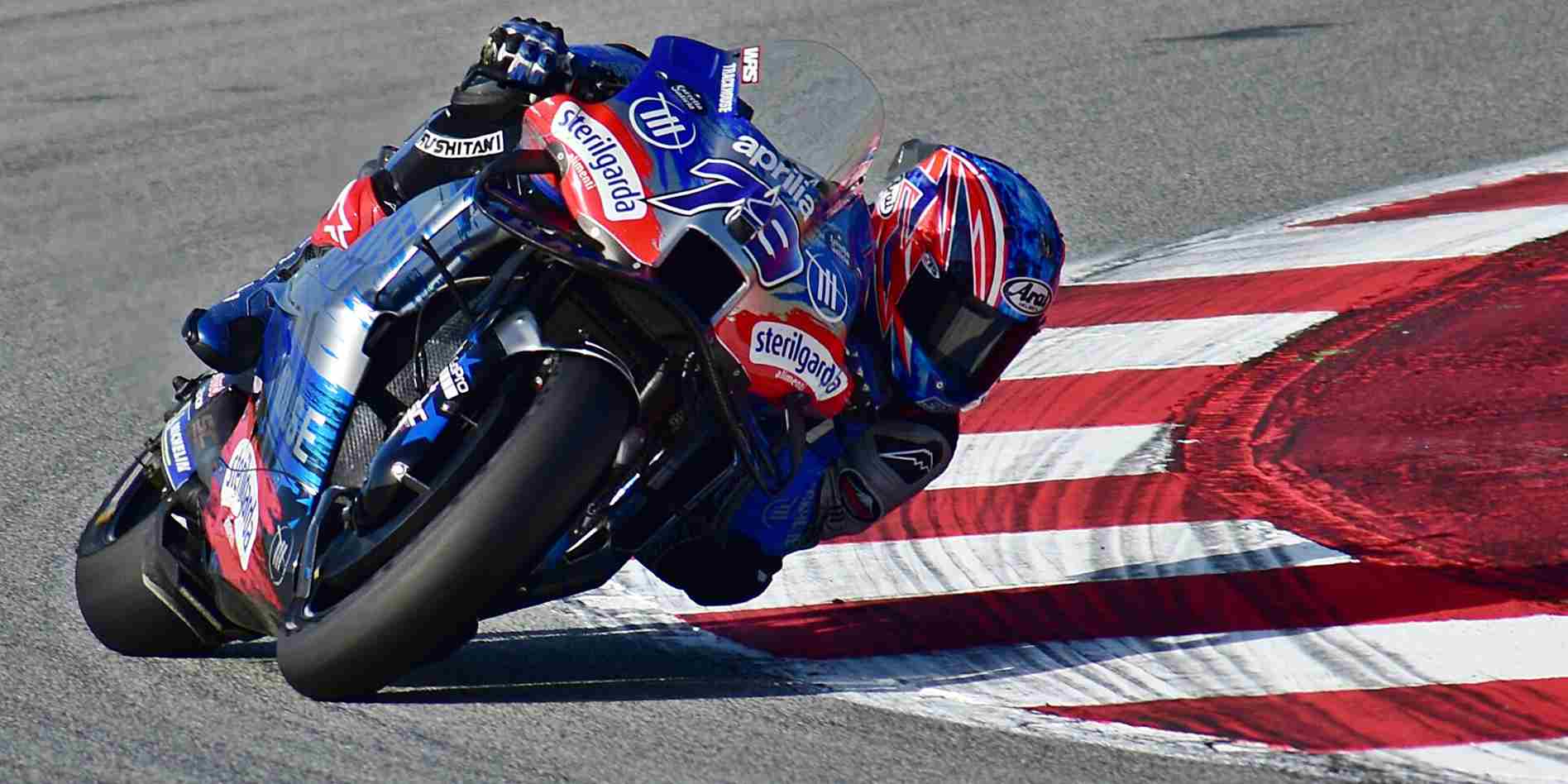
While MotoGP continues to go forward, the requirement for newer, recognizable talent that can cause excitement and give a new dynamic to the grid is unquenchable. One such promising young gun is Ai Ogura — a young Japanese talent whose eyes have been caught by one of the most talked-about teams, Trackhouse Racing, aside from its ambitious plans and bold decisions. With the 2025 season looming, Trackhouse has gambled big on Ogura, hoping he may be that disruptor MotoGP so badly needs to break the status quo. In this piece, we examine why Trackhouse Racing is banking on Ogura’s potential to move the needle in MotoGP. We look at his rise through the ranks, the strategic moves of Trackhouse, and the wider ramifications this deal has on the sport. Is Ogura the spark MotoGP needs to bring new excitement and competitiveness? That’s what we’re here to find out, as we delve into this article. Ai Ogura – Who is He? The Rise of a Promising Talent Ai Ogura is no stranger to motorcycle racing enthusiasts. Born in Tokyo, Japan, in 2001, Ogura’s urge to ride on wheels seemed to come right from an early age, with his natural affinity for speed and skill apparent to all. He started competing from the early junior and national championships, and then worked his way up with ease through their ranks, showing great talent and a calm, focused racing style. 1. Early Career and Breakthrough in Moto3 Ogura’s professional career got underway in the Moto3 World Championship with Honda Team Asia in 2019. Performances were consistent and continually improving in nature, soon catching the eye in the paddock. Moto3 Rising Star: In his first season, Ogura was 10th overall but managed to go toe-to-toe with the more experienced riders in the field. By 2020, he had established himself as a title contender, finishing the season as runner-up with podium finishes that underlined growing maturity and race-craft. Riding style traits: Ogura’s riding style can be termed smooth and full of precision. While others around him may be more aggressive, he depends on positioning and strategically calculated moves to come out ahead during races. Many reviewers have been particularly impressed with his tire wear management and the respective changeability of conditions. 2. The Transition to Moto2: Prove His Mettle The successful performance of Ogura in Moto3 saw him graduate to the Moto2 World Championship in 2021, where his skill and adaptability continued to wow. The immediate impact of Ogura’s transition into Moto2 was all one could wish for, as he put himself in the leading pack right away. By the 2022 season, Ogura managed to claim his first-ever victory in Moto2, confirming his reputation as one of the brightest stars in prospects. His performances were underlined by composure and maturity beyond his age. Pivotal Year: The 2023 season has been a real breakthrough for Ogura in Moto2, battling consistently for podiums and wins. His ability to mix it up with the established star names of the class demonstrated his readiness for the next step in his career. Trackhouse Racing: The Ambitious New Entrant in MotoGP Trackhouse Racing is better known across the NASCAR world, though it has recently made headlines with the announcement of plans for expansion into MotoGP. The team was founded by Justin Marks and is co-owned by the musical superstar Pitbull. True to expectations, Trackhouse Racing has been anything but conventional in its approach and strategies, bucking traditional motorsport norms. 1. Trackhouse’s Vision for MotoGP Trackhouse’s venture into MotoGP is wide-reaching in the motorsport arena, hence diversification and extension of its motorsport footprint. The team, originating from American racing turf, does have a few fresh perspectives to bring to MotoGP based on its unique branding, innovation, and technique in engaging with the fans. Trackhouse’s New Approach: The goal for Trackhouse now is to bring this creative and dynamic approach into MotoGP, implementing experience that has helped to build a brand in NASCAR to a global audience, focusing on entertainment, digital content, and fan engagement — all areas where already some success has been achieved by this team in other disciplines. An Eye for Talent: The signing of Ai Ogura is a reflection of the commitment from Trackhouse in nurturing new talent, while also believing in the shake-up this younger rider is bound to make to the hierarchy MotoGP has. This team is gambling on Ogura’s abilities to stir up a challenge against the established stars and give a fresh storyline to the sport. 2. Why Ogura? A Strategic Move Ogura is a little bit of a risk for Trackhouse to choose as its lead rider, but it is one they feel will be well rewarded. There is a combination of elements making Ogura actually a hot property for a team looking to stir things up in MotoGP. Youth and Potential: Ogura is only 24 years old, meaning he is still in the early stage of his career with much room for growth and development. His youth fits into their strategy of investing in the future and teambuilding around a rider who can develop into a star. Proven Talent: Ogura has already proved he has the talent to see him compete at the highest level of motorcycle racing. Performances in Moto2, where he has shown to learn quickly and adapt to challenges, suggest that he is ready for MotoGP. Cultural and Market Appeal: Ogura’s Japanese descent also benefits MotoGP in its effort to further push the series in the Asian market, considered a dramatically important growth location for the sport. Japan has a rich history in motorcycle racing, and having a young Japanese talent in a prominent team probably will boost interest and viewership in the region. The Potential Impact Ogura’s Arrival Might Have on MotoGP Ogura’s entry to MotoGP on Trackhouse Racing may have considerable implications, not only for the rider himself but for the sport as a whole. That said, here’s why Ogura could be that much-needed game-changer for MotoGP: 1.

F1’s Most Heated Rivalries: What The 2024 Season Had In Store for Fans
Rivalries are the lifeblood of Formula 1, giving events an air of personal drama and often far greater levels of excitement that transcend even the sport itself. From legendary clashes involving Ayrton Senna and Alain Prost through the intense battles of Lewis Hamilton and Nico Rosberg, he remembers how rivalries shaped F1’s history and captured the imagination of worldwide fans. This is no different for the 2024 season, where a new cast of heated rivalries will look to define the fight for this year’s Championship. As teams and drivers push for every advantage possible, these rivalries are poised to create some of the compelling stories of the season. With the following article deep-diving into the hottest 2024 F1 rivalries this season, it takes a look at the background and key flashpoints of each before turning its attention to the implications those might have for the championship fight. From daredevil veterans rekindling old grudges to fresh-faced youngsters stirring the pot, these will be pivotal in the on-track battles, as well as laying threads through the narrative atmosphere of the whole season. 1. Max Verstappen vs. Lewis Hamilton: A Showdown Reborn Max Verstappen and Lewis Hamilton have been the protagonists of one of the most intense rivalries in recent F1 history. Their 2021 championship battle was one for the ages, culminating in a quite controversial final race in Abu Dhabi. While Verstappen has since emerged as the dominant force in F1, Hamilton’s resurgence in 2024 has re-ignited their rivalry, setting the stage for another thrilling chapter in their ongoing saga. A. History of the Rivalry The contrast marking them out as the Verstappen-Hamilton rivalry is one of contrasts in style and personality. Verstappen is the brash young Dutchman, never backward in coming forward and often pushing the limits on track to the bare limits of what can be considered aboveboard. Hamilton is the crafty, seven-time world champion who knows well how to mix incredible skills with calculation. Often enough, their collision course is riddled with high-octane drama and sprinkled with controversy. Past Flashpoints: The 2021 season was the height of their rivalry that featured several incidents on the track, with crashes at both Silverstone and Monza. These teed up a narrative of mutual distrust, intense competition that has trickled into subsequent seasons, even as Verstappen pulled ahead in the championship standings. B. 2024 Season: A New Battleground A rivalry that had only recently started to dissipate at the commencement of the 2024 season, Hamilton and Mercedes managed to close that gap to Verstappen and Red Bull, and the rest is history. Both drivers have won races, so the championship fight is shaping up to be a tightly contested one. Early in the 2024 Season Tension: The tension between Verstappen and Hamilton has already been conspicuous in the early races of 2024. A notable incident at the Spanish Grand Prix, where the two made contact while battling for the lead, reminded fans of the fiery nature of their rivalry. While neither driver backed down, both were quick to point fingers, blaming each other for the clash. Mind Games: The rivalry also played itself off the track with strategic mind games. Verstappen often criticized Mercedes’ pit wall for their strategy calls, while Hamilton had subtle digs at Red Bull’s aggressive approach. This, all in itself, is another layer added to the psychological game between these two as each driver tries to gain an edge wherever possible. C. Impact on the Championship This isn’t just a personal Verstappen-Hamilton rivalry that has carried over into 2024, but also one that’s going to be key in the fight for this year’s title, with both drivers capable of fighting for wins and, ultimately, the championship. Tensions of the Championship: Literally, every battle between Verstappen and Hamilton on track is a potential flashpoint, with collisions or even strategic mistakes that can affect the tide of the drivers’ and constructors’ championships. As the season keeps on going, so do the stakes; with every race comes another opportunity to win some valuable points or to kill that advantage. Team Dynamics: The rivalry also extends into the team dynamic, particularly in Mercedes, because Hamilton’s teammate is Charles Leclerc, who has shown very strong pace. Therefore, managing internal competition between Hamilton and Leclerc will be crucial as Mercedes seeks to challenge the dominance of Red Bull. 2. Charles Leclerc vs. Carlos Sainz: Team-mates Turned Rivals The partnership at Ferrari has been one where both Charles Leclerc and Carlos Sainz respect and collaborate with each other. However, with both drivers set on leading Ferrari in their quest for a championship, the relationship between them has grown into one more rivalry than before. A full-blow rivalry came into being in preparation for the 2024 season, each pushing others to the limit. A. History of the Rivalry Teaming up at Ferrari in 2021, Leclerc and Sainz rapidly set into place one of the most balanced and powerful partnerships on the grid. Complementary in driving style and evoking mutual respect, Ferrari was able to rebuild with them and recover competitiveness. But as Ferrari’s performances went up, so too did the stakes for the two drivers vying for top dog at the Italian outfit. Past seasons: With a few minor exceptions, Leclerc and Sainz have steered clear of direct disagreement to this point, instead throwing their collective energies into helping Ferrari climb back towards the front of the grid. For all that, the odd on-track spat and disagreement over strategy calls in sunlight betrayed how there was teak-tough competitiveness lurking just beneath the surface. B. The 2024 Season-Where the Rivalry Gets Much Hotter This has moved the tussle in the competition between Leclerc and Sainz to the forefront going into the 2024 season, with each driver angling for favor with the team to set him up with the best chance for a championship challenge. Same Tools, Different Results: With similar machinery for both drivers, their results have often been different in the fact that Leclerc has usually
F1’s Most Heated Rivalries: What The 2024 Season Had In Store for Fans
Rivalries are the lifeblood of Formula 1, giving events an air of personal drama and often far greater levels of excitement that transcend even the sport itself. From legendary clashes involving Ayrton Senna and Alain Prost through the intense battles of Lewis Hamilton and Nico Rosberg, he remembers how rivalries shaped F1’s history and captured the imagination of worldwide fans. This is no different for the 2024 season, where a new cast of heated rivalries will look to define the fight for this year’s Championship. As teams and drivers push for every advantage possible, these rivalries are poised to create some of the compelling stories of the season. With the following article deep-diving into the hottest 2024 F1 rivalries this season, it takes a look at the background and key flashpoints of each before turning its attention to the implications those might have for the championship fight. From daredevil veterans rekindling old grudges to fresh-faced youngsters stirring the pot, these will be pivotal in the on-track battles, as well as laying threads through the narrative atmosphere of the whole season. 1. Max Verstappen vs. Lewis Hamilton: A Showdown Reborn Max Verstappen and Lewis Hamilton have been the protagonists of one of the most intense rivalries in recent F1 history. Their 2021 championship battle was one for the ages, culminating in a quite controversial final race in Abu Dhabi. While Verstappen has since emerged as the dominant force in F1, Hamilton’s resurgence in 2024 has re-ignited their rivalry, setting the stage for another thrilling chapter in their ongoing saga. A. History of the Rivalry The contrast marking them out as the Verstappen-Hamilton rivalry is one of contrasts in style and personality. Verstappen is the brash young Dutchman, never backward in coming forward and often pushing the limits on track to the bare limits of what can be considered aboveboard. Hamilton is the crafty, seven-time world champion who knows well how to mix incredible skills with calculation. Often enough, their collision course is riddled with high-octane drama and sprinkled with controversy. Past Flashpoints: The 2021 season was the height of their rivalry that featured several incidents on the track, with crashes at both Silverstone and Monza. These teed up a narrative of mutual distrust, intense competition that has trickled into subsequent seasons, even as Verstappen pulled ahead in the championship standings. B. 2024 Season: A New Battleground A rivalry that had only recently started to dissipate at the commencement of the 2024 season, Hamilton and Mercedes managed to close that gap to Verstappen and Red Bull, and the rest is history. Both drivers have won races, so the championship fight is shaping up to be a tightly contested one. Early in the 2024 Season Tension: The tension between Verstappen and Hamilton has already been conspicuous in the early races of 2024. A notable incident at the Spanish Grand Prix, where the two made contact while battling for the lead, reminded fans of the fiery nature of their rivalry. While neither driver backed down, both were quick to point fingers, blaming each other for the clash. Mind Games: The rivalry also played itself off the track with strategic mind games. Verstappen often criticized Mercedes’ pit wall for their strategy calls, while Hamilton had subtle digs at Red Bull’s aggressive approach. This, all in itself, is another layer added to the psychological game between these two as each driver tries to gain an edge wherever possible. C. Impact on the Championship This isn’t just a personal Verstappen-Hamilton rivalry that has carried over into 2024, but also one that’s going to be key in the fight for this year’s title, with both drivers capable of fighting for wins and, ultimately, the championship. Tensions of the Championship: Literally, every battle between Verstappen and Hamilton on track is a potential flashpoint, with collisions or even strategic mistakes that can affect the tide of the drivers’ and constructors’ championships. As the season keeps on going, so do the stakes; with every race comes another opportunity to win some valuable points or to kill that advantage. Team Dynamics: The rivalry also extends into the team dynamic, particularly in Mercedes, because Hamilton’s teammate is Charles Leclerc, who has shown very strong pace. Therefore, managing internal competition between Hamilton and Leclerc will be crucial as Mercedes seeks to challenge the dominance of Red Bull. 2. Charles Leclerc vs. Carlos Sainz: Team-mates Turned Rivals The partnership at Ferrari has been one where both Charles Leclerc and Carlos Sainz respect and collaborate with each other. However, with both drivers set on leading Ferrari in their quest for a championship, the relationship between them has grown into one more rivalry than before. A full-blow rivalry came into being in preparation for the 2024 season, each pushing others to the limit. A. History of the Rivalry Teaming up at Ferrari in 2021, Leclerc and Sainz rapidly set into place one of the most balanced and powerful partnerships on the grid. Complementary in driving style and evoking mutual respect, Ferrari was able to rebuild with them and recover competitiveness. But as Ferrari’s performances went up, so too did the stakes for the two drivers vying for top dog at the Italian outfit. Past seasons: With a few minor exceptions, Leclerc and Sainz have steered clear of direct disagreement to this point, instead throwing their collective energies into helping Ferrari climb back towards the front of the grid. For all that, the odd on-track spat and disagreement over strategy calls in sunlight betrayed how there was teak-tough competitiveness lurking just beneath the surface. B. The 2024 Season-Where the Rivalry Gets Much Hotter This has moved the tussle in the competition between Leclerc and Sainz to the forefront going into the 2024 season, with each driver angling for favor with the team to set him up with the best chance for a championship challenge. Same Tools, Different Results: With similar machinery for both drivers, their results have often been different in the fact that Leclerc has usually

How Energy-Based Fuel Flow Measurement Will Impact F1 in 2025
The introduction of power-unit-based fuel flow in Formula 1 (F1) is an evolutionary change in the way in which the sport is approaching performance, sustainability, and competition. While this change is to be adopted in full by 2026, in 2025 it is to have an impact in expectation of this change. This article explains the implications of this change and in what ways this can shape the future trajectory of F1. What is energy-based flow metering? Energy-Based Flow Meter The conventional rules have thus far limited fuel consumption by restricting the top mass flow rate of fuel. From next year, starting in 2026, F1 is adopting an energy-limiting flow of fuel. This means that in lieu of controlling by weight the amount of fuel, the sport is controlling the overall energy content delivered to an engine during an outing. This is taking differences in fuels, including sustainable fuels, which have varying energy densities compared to traditional fossil fuels, into consideration. It is in alignment with overall objectives in F1 to minimize carbon emissions and be more sustainable while providing ultimate performance. Encouragement to be mindful of energy rather than mass drives combustion and fuel efficiency development. The key aspects of energy-based regulation Fuel Options: Under this regulation, fully sustainable fuels can be employed that have been derived from non-food sources, municipal solid waste, or captured atmospheric carbon. These fuels should not have detrimental impacts upon performance while achieving net-zero carbon emissions. Energy Efficiency: All competitors shall have to design their engines to achieve optimum efficiency in order to obtain the highest power while minimizing energy consumption to an absolute degree. Hybrid systems: As power increasingly depends upon electricity—tripling to 350 kW from 120 kW—it will call for improved energy-harvesting and storing systems. Impact on Sustainability 1. Transition to Sustainable Fuels One of the most significant impacts of energy-based fuel flow measurement is its compatibility with fully sustainable fuels. From 2026, F1 cars will run on synthetic e-fuels derived from non-food sources, municipal waste, or even carbon captured from the atmosphere. These fuels aim to achieve net-zero carbon emissions without sacrificing performance. These teams can design their engines to operate efficiently with these novel fuels by controlling energy rather than mass to achieve optimum power while minimizing negative impacts to the environment. This can have implications in the motor vehicle sector overall by facilitating accelerated development and uptake of green fuels. 2. Mitigating Carbon Footprints F1 transcends mere fuel types in support of sustainability. It is aiming to achieve net-zero by 2030 through reducing emissions in transportation, circuit power consumption, and in-team operation. Energy-derived fuel flow measurements form part of this process because this is in accordance with global action against climatic change. Innovations in 3. Engine Efficiency Fuel flow limitations by energy will compel teams to maximize engine efficiency. Current hybrids have been in the range of about 50% engine design thermal efficiencies, making these among the most efficient internal combustion vehicles ever created. Under future rules, combustion processes, turbo systems, and hybrids will have to be optimized by teams. For example: The deletion of the MGU-H (Motor Generator Unit—Heat) is making power units easier to handle but is putting additional stress on energy recuperation through braking (MGU-K). The increased reliance upon electric power—forecast to go to three times, to 350 kW from 120 kW—will draw upon better power-harvesting and storing systems. 4. Energy Deployment & Energy Harvesting Energy recovered during braking is to be doubled in accordance with rules to allow cars to recover up to 8.5 megajoules in every lap. This recovered energy can be employed tactically to overtake or gain lead positions, bringing an additional layer of tactical sophistication to races. 5. Battery Technology The increased electrical power output necessitates advancements in battery technology. Teams will focus on developing high-performance batteries that can efficiently store and release energy without overheating or degrading. This could lead to breakthroughs in battery technology that benefit both F1 and the broader automotive industry. Competitive dynamics 6. Leveling the Playing Field Fuel flow measurements in an energy-based system can equalize things among squads. Setting an overall energy consumption threshold in place of an absolute quantity of fuel can allow squads with fewer resources to compete equally with superior-equipped conventional powerhouses. In addition to this, making things like batteries standardized and capping dyno testing time will keep development prices down while making innovation accessible to every team. 7. Strategic Complexity The system poses strategic problems both to drivers and to teams: Conserving energy during the duration of a race is key. Drivers may have to change driving habits in order to realize optimum energy recuperation while braking. The teams should develop advanced algorithms to balance energy distribution to realize optimum performance while not exceeding thresholds. 8. Driving Skills and Flexibility The increased emphasis on energy management will stress driving ability and adjustability. Those who can manage energy efficiently while carrying pace will have an additional competitive edge. This can lead to improved racing tactics and greater emphasis placed upon driving ability. Challenges and Risks 9. Reliability Problems The increased dependence upon electric systems and renewable fuels can have reliability issues: High-performance batteries must withstand tough conditions without overheating or degrading. Synthetic fuels must operate in an identical manner in varying temperatures and pressures. The squads will have to invest heavily in testing and development in order to mitigate these threats before full introduction in 2026. 10. Learning Curve The transition phase in 2025 is certain to have a steep learning curve in which power units and tactics have to be accommodated to match new rules. First movers who quickly get to grips with these changes can have an advantage. 11. Cost Implications While cost savings through economies in standardized items and testing are part of the purpose behind these new regulations, an initial investment in emerging technologies can be prohibitive. Organizations will have to balance cost management with innovation in order to compete. Broader Implications 12. Road Relevance F1 has been used
How Energy-Based Fuel Flow Measurement Will Impact F1 in 2025
The introduction of power-unit-based fuel flow in Formula 1 (F1) is an evolutionary change in the way in which the sport is approaching performance, sustainability, and competition. While this change is to be adopted in full by 2026, in 2025 it is to have an impact in expectation of this change. This article explains the implications of this change and in what ways this can shape the future trajectory of F1. What is energy-based flow metering? Energy-Based Flow Meter The conventional rules have thus far limited fuel consumption by restricting the top mass flow rate of fuel. From next year, starting in 2026, F1 is adopting an energy-limiting flow of fuel. This means that in lieu of controlling by weight the amount of fuel, the sport is controlling the overall energy content delivered to an engine during an outing. This is taking differences in fuels, including sustainable fuels, which have varying energy densities compared to traditional fossil fuels, into consideration. It is in alignment with overall objectives in F1 to minimize carbon emissions and be more sustainable while providing ultimate performance. Encouragement to be mindful of energy rather than mass drives combustion and fuel efficiency development. The key aspects of energy-based regulation Fuel Options: Under this regulation, fully sustainable fuels can be employed that have been derived from non-food sources, municipal solid waste, or captured atmospheric carbon. These fuels should not have detrimental impacts upon performance while achieving net-zero carbon emissions. Energy Efficiency: All competitors shall have to design their engines to achieve optimum efficiency in order to obtain the highest power while minimizing energy consumption to an absolute degree. Hybrid systems: As power increasingly depends upon electricity—tripling to 350 kW from 120 kW—it will call for improved energy-harvesting and storing systems. Impact on Sustainability 1. Transition to Sustainable Fuels One of the most significant impacts of energy-based fuel flow measurement is its compatibility with fully sustainable fuels. From 2026, F1 cars will run on synthetic e-fuels derived from non-food sources, municipal waste, or even carbon captured from the atmosphere. These fuels aim to achieve net-zero carbon emissions without sacrificing performance. These teams can design their engines to operate efficiently with these novel fuels by controlling energy rather than mass to achieve optimum power while minimizing negative impacts to the environment. This can have implications in the motor vehicle sector overall by facilitating accelerated development and uptake of green fuels. 2. Mitigating Carbon Footprints F1 transcends mere fuel types in support of sustainability. It is aiming to achieve net-zero by 2030 through reducing emissions in transportation, circuit power consumption, and in-team operation. Energy-derived fuel flow measurements form part of this process because this is in accordance with global action against climatic change. Innovations in 3. Engine Efficiency Fuel flow limitations by energy will compel teams to maximize engine efficiency. Current hybrids have been in the range of about 50% engine design thermal efficiencies, making these among the most efficient internal combustion vehicles ever created. Under future rules, combustion processes, turbo systems, and hybrids will have to be optimized by teams. For example: The deletion of the MGU-H (Motor Generator Unit—Heat) is making power units easier to handle but is putting additional stress on energy recuperation through braking (MGU-K). The increased reliance upon electric power—forecast to go to three times, to 350 kW from 120 kW—will draw upon better power-harvesting and storing systems. 4. Energy Deployment & Energy Harvesting Energy recovered during braking is to be doubled in accordance with rules to allow cars to recover up to 8.5 megajoules in every lap. This recovered energy can be employed tactically to overtake or gain lead positions, bringing an additional layer of tactical sophistication to races. 5. Battery Technology The increased electrical power output necessitates advancements in battery technology. Teams will focus on developing high-performance batteries that can efficiently store and release energy without overheating or degrading. This could lead to breakthroughs in battery technology that benefit both F1 and the broader automotive industry. Competitive dynamics 6. Leveling the Playing Field Fuel flow measurements in an energy-based system can equalize things among squads. Setting an overall energy consumption threshold in place of an absolute quantity of fuel can allow squads with fewer resources to compete equally with superior-equipped conventional powerhouses. In addition to this, making things like batteries standardized and capping dyno testing time will keep development prices down while making innovation accessible to every team. 7. Strategic Complexity The system poses strategic problems both to drivers and to teams: Conserving energy during the duration of a race is key. Drivers may have to change driving habits in order to realize optimum energy recuperation while braking. The teams should develop advanced algorithms to balance energy distribution to realize optimum performance while not exceeding thresholds. 8. Driving Skills and Flexibility The increased emphasis on energy management will stress driving ability and adjustability. Those who can manage energy efficiently while carrying pace will have an additional competitive edge. This can lead to improved racing tactics and greater emphasis placed upon driving ability. Challenges and Risks 9. Reliability Problems The increased dependence upon electric systems and renewable fuels can have reliability issues: High-performance batteries must withstand tough conditions without overheating or degrading. Synthetic fuels must operate in an identical manner in varying temperatures and pressures. The squads will have to invest heavily in testing and development in order to mitigate these threats before full introduction in 2026. 10. Learning Curve The transition phase in 2025 is certain to have a steep learning curve in which power units and tactics have to be accommodated to match new rules. First movers who quickly get to grips with these changes can have an advantage. 11. Cost Implications While cost savings through economies in standardized items and testing are part of the purpose behind these new regulations, an initial investment in emerging technologies can be prohibitive. Organizations will have to balance cost management with innovation in order to compete. Broader Implications 12. Road Relevance F1 has been used
