

The 1994 Formula One season has gone down in history as one of the most scandalous, with the Benetton team right at the center of a storm of allegations that overshadowed their quite brilliant success. It was the year when Benetton, led by the young Michael Schumacher, emerged as a dominant force, but their achievements were tarnished by suspicions of foul play and technical irregularities. This article looks at the different controversies that surrounded Benetton during the 1994 season and highlights incidents that have typified one of the most turbulent seasons of Formula One. The Rise of Benetton and Early Suspicions With Michael Schumacher on board and a car designed by the brilliant Rory Byrne, Benetton went into the 1994 season with high hopes. From the very beginning, the team’s performance raised some eyebrows among both competitors and observers. The Benetton B194 was very quick and handled fantastically well, especially in slow and medium-speed corners, which raised whispers of possible rule-bending. The first concrete allegations arose in the season-opening Brazilian Grand Prix. A really quick pit stop, given to Schumacher, who jumped into the lead from Ayrton Senna, created the suspicion that an illegal system of the team in question had ensured this advantage for their driver during the time of the stops2. As it was going to happen frequently, this situation set the atmosphere for a controversial, accusation-filled year. Traction Control Allegations One of the most persistent accusations against Benetton in 1994 was the use of illegal traction control. Traction control systems had been outlawed for the 1994 season, but suspicion arose that Benetton had found a way around this restriction. The issue came to a head at the Pacific Grand Prix, where Ayrton Senna, forced out of the race due to an early collision, watched the Benetton cars from the sidelines. Senna claimed to have heard an unusual sound emanating from the Benetton engines, especially when exiting corners. To the seasoned Brazilian driver, it sounded very much like the soft misfire associated with traction control. This was achieved with the novel use by Benetton of airbox sensors to approximate the car’s velocity and detect which gear is engaged, allowing them to better employ a power limit strategy. Very clever, but certainly stretching what could legally be considered permissible under the rules. The Launch Control Controversy Inquiries into the safety of cars after the death of Senna at the San Marino Grand Prix made some astonishing revelations. The FIA found code in Benetton’s software that was referred to as “launch control”—a system through which a start of a race could be automated by actuating the clutch, gear shifts, and engine speed to a fixed pattern. Benetton argued that the launch control was used only during testing and would need a recompilation of the code in order to turn it on. They claimed not to have done this at any race, but FIA found out that the launch control could be enabled inside the ECU as an option and had been hidden without needing recompilation. This led to a $100,000 fine for Benetton, but the team escaped more serious punishment since the FIA was unable to prove that the system had actually been used in races. The affair finally spilled over at the French Grand Prix with Schumacher’s phenomenal start from third on the grid to first into the first corner, reigniting accusations of launch control. The Refueling Rig Incident Probably the single most dramatic, visually arresting incident of the 1994 season occurred during the German Grand Prix at Hockenheim when, during a routine pit stop for Jos Verstappen—Benetton’s second driver—a huge fireball erupted as fuel sprayed from the refueling rig onto the hot car. The incident, caught live on television, saw five mechanics and Verstappen himself burned, fortunately none of them seriously. The dramatic nature of the fire saw an immediate investigation launched by the FIA. The investigation discovered the fuel spillage happened as a result of a valve on the refueling rig that hadn’t shut down because it had some form of “foreign body. Crucially, though, it also emerged Benetton had taken a filter off the refueling rig—a device that was supposed to prevent just this form of accident. Benetton’s defense was that the filter was removed following the approval of the FIA’s scrutiny team prior to the German Grand Prix. In any case, however, the absence of the filter raised the flow rate of fuel by 12.5% as estimated, thereby providing Benetton with an advantage in pit stops of a second. This violation came with a $500,000 fine, but the team says the removal of the filter wasn’t an intentional move to gain an advantage. It only seemed to add fodder to the fire built against allegations against Benetton and continued to smear their name even more as questions were posed whether the team valued safety and sportsmanship. The Silverstone Incident and FIA Investigations The British Grand Prix at Silverstone brought more controversy for Benetton and Schumacher. Prior to the start, during the formation lap, Schumacher illegally passed pole-position starter Damon Hill. He was given a five-second stop-and-go penalty, but his team failed to serve it within the requisite three laps. Next came the black flag from the stewards to tell Schumacher to go into the pits and park, but he was kept on track by Benetton, who was having a fight on the phone with Race Director Roland Bruynseraede. These flagrant neglects of instructions resulted in further action and fines being brought. In the weeks after Silverstone, the FIA mounted a full-scale digital inquiry into Benetton’s systems. The team was further fined $100,000 for its delay in revealing the ‘source codes’ for their electronic systems, which the FIA had been requesting since the San Marino Grand Prix. The Impact on the Championship Despite all the controversies and allegations, Michael Schumacher and Benetton won the 1994 World Championship. Schumacher won his maiden Drivers’ Championship while Benetton won the Constructors’ title. However, the events of the season
The 1994 Benetton Allegations
The 1994 Formula One season has gone down in history as one of the most scandalous, with the Benetton team right at the center of a storm of allegations that overshadowed their quite brilliant success. It was the year when Benetton, led by the young Michael Schumacher, emerged as a dominant force, but their achievements were tarnished by suspicions of foul play and technical irregularities. This article looks at the different controversies that surrounded Benetton during the 1994 season and highlights incidents that have typified one of the most turbulent seasons of Formula One. The Rise of Benetton and Early Suspicions With Michael Schumacher on board and a car designed by the brilliant Rory Byrne, Benetton went into the 1994 season with high hopes. From the very beginning, the team’s performance raised some eyebrows among both competitors and observers. The Benetton B194 was very quick and handled fantastically well, especially in slow and medium-speed corners, which raised whispers of possible rule-bending. The first concrete allegations arose in the season-opening Brazilian Grand Prix. A really quick pit stop, given to Schumacher, who jumped into the lead from Ayrton Senna, created the suspicion that an illegal system of the team in question had ensured this advantage for their driver during the time of the stops2. As it was going to happen frequently, this situation set the atmosphere for a controversial, accusation-filled year. Traction Control Allegations One of the most persistent accusations against Benetton in 1994 was the use of illegal traction control. Traction control systems had been outlawed for the 1994 season, but suspicion arose that Benetton had found a way around this restriction. The issue came to a head at the Pacific Grand Prix, where Ayrton Senna, forced out of the race due to an early collision, watched the Benetton cars from the sidelines. Senna claimed to have heard an unusual sound emanating from the Benetton engines, especially when exiting corners. To the seasoned Brazilian driver, it sounded very much like the soft misfire associated with traction control. This was achieved with the novel use by Benetton of airbox sensors to approximate the car’s velocity and detect which gear is engaged, allowing them to better employ a power limit strategy. Very clever, but certainly stretching what could legally be considered permissible under the rules. The Launch Control Controversy Inquiries into the safety of cars after the death of Senna at the San Marino Grand Prix made some astonishing revelations. The FIA found code in Benetton’s software that was referred to as “launch control”—a system through which a start of a race could be automated by actuating the clutch, gear shifts, and engine speed to a fixed pattern. Benetton argued that the launch control was used only during testing and would need a recompilation of the code in order to turn it on. They claimed not to have done this at any race, but FIA found out that the launch control could be enabled inside the ECU as an option and had been hidden without needing recompilation. This led to a $100,000 fine for Benetton, but the team escaped more serious punishment since the FIA was unable to prove that the system had actually been used in races. The affair finally spilled over at the French Grand Prix with Schumacher’s phenomenal start from third on the grid to first into the first corner, reigniting accusations of launch control. The Refueling Rig Incident Probably the single most dramatic, visually arresting incident of the 1994 season occurred during the German Grand Prix at Hockenheim when, during a routine pit stop for Jos Verstappen—Benetton’s second driver—a huge fireball erupted as fuel sprayed from the refueling rig onto the hot car. The incident, caught live on television, saw five mechanics and Verstappen himself burned, fortunately none of them seriously. The dramatic nature of the fire saw an immediate investigation launched by the FIA. The investigation discovered the fuel spillage happened as a result of a valve on the refueling rig that hadn’t shut down because it had some form of “foreign body. Crucially, though, it also emerged Benetton had taken a filter off the refueling rig—a device that was supposed to prevent just this form of accident. Benetton’s defense was that the filter was removed following the approval of the FIA’s scrutiny team prior to the German Grand Prix. In any case, however, the absence of the filter raised the flow rate of fuel by 12.5% as estimated, thereby providing Benetton with an advantage in pit stops of a second. This violation came with a $500,000 fine, but the team says the removal of the filter wasn’t an intentional move to gain an advantage. It only seemed to add fodder to the fire built against allegations against Benetton and continued to smear their name even more as questions were posed whether the team valued safety and sportsmanship. The Silverstone Incident and FIA Investigations The British Grand Prix at Silverstone brought more controversy for Benetton and Schumacher. Prior to the start, during the formation lap, Schumacher illegally passed pole-position starter Damon Hill. He was given a five-second stop-and-go penalty, but his team failed to serve it within the requisite three laps. Next came the black flag from the stewards to tell Schumacher to go into the pits and park, but he was kept on track by Benetton, who was having a fight on the phone with Race Director Roland Bruynseraede. These flagrant neglects of instructions resulted in further action and fines being brought. In the weeks after Silverstone, the FIA mounted a full-scale digital inquiry into Benetton’s systems. The team was further fined $100,000 for its delay in revealing the ‘source codes’ for their electronic systems, which the FIA had been requesting since the San Marino Grand Prix. The Impact on the Championship Despite all the controversies and allegations, Michael Schumacher and Benetton won the 1994 World Championship. Schumacher won his maiden Drivers’ Championship while Benetton won the Constructors’ title. However, the events of the season

The 1976 Japanese Grand Prix Restart Controversy
The 1976 Formula One season had been one of the most dramatic and hotly contested in the sport’s history, with the battle for the championship between Ferrari’s Niki Lauda and McLaren’s James Hunt, in which every turn, on and off the track, kept the fans around the world gasping. Entering the final round at the Fuji Speedway, Lauda held a tenuous 3-point lead over Hunt in the standings. What happened over the next 24 hours would be remembered as arguably one of the most controversial and monumental moments in F1. Treacherous Conditions at Fuji From the moment the cars took to the track for practice, this would be no ordinary race. The Fuji circuit in Japan was enamored with heavy rain and fog, producing conditions on the track nothing short of extremely dangerous to drive in. For the most part, visibility was at a minimum, and much of the track was completely covered with standing water. During practice sessions, many drivers made stern statements concerning how dangerous these conditions would be for racing. It has been stated that the very brave James Hunt mentioned having the race postponed. Nevertheless, due to the large amount of 75,000 in the grandstand and huge crowds from telecasts from different corners of the globe, heavy pressure mounted on race promoters and F-1 officials to run the Grand Prix at its regularly scheduled time. The Controversial Decision to Race The situation hadn’t cleared by race day; if anything, it was raining harder than on the day of arrival. As the official start time came closer, some very hot and heavy debate broke out down pit lane and into race control for a postponement or cancellation of the event. Many drivers felt it was simply too dangerous to race. Emerson Fittipaldi and Carlos Pace were among those who flatly refused to take part. Others, like Hunt, were willing to start but hoped race officials would quickly red flag the event after a couple of laps. Ultimately, the highly controversial decision was taken to run the race as initially planned. Bernie Ecclestone was reportedly one of the major driving forces in running the race, not wishing to disappoint thousands of fans and also badly needing the American television money. This set up what would become a very infamous day in Formula One history. Chaotic Start in Monsoon Conditions Lined up on the grid, visibility was so poor that drivers could hardly see the cars in front of them. When the lights went out, the field tentatively accelerated into a wall of spray. Coming off a second place on the grid, James Hunt pulled off a good start to take the lead into the first corner. Behind him, however, the cars were sliding onto the houses left and right because one just couldn’t seem to get enough grip. It has been a scene of complete chaos at the beginning, with several cars spinning or crashing in the opening laps. Lauda’s Controversial Withdrawal On only the second lap of the race, the astonishing decision was made by Niki Lauda to pull into the pits and withdraw from the Grand Prix—the risk was simply not worth it to Lauda, who still carried the physical and mental scars from his horrific crash at the Nürburgring earlier in the season. “My life is worth more than a title,” Lauda reportedly said as he climbed from his Ferrari. It was a brave and principled stand by the Austrian but one that would prove hugely controversial. By withdrawing so early, Lauda was effectively handing the championship to Hunt if the Briton could finish fourth or higher. Lauda’s decision split opinion in the paddock and among fans. Some praised him for prioritizing safety, while others felt he had an obligation to his team to at least attempt to race. The debate around Lauda’s actions that day continues even decades later. Hunt’s Roller Coaster Race Without Lauda, James Hunt knew exactly what he had to do to claim the title. But treacherous conditions aside, nothing was certain. Hunt held the early lead but struggled for grip and visibility like everyone else. As the race wore on, the rain began to ease off, and a dry line began to appear in parts, making the conditions very changeable and the choice of tires extremely tricky. The McLaren team left Hunt out on wet tires, which seemed at first to be the right decision. But as the track continued to dry, Hunt’s wet tires started to blister and deteriorate rapidly. With only a few laps remaining, disaster struck as Hunt suffered a puncture, forcing him to pit. He emerged in fifth place, needing to pass two cars in the final laps to secure the championship. A Dramatic Ending In a display of true brilliance and sheer determination, on the final running of the race, in the last half lap, when all others deemed it impossible, Hunt fought from the back to the leading pack. Moving with ease, he swept past Alan Jones to achieve fourth place. On the second-to-last lap he achieved third position, passing an outclassed Clay Regazzoni. As Hunt crossed the finish line, he did not realize that he had done enough to win the title. It was only when he came back to the pits that his team told him he was the new World Champion. The scenes of jubilation in the McLaren garage contrasted markedly with the dejection in the Ferrari camp. Aftermath and Controversy The 1976 Japanese Grand Prix immediately became one of the most debated and controversial races in history. Many felt the race should never have been started under such treacherous conditions. Others criticized Lauda for his withdrawal, while many praised his courage in making such a difficult decision. The events at Fuji would have far-reaching consequences for Formula One. It led to increased scrutiny of safety standards and race procedures in wet conditions. The controversy also damaged the relationship between Lauda and Ferrari, contributing to his departure from the team
The 1976 Japanese Grand Prix Restart Controversy
The 1976 Formula One season had been one of the most dramatic and hotly contested in the sport’s history, with the battle for the championship between Ferrari’s Niki Lauda and McLaren’s James Hunt, in which every turn, on and off the track, kept the fans around the world gasping. Entering the final round at the Fuji Speedway, Lauda held a tenuous 3-point lead over Hunt in the standings. What happened over the next 24 hours would be remembered as arguably one of the most controversial and monumental moments in F1. Treacherous Conditions at Fuji From the moment the cars took to the track for practice, this would be no ordinary race. The Fuji circuit in Japan was enamored with heavy rain and fog, producing conditions on the track nothing short of extremely dangerous to drive in. For the most part, visibility was at a minimum, and much of the track was completely covered with standing water. During practice sessions, many drivers made stern statements concerning how dangerous these conditions would be for racing. It has been stated that the very brave James Hunt mentioned having the race postponed. Nevertheless, due to the large amount of 75,000 in the grandstand and huge crowds from telecasts from different corners of the globe, heavy pressure mounted on race promoters and F-1 officials to run the Grand Prix at its regularly scheduled time. The Controversial Decision to Race The situation hadn’t cleared by race day; if anything, it was raining harder than on the day of arrival. As the official start time came closer, some very hot and heavy debate broke out down pit lane and into race control for a postponement or cancellation of the event. Many drivers felt it was simply too dangerous to race. Emerson Fittipaldi and Carlos Pace were among those who flatly refused to take part. Others, like Hunt, were willing to start but hoped race officials would quickly red flag the event after a couple of laps. Ultimately, the highly controversial decision was taken to run the race as initially planned. Bernie Ecclestone was reportedly one of the major driving forces in running the race, not wishing to disappoint thousands of fans and also badly needing the American television money. This set up what would become a very infamous day in Formula One history. Chaotic Start in Monsoon Conditions Lined up on the grid, visibility was so poor that drivers could hardly see the cars in front of them. When the lights went out, the field tentatively accelerated into a wall of spray. Coming off a second place on the grid, James Hunt pulled off a good start to take the lead into the first corner. Behind him, however, the cars were sliding onto the houses left and right because one just couldn’t seem to get enough grip. It has been a scene of complete chaos at the beginning, with several cars spinning or crashing in the opening laps. Lauda’s Controversial Withdrawal On only the second lap of the race, the astonishing decision was made by Niki Lauda to pull into the pits and withdraw from the Grand Prix—the risk was simply not worth it to Lauda, who still carried the physical and mental scars from his horrific crash at the Nürburgring earlier in the season. “My life is worth more than a title,” Lauda reportedly said as he climbed from his Ferrari. It was a brave and principled stand by the Austrian but one that would prove hugely controversial. By withdrawing so early, Lauda was effectively handing the championship to Hunt if the Briton could finish fourth or higher. Lauda’s decision split opinion in the paddock and among fans. Some praised him for prioritizing safety, while others felt he had an obligation to his team to at least attempt to race. The debate around Lauda’s actions that day continues even decades later. Hunt’s Roller Coaster Race Without Lauda, James Hunt knew exactly what he had to do to claim the title. But treacherous conditions aside, nothing was certain. Hunt held the early lead but struggled for grip and visibility like everyone else. As the race wore on, the rain began to ease off, and a dry line began to appear in parts, making the conditions very changeable and the choice of tires extremely tricky. The McLaren team left Hunt out on wet tires, which seemed at first to be the right decision. But as the track continued to dry, Hunt’s wet tires started to blister and deteriorate rapidly. With only a few laps remaining, disaster struck as Hunt suffered a puncture, forcing him to pit. He emerged in fifth place, needing to pass two cars in the final laps to secure the championship. A Dramatic Ending In a display of true brilliance and sheer determination, on the final running of the race, in the last half lap, when all others deemed it impossible, Hunt fought from the back to the leading pack. Moving with ease, he swept past Alan Jones to achieve fourth place. On the second-to-last lap he achieved third position, passing an outclassed Clay Regazzoni. As Hunt crossed the finish line, he did not realize that he had done enough to win the title. It was only when he came back to the pits that his team told him he was the new World Champion. The scenes of jubilation in the McLaren garage contrasted markedly with the dejection in the Ferrari camp. Aftermath and Controversy The 1976 Japanese Grand Prix immediately became one of the most debated and controversial races in history. Many felt the race should never have been started under such treacherous conditions. Others criticized Lauda for his withdrawal, while many praised his courage in making such a difficult decision. The events at Fuji would have far-reaching consequences for Formula One. It led to increased scrutiny of safety standards and race procedures in wet conditions. The controversy also damaged the relationship between Lauda and Ferrari, contributing to his departure from the team
The 2005 United States Grand Prix Tire Controversy
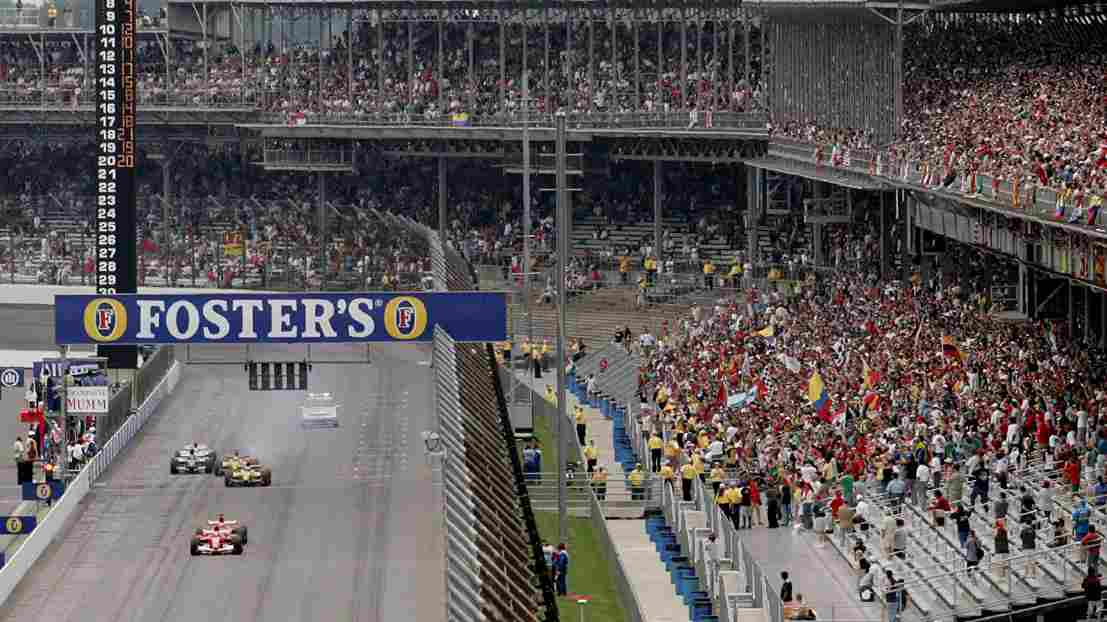
The 2005 United States Grand Prix at the Indianapolis Motor Speedway on June 19, 2005, was one of the most infamous and controversial races in Formula 1 history. What should have been an exciting event showcasing the pinnacle of motorsport to American fans instead turned into a farcical six-car race that left spectators outraged and damaged F1’s reputation in the United States for years to come. To understand how this debacle unfolded, one needs to go back to the context of the 2005 F1 season. New tire regulations, with the declared purpose of cutting costs and spicing up competition, meant that for the first time, teams had to use just one set of tires for both qualifying and the whole race distance. This placed tremendous pressure on the two tire manufacturers, Michelin and Bridgestone, to produce high-durability yet high-performance tires. Michelin supplied seven of the ten teams, while Bridgestone equipped the remaining three—Ferrari, Jordan, and Minardi. Up until that point in the season, Michelin had generally outperformed Bridgestone, with their teams dominating the championship standings. The Problem Arises The first portents of disaster came during Friday practice on June 17: Toyota’s third driver, Ricardo Zonta, had a left rear tire failure, but this did not immediately sound major alarm bells. Later that same afternoon, however, Ralf Schumacher suffered a spectacular crash in his Toyota when his left rear tire let go at high speed through the banked Turn 13—the final corner leading onto the main straight. This particular corner presented a very special challenge. Unique among all the tracks on the F1 calendar, the Indianapolis circuit incorporated part of the famous oval, with its steeply banked turn that imposed extreme lateral loads on the tires not experienced anywhere else. As the day progressed on Friday, it became obvious that this was not an isolated incident: Michelin was finding that the same problems were occurring on tires on other teams’ cars. By Saturday morning, the extent of the problem was clear: Michelin could not guarantee the safety of their tires for more than about 10 laps of racing. Frantic Search for Solutions With less than 48 hours before the race was to start, Michelin, the teams involved, and F1 officials held an emergency search for a solution. Several options were proposed and debated: Michelin offered to fly in a new batch of tires overnight from their headquarters in France. However, there were concerns about whether these would resolve the issue, and using them would violate regulations requiring teams to use the same tire specification they qualified with. It had the Michelin teams wanting to install a temporary chicane before Turn 13 as a means to try to avoid running at competitive speeds through the problematic corner. Although seemingly logical, such a move had opposition from both the FIA, which is Formula 1’s governing body, and the Bridgestone teams. The next proposal was for the Michelin teams to enter pits every ten laps to get a change of tires. This, again, would call for bending of rules. Some said the Michelin cars could just go through Turn 13 slowly, but this was not a very practical or safe idea. After further discussion, well into Saturday and even into Sunday morning, no compromise had been reached. The FIA, under its president Max Mosley, proved to be of a very restrictive attitude toward rewriting the rules or having the track redesigned. They claimed this to be unfair toward Bridgestone teams since those came with suitable tires, and it also meant that there had to be a potential serious safety concern at this very last-minute twist in circuit geometry. The Fateful Decision With no workable solution that could be applied, and Michelin unable to guarantee the safety of their tires, the seven teams equipped with Michelin tires were put in an impossible situation: to risk driver safety by racing or withdraw from the event. In the end, they made the hard decision not to compete. But the real drama only came as the cars took to their grid positions for the formation lap, their Michelin tires utterly unsuitable for the configuration at Indianapolis; only as all 14 Michelins peeled into the pits at the end of the warm-up lap did the staggering reality dawn—only six cars would start the Grand Prix. The Race What followed was a hollow spectacle. Michael Schumacher led home a Ferrari 1-2, with Tiago Monteiro’s Jordan claiming an unlikely podium in third. But there was little celebration. Angry fans booed and threw bottles onto the track. Many left early, demanding refunds. The farcical race dealt a severe blow to Formula 1’s efforts to build a fanbase in the crucial American market. It also underlined deep divisions within the sport between the FIA, the teams, and commercial rights holders. Aftermath and Consequences The fallout from the 2005 US Grand Prix was both immediate and long-lasting: Michelin fully refunded all ticket holders and purchased 20,000 tickets for the 2006 race to give away to spectators. This gesture, while well-intentioned, could hardly undo the harm that had been done. The seven Michelin teams were sanctioned by the FIA. They were initially found guilty of failing to ensure they had suitable tires and refusing to race, but these verdicts were overturned on appeal. The controversy hastened Michelin’s exit from Formula 1. They withdrew as a tire supplier after the 2006 season. It added to the ill feeling between F1 and the Indianapolis Motor Speedway. The US Grand Prix would only take place at the circuit twice more before disappearing off the calendar after 2007 25. This incident brought about a change in F1’s tire regulations. Since the 2006 season, tire changes during racing were allowed once more. Analysis and Lessons Learnt In retrospect, it was clear that a combination of many factors contributed to this perfect storm of circumstances: The peculiar nature of the Indianapolis circuit caught Michelin off guard. Their simulations had underestimated the extreme loads placed through the banked Turn 1328 on
The 2005 United States Grand Prix Tire Controversy
The 2005 United States Grand Prix at the Indianapolis Motor Speedway on June 19, 2005, was one of the most infamous and controversial races in Formula 1 history. What should have been an exciting event showcasing the pinnacle of motorsport to American fans instead turned into a farcical six-car race that left spectators outraged and damaged F1’s reputation in the United States for years to come. To understand how this debacle unfolded, one needs to go back to the context of the 2005 F1 season. New tire regulations, with the declared purpose of cutting costs and spicing up competition, meant that for the first time, teams had to use just one set of tires for both qualifying and the whole race distance. This placed tremendous pressure on the two tire manufacturers, Michelin and Bridgestone, to produce high-durability yet high-performance tires. Michelin supplied seven of the ten teams, while Bridgestone equipped the remaining three—Ferrari, Jordan, and Minardi. Up until that point in the season, Michelin had generally outperformed Bridgestone, with their teams dominating the championship standings. The Problem Arises The first portents of disaster came during Friday practice on June 17: Toyota’s third driver, Ricardo Zonta, had a left rear tire failure, but this did not immediately sound major alarm bells. Later that same afternoon, however, Ralf Schumacher suffered a spectacular crash in his Toyota when his left rear tire let go at high speed through the banked Turn 13—the final corner leading onto the main straight. This particular corner presented a very special challenge. Unique among all the tracks on the F1 calendar, the Indianapolis circuit incorporated part of the famous oval, with its steeply banked turn that imposed extreme lateral loads on the tires not experienced anywhere else. As the day progressed on Friday, it became obvious that this was not an isolated incident: Michelin was finding that the same problems were occurring on tires on other teams’ cars. By Saturday morning, the extent of the problem was clear: Michelin could not guarantee the safety of their tires for more than about 10 laps of racing. Frantic Search for Solutions With less than 48 hours before the race was to start, Michelin, the teams involved, and F1 officials held an emergency search for a solution. Several options were proposed and debated: Michelin offered to fly in a new batch of tires overnight from their headquarters in France. However, there were concerns about whether these would resolve the issue, and using them would violate regulations requiring teams to use the same tire specification they qualified with. It had the Michelin teams wanting to install a temporary chicane before Turn 13 as a means to try to avoid running at competitive speeds through the problematic corner. Although seemingly logical, such a move had opposition from both the FIA, which is Formula 1’s governing body, and the Bridgestone teams. The next proposal was for the Michelin teams to enter pits every ten laps to get a change of tires. This, again, would call for bending of rules. Some said the Michelin cars could just go through Turn 13 slowly, but this was not a very practical or safe idea. After further discussion, well into Saturday and even into Sunday morning, no compromise had been reached. The FIA, under its president Max Mosley, proved to be of a very restrictive attitude toward rewriting the rules or having the track redesigned. They claimed this to be unfair toward Bridgestone teams since those came with suitable tires, and it also meant that there had to be a potential serious safety concern at this very last-minute twist in circuit geometry. The Fateful Decision With no workable solution that could be applied, and Michelin unable to guarantee the safety of their tires, the seven teams equipped with Michelin tires were put in an impossible situation: to risk driver safety by racing or withdraw from the event. In the end, they made the hard decision not to compete. But the real drama only came as the cars took to their grid positions for the formation lap, their Michelin tires utterly unsuitable for the configuration at Indianapolis; only as all 14 Michelins peeled into the pits at the end of the warm-up lap did the staggering reality dawn—only six cars would start the Grand Prix. The Race What followed was a hollow spectacle. Michael Schumacher led home a Ferrari 1-2, with Tiago Monteiro’s Jordan claiming an unlikely podium in third. But there was little celebration. Angry fans booed and threw bottles onto the track. Many left early, demanding refunds. The farcical race dealt a severe blow to Formula 1’s efforts to build a fanbase in the crucial American market. It also underlined deep divisions within the sport between the FIA, the teams, and commercial rights holders. Aftermath and Consequences The fallout from the 2005 US Grand Prix was both immediate and long-lasting: Michelin fully refunded all ticket holders and purchased 20,000 tickets for the 2006 race to give away to spectators. This gesture, while well-intentioned, could hardly undo the harm that had been done. The seven Michelin teams were sanctioned by the FIA. They were initially found guilty of failing to ensure they had suitable tires and refusing to race, but these verdicts were overturned on appeal. The controversy hastened Michelin’s exit from Formula 1. They withdrew as a tire supplier after the 2006 season. It added to the ill feeling between F1 and the Indianapolis Motor Speedway. The US Grand Prix would only take place at the circuit twice more before disappearing off the calendar after 2007 25. This incident brought about a change in F1’s tire regulations. Since the 2006 season, tire changes during racing were allowed once more. Analysis and Lessons Learnt In retrospect, it was clear that a combination of many factors contributed to this perfect storm of circumstances: The peculiar nature of the Indianapolis circuit caught Michelin off guard. Their simulations had underestimated the extreme loads placed through the banked Turn 1328 on
