

Formula 1 has always been at the very forefront of automotive innovation, pushing the boundaries for what is possible in vehicle performance, efficiency, and safety. While the sleek, high-powered machines tearing around F1 circuits may be worlds apart from the cars we drive day in and day out, there’s actually a surprising amount of technology transfer between them. It is this mutualistic relationship between F1 and the consumer automotive industry that has driven many of the innovations that have trickled down to our everyday vehicles, making them much safer, more efficient, and far more enjoyable to drive. Aerodynamics: Shaping Efficiency for the Future Probably the most significant area of influence F1 technology has had on road cars is in the area of aerodynamics. The relentless pursuit of speed and efficiency on the track has led to breakthroughs now applied to everyday vehicles. Active Aerodynamics In modern F1 cars, it enables the drivers to decrease the aerodynamic resistance by having a movable flap on the rear wings, named the Drag Reduction System. This technology has found applications in a number of road vehicles, starting from high-performance sports cars down to sedans. For example, a twin-part rear wing is an application of the drag reduction system in the Ferrari SF90. Even more mainstream vehicles, including the Ford Mustang, BMW M5, and older Chevy Cruze sedans, utilize similar technology. They sport active grille shutters that open at slower speeds and close up at higher ones to lower air drag and raise fuel economy, only to reopen their shutters back down at slower speeds, helping cool their engines. Underbody Aerodynamics F1’s focus on underbody aerodynamics has also bled into road car design. Many manufacturers now employ race car-like underbody trays and sculpting to reduce turbulence and drag underneath the vehicle. This not only aids in improving fuel efficiency but also enhances stability at higher speeds. Hybrid Powertrains: Racing Towards a Greener Future The introduction of hybrid technology in F1 has given significant impetus to the development of hybrid and electric vehicles for the consumer market. Kinetic Energy Recovery System – KERS F1 has been in the lead to ensure this through the introduction of an electric hybrid solution, known as Kinetic Energy Recovery Systems, in 2009, whereby energy produced under braking is stored within a battery, which the drivers deploy during the race. The technology is currently being adapted for hybrid-electric passenger vehicles by taking kinetic energy and converting it into electric energy that assists the electric motor, at the same time reducing fuel consumption in the process. Energy Recovery Systems (ERS) By 2014, every F1 car was equipped with hybrid drivetrain systems that involved two forms of energy recovery, namely MGU-K (Motor Generator Unit – Kinetic) and MGU-H (Motor Generator Unit – Heat). The MGU-K recovers braking energy while the MGU-H does its job of recovering heat from the turbocharger. This has been highly instrumental in the development of hybrid systems in road cars, which can be both efficient and powerful hybrid vehicles. Hot V Engines Some of these innovations have trickled down in the design of road car engines. For example, Mercedes and Ferrari have taken the “hot V” configuration from F1 and fitted them into their road cars. It locates the turbochargers in between the V of the engine and hence reduces the intake piping, reduces pumping losses, and increases throttle response while reducing lag. Braking Systems: Braking Performance to Meet Energy Efficiency F1’s advancements in braking technology have significantly impacted road car safety and efficiency. Disc Brakes Disc brakes, now taken for granted on most road cars, first appeared on F1 in the 1950s. Compared to drum brakes, discs were easier to maintain and keep cool, providing superior stopping power and consistency. Regenerative Braking Following on from developments of KERS, regenerative braking systems—the capture of energy during braking that would otherwise become heat, stored for later use—are commonplace in hybrid and electric road cars today. Carbon-Ceramic Brakes While still not mainstream due to the cost factor, carbon-ceramic brakes—which were first developed for F1—are fitted to some high-performance road cars today. These possess greater stopping power and heat resistance compared to steel brakes. Materials Innovation: Lightweight yet Strong F1’s never-ending pursuit of finding an ideal blend of strength and lightness has driven road cars to receive many benefits in the field of materials science. Carbon Fiber Carbon fiber, being greatly used in F1 because of its excellent ratio of strength and weight, can now find an application in high-range road cars. With the material currently too expensive to find widespread application in more plebeian transports, carbon fiber components are used in a lot of performance and luxury cars in a bid to shed some weight and lower fuel consumption. DLC diamond-like coatings F1 teams coat thin layers of diamond-like material on engine cylinders to reduce friction and thereby raise performance. Some high-performance road cars have already adopted this technology, including the Ferrari 458, to attain better engine efficiency and durability. Suspension Systems: Smoothing the Ride Improvements to handling and comfort for the road cars are thus provided due to various suspension technologies introduced within F1. Active Suspension Although active suspension was outlawed in F1 following the 1993 season, the technology developed during its brief use has trickled down into road car suspension systems. Many of today’s luxury cars boast adaptive suspension systems capable of adjusting in real time to the road conditions for a balance of comfort and performance. Interconnected Suspension McLaren has implemented the hydraulic suspension solution on its higher-end road cars in order to maintain the ideal ride height and balance in most driving conditions using a similar system that was once in use on FRIC (Front and Rear Interconnected) from F1. Data and Electronics: The Invisible Revolution Perhaps the most important, yet least recognizable, area of technology transfer between F1 and road cars is in data analysis and electronic systems. Telemetry and Sensors Modern F1 cars have hundreds of sensors providing real-time data on every single aspect
The Role Of Technology Transfer Between F1 And Everyday Cars
Formula 1 has always been at the very forefront of automotive innovation, pushing the boundaries for what is possible in vehicle performance, efficiency, and safety. While the sleek, high-powered machines tearing around F1 circuits may be worlds apart from the cars we drive day in and day out, there’s actually a surprising amount of technology transfer between them. It is this mutualistic relationship between F1 and the consumer automotive industry that has driven many of the innovations that have trickled down to our everyday vehicles, making them much safer, more efficient, and far more enjoyable to drive. Aerodynamics: Shaping Efficiency for the Future Probably the most significant area of influence F1 technology has had on road cars is in the area of aerodynamics. The relentless pursuit of speed and efficiency on the track has led to breakthroughs now applied to everyday vehicles. Active Aerodynamics In modern F1 cars, it enables the drivers to decrease the aerodynamic resistance by having a movable flap on the rear wings, named the Drag Reduction System. This technology has found applications in a number of road vehicles, starting from high-performance sports cars down to sedans. For example, a twin-part rear wing is an application of the drag reduction system in the Ferrari SF90. Even more mainstream vehicles, including the Ford Mustang, BMW M5, and older Chevy Cruze sedans, utilize similar technology. They sport active grille shutters that open at slower speeds and close up at higher ones to lower air drag and raise fuel economy, only to reopen their shutters back down at slower speeds, helping cool their engines. Underbody Aerodynamics F1’s focus on underbody aerodynamics has also bled into road car design. Many manufacturers now employ race car-like underbody trays and sculpting to reduce turbulence and drag underneath the vehicle. This not only aids in improving fuel efficiency but also enhances stability at higher speeds. Hybrid Powertrains: Racing Towards a Greener Future The introduction of hybrid technology in F1 has given significant impetus to the development of hybrid and electric vehicles for the consumer market. Kinetic Energy Recovery System – KERS F1 has been in the lead to ensure this through the introduction of an electric hybrid solution, known as Kinetic Energy Recovery Systems, in 2009, whereby energy produced under braking is stored within a battery, which the drivers deploy during the race. The technology is currently being adapted for hybrid-electric passenger vehicles by taking kinetic energy and converting it into electric energy that assists the electric motor, at the same time reducing fuel consumption in the process. Energy Recovery Systems (ERS) By 2014, every F1 car was equipped with hybrid drivetrain systems that involved two forms of energy recovery, namely MGU-K (Motor Generator Unit – Kinetic) and MGU-H (Motor Generator Unit – Heat). The MGU-K recovers braking energy while the MGU-H does its job of recovering heat from the turbocharger. This has been highly instrumental in the development of hybrid systems in road cars, which can be both efficient and powerful hybrid vehicles. Hot V Engines Some of these innovations have trickled down in the design of road car engines. For example, Mercedes and Ferrari have taken the “hot V” configuration from F1 and fitted them into their road cars. It locates the turbochargers in between the V of the engine and hence reduces the intake piping, reduces pumping losses, and increases throttle response while reducing lag. Braking Systems: Braking Performance to Meet Energy Efficiency F1’s advancements in braking technology have significantly impacted road car safety and efficiency. Disc Brakes Disc brakes, now taken for granted on most road cars, first appeared on F1 in the 1950s. Compared to drum brakes, discs were easier to maintain and keep cool, providing superior stopping power and consistency. Regenerative Braking Following on from developments of KERS, regenerative braking systems—the capture of energy during braking that would otherwise become heat, stored for later use—are commonplace in hybrid and electric road cars today. Carbon-Ceramic Brakes While still not mainstream due to the cost factor, carbon-ceramic brakes—which were first developed for F1—are fitted to some high-performance road cars today. These possess greater stopping power and heat resistance compared to steel brakes. Materials Innovation: Lightweight yet Strong F1’s never-ending pursuit of finding an ideal blend of strength and lightness has driven road cars to receive many benefits in the field of materials science. Carbon Fiber Carbon fiber, being greatly used in F1 because of its excellent ratio of strength and weight, can now find an application in high-range road cars. With the material currently too expensive to find widespread application in more plebeian transports, carbon fiber components are used in a lot of performance and luxury cars in a bid to shed some weight and lower fuel consumption. DLC diamond-like coatings F1 teams coat thin layers of diamond-like material on engine cylinders to reduce friction and thereby raise performance. Some high-performance road cars have already adopted this technology, including the Ferrari 458, to attain better engine efficiency and durability. Suspension Systems: Smoothing the Ride Improvements to handling and comfort for the road cars are thus provided due to various suspension technologies introduced within F1. Active Suspension Although active suspension was outlawed in F1 following the 1993 season, the technology developed during its brief use has trickled down into road car suspension systems. Many of today’s luxury cars boast adaptive suspension systems capable of adjusting in real time to the road conditions for a balance of comfort and performance. Interconnected Suspension McLaren has implemented the hydraulic suspension solution on its higher-end road cars in order to maintain the ideal ride height and balance in most driving conditions using a similar system that was once in use on FRIC (Front and Rear Interconnected) from F1. Data and Electronics: The Invisible Revolution Perhaps the most important, yet least recognizable, area of technology transfer between F1 and road cars is in data analysis and electronic systems. Telemetry and Sensors Modern F1 cars have hundreds of sensors providing real-time data on every single aspect

How F1 Circuits Are Designed: Balancing Speed, Safety, And Spectacle
Interesting and complicated is the interplay between engineering, creativity, and deep insight into racing dynamics in Formula 1 circuit design. Several factors come into consideration in an attempt to make the best F1 track in the world, from speed and safety considerations to spectator experience. This article investigates the detailed world of F1 circuit design, describing key elements that go to shape these iconic racing arenas. The Art and Science of Circuit Layout The basis of any great F1 circuit is a well-planned layout, challenging for the drivers and, at the same time, one that can permit exciting racing for the viewers. A circuit designer has to balance different elements delicately in order for the track to be thrilling but safe. Streets and Corners One of the basic things in circuit design is putting straights and corners together. Long straights are quintessential for expressing raw power and speed in F1 cars and usually become a site for perfect passing zones. Such high-speed sectors are commonly succeeded by heavy braking zones where daring overtakes and wheel-to-wheel racing become quite possible. Nevertheless, corners are designed differently for drivers and car performances to be tested under variable circumstances: Hairpins: Tight, slow corners that require precise braking and acceleration Chicanes: A series of sharp direction changes that, in outbreak cases, tests a driver’s reflexes. Sweeping curves: Fast, flowing corners that test a car’s aerodynamic grip The combination and sequence of these corner types determine the character and excitement of a circuit. Elevation Changes Adding elevation changes opens a whole new dimension on circuit design: hills, dips, and undulations are not just aesthetically pleasing but bring their own challenges. Elevation shifts may change the braking point into corners, adjust the balance of the car during entry or mid corner, and further complicate the driving conditions through the inability to see either apex or corners of turns in order to create one very dynamic and interesting lap. Mistake Generators Theoretically, a fine circuit design does include what the designers term as “error-inducing areas,” or, alternatively, mistake generators of the track. These areas usually appear straightforward; however, this is not obvious to a less-than-experienced driver and usually has some small side effects on either traction, braking, or rotation. Spotted by a wise designer, placing these elements strategically presents chances for passing and makes a bit of uncertainty in racing outcomes. Safety: The Paramount Concern Although a fantastic layout remains one of the critical ingredients for success in any track, F1 circuits remain safety paramount as part of its design features. The safety consideration is one aspect all modern tracks are trying to satisfy as regards the protection of the driver, the team members, and the fans generally. Runoff Areas Run-off areas are a necessary feature that provides space for drivers to regain control in case of an incident. These are usually surfaced with gravel or asphalt, which provides substantial deceleration to cars that leave the track. The size and type of each corner’s run-off area are calculated using highly advanced simulation programs such as CSAS, or Circuit Safety Analysis System, which is capable of predicting the trajectory and impact a car would make under given conditions. Barriers and Fencing Impact-absorbing barriers are installed at strategic positions around the circuit to reduce the impact of crashes. These may include tire walls, Tecpro barriers, and other energy-absorbing systems designed to dissipate impact forces and minimize injury to drivers. The high fencing around the perimeter of the circuit is designed to protect against debris in case of an accident, while the fences themselves are designed to contain the cars and debris on the track, thereby protecting both drivers and spectators alike. Medical Facilities Modern F1 circuits have advanced medical facilities and personnel, all poised to act on an instant’s notice. This means medical cars, helicopters, and fully equipped trackside medical centers to ensure quick response times in case of any incidents. The Role of Technology in Circuit Design The modern era has given a completely new look to the design and testing stages of F1 circuits. Advanced computer-based simulations and modeling can be used by designers to evaluate various aspects of the track before construction of the track begins. Computer Simulations Designers employ the use of sophisticated computer simulations. These models test corner radius, elevation changes, and track width, amongst many other factors. These simulations enable them to pick out problems and make subtle changes in both layout and nature of the track. Surface Design The track surface itself is an extremely important aspect of circuit design: designers will select various materials with inclusions that achieve a desired level of grip and, therefore, the desired tire wear, affecting not only performance but also very fundamental strategic decisions on pit stops and tire management. Balancing Tradition and Innovation Wherever it goes, and however much it evolves, the art of F1 circuit design will always need to walk that tightrope of respect for a rich history combined with the ability to innovate and improve. The way this so often works out is in redesigning classic circuits. Classic Circuits The most iconic tracks, which have remained part of the F1 calendar since the very first 1950 season, include Monaco, Monza, Silverstone, and Spa-Francorchamps. Over time, these circuits have undergone a great number of different safety updates while retaining most of their distinctive character and difficulties. Modern Designs In contrast, many of the new circuits have more expansive run-off areas, more even surfaces, and a much greater emphasis on safety. While such tracks are generally safer, they have at times been criticized for lacking the character and challenge of some of the older circuits. Hermann Tilke’s Influence No discussion of modern F1 circuit design would be complete without mentioning Hermann Tilke, the most prolific designer of contemporary F1 tracks. Tilke has designed or redesigned more than 25 different Formula One circuits and greatly changed the face of modern F1 racing. Tilke’s designs often feature certain hallmarks: Long straights into tight corners to facilitate
The Science Behind Tyre Strategies: How They Influence Race Outcomes
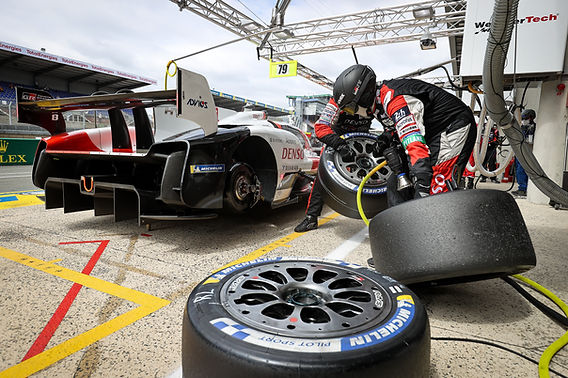
In the cutthroat world of Formula 1, where even milliseconds mean everything between winning and losing, it’s the tire strategy that again comes into the equation in terms of determining the outcomes of the races. Interesting strategic fields in which all combinations regarding tire compounds, degradations, and timing in pit stops all interact so complexly that teams need to get their working formula right for the maximum result. The Basics of F1 Tires Tire Compounds and Their Characteristics F1 tires are designed for high-speed performance and are made from special rubbers that are different in hardness and durability. Pirelli, being the current sole supplier of tires to F1, provides each team with two or more, usually softer, medium, and harder compounds for each race weekend. Softer compounds provide better grip and quicker laps, but they degrade faster. Harder compounds provide less grip; however, it is much more consistent and endures longer. This trade-off between grip and durability forms the base of tire strategy in F1. How Tires Generate Grip The generation of tyre grip is provided by two main mechanisms: Indentation: The asperity of the track surface excites the rubber, causing it to deform asymmetrically and therefore generate friction. Adhesion: When rubber molecules on the surface bind and deform to conform with the road, then the tires rotate. These all provide the viscous response of rubber that will develop resistance to such a deformation called friction. Maximum grip levels are attained when the amount of energy dissipation within a tire is the maximum, the phenomenology of hysteresis. Tire Degradation and Its Consequences Understanding Degradation Degradation basically implies losing performance owing to wear and the heat factor, among other determinants. In their degradation phase, tires experience lowered grip that reflects slower laps and ultimately decreases overall performance. Degradation depends on several factors, such as: Tire compound Track surface characteristics Ambient and track temperatures Driving style Car setup and weight distribution The Importance of Tire Management Good tire management is vital in achieving and sustaining performance throughout a racing stint. Driving styles often need to be adjusted, trading some ultimate pace for tire conservation. Tire management strategies include: Smooth inputs: Easy acceleration, braking, and steering to decrease the stress on the tires. Avoiding lock-ups: Careful braking to prevent flat spots and excessive wear Wheelspin management: controlled acceleration to minimize tire slip and degradation. Optimized racing lines—full width of track to reduce cornering forces Tire Strategies in Action One-Stop vs. Multi-Stop Strategies The decision on one-stop or multi-stop is a very important one that could significantly make the difference between race outcomes. Teams have to trade off time spent in the pit lane for the potential performance gain with fresher tires. Some of the factors that influenced this decision include: Track characteristics: Some circuits are more demanding on tires, favoring multi-stop strategies. Overtaking difficulty: On tracks where overtaking is difficult, one-stop strategies could favor maintaining track position. Tire allocation: Strategic options are also determined by the available tire compounds and quantities. Race distance: Long-distance races require several stops. The Undercut and Overcut Two of the most crucial tactical decisions involved in F1 are the undercut and the overcut: Undercut: Pitting before a competitor to achieve track position through the performance advantage of fresh tires Overcut: Staying out longer on older tires, hoping to gain an advantage when the rival pits All such strategies have their own successes and are dependent on factors, including characteristics of tyre warm-up, performance of in-lap and out-lap, and ability to manage the older tyres effectively. Advanced Tyre Modelling and Strategy Development Tire Models and Simulation Teams take advanced tire models into consideration that are able to predict performance and degradation for any given race. Input parameters will deliver a range of output in the form of forces and moments at the tyre contact patch. Advanced tire models include: Thermal properties: Temperature rise forecasting in tire layers Pressure variations: Modeling of the inflation pressure change on a stint Mechanical wear: Estimating tread layer degradation Chemical degradation: Accounting for property changes in rubber compounds Data-driven optimization of strategies Modern F1 teams use a great deal of data analysis and machine learning techniques to optimize their tire strategies. Through the analysis of historical race data, practice session telemetry, and real-time information during the race, teams can make informed decisions about pit stop timing and tire compound selection26. Key components of data-driven strategy optimization include: Predictive modeling: Forecasting performance and degradation rate for tires. Monte Carlo simulations: thousands of race scenarios ran for optimal strategy determination Real-time strategy changes: Changes in plans according to the development of race conditions and competitor activity. Tire Strategy: The Role of the Drivers Driving Style and Tyre Management While teams develop the overall strategy, much of the race execution and adaptation of on-track plans falls into the hands of the drivers. Driving styles tend to be highly variable, with huge implications for wear and performance, such as tires. Drivers should be able to: Accurate feedback of tire condition and performance Adapt driving styles to minimize tire degradation. Apply specific tire management techniques when necessary, for example, lift and coast. Respond to changes in track conditions and updates from the pit wall. Tire Warm-Up: Importance Proper warming up of tires is very important to get good performance from tires. In fact, tires need some warm-up time when exiting the pits or after a safety car intervention. Weaving and temperature management of brakes are among the most used methods to get tires into their correct operating window whenever full performance is needed. External Factors That Influence Tyre Strategy Weather and Track Conditions Weather conditions also have a significant role in tire strategy. The ambient temperature, track temperature, and precipitation all affect tire performance and degradation rates. Teams have to consider: Temperature effects on various compounds The potential for rain and the need for wet or intermediate tires Track evolution throughout the race weekend Safety Cars and Virtual Safety Cars The deployment of safety cars or virtual safety
The Science Behind Tyre Strategies: How They Influence Race Outcomes
In the cutthroat world of Formula 1, where even milliseconds mean everything between winning and losing, it’s the tire strategy that again comes into the equation in terms of determining the outcomes of the races. Interesting strategic fields in which all combinations regarding tire compounds, degradations, and timing in pit stops all interact so complexly that teams need to get their working formula right for the maximum result. The Basics of F1 Tires Tire Compounds and Their Characteristics F1 tires are designed for high-speed performance and are made from special rubbers that are different in hardness and durability. Pirelli, being the current sole supplier of tires to F1, provides each team with two or more, usually softer, medium, and harder compounds for each race weekend. Softer compounds provide better grip and quicker laps, but they degrade faster. Harder compounds provide less grip; however, it is much more consistent and endures longer. This trade-off between grip and durability forms the base of tire strategy in F1. How Tires Generate Grip The generation of tyre grip is provided by two main mechanisms: Indentation: The asperity of the track surface excites the rubber, causing it to deform asymmetrically and therefore generate friction. Adhesion: When rubber molecules on the surface bind and deform to conform with the road, then the tires rotate. These all provide the viscous response of rubber that will develop resistance to such a deformation called friction. Maximum grip levels are attained when the amount of energy dissipation within a tire is the maximum, the phenomenology of hysteresis. Tire Degradation and Its Consequences Understanding Degradation Degradation basically implies losing performance owing to wear and the heat factor, among other determinants. In their degradation phase, tires experience lowered grip that reflects slower laps and ultimately decreases overall performance. Degradation depends on several factors, such as: Tire compound Track surface characteristics Ambient and track temperatures Driving style Car setup and weight distribution The Importance of Tire Management Good tire management is vital in achieving and sustaining performance throughout a racing stint. Driving styles often need to be adjusted, trading some ultimate pace for tire conservation. Tire management strategies include: Smooth inputs: Easy acceleration, braking, and steering to decrease the stress on the tires. Avoiding lock-ups: Careful braking to prevent flat spots and excessive wear Wheelspin management: controlled acceleration to minimize tire slip and degradation. Optimized racing lines—full width of track to reduce cornering forces Tire Strategies in Action One-Stop vs. Multi-Stop Strategies The decision on one-stop or multi-stop is a very important one that could significantly make the difference between race outcomes. Teams have to trade off time spent in the pit lane for the potential performance gain with fresher tires. Some of the factors that influenced this decision include: Track characteristics: Some circuits are more demanding on tires, favoring multi-stop strategies. Overtaking difficulty: On tracks where overtaking is difficult, one-stop strategies could favor maintaining track position. Tire allocation: Strategic options are also determined by the available tire compounds and quantities. Race distance: Long-distance races require several stops. The Undercut and Overcut Two of the most crucial tactical decisions involved in F1 are the undercut and the overcut: Undercut: Pitting before a competitor to achieve track position through the performance advantage of fresh tires Overcut: Staying out longer on older tires, hoping to gain an advantage when the rival pits All such strategies have their own successes and are dependent on factors, including characteristics of tyre warm-up, performance of in-lap and out-lap, and ability to manage the older tyres effectively. Advanced Tyre Modelling and Strategy Development Tire Models and Simulation Teams take advanced tire models into consideration that are able to predict performance and degradation for any given race. Input parameters will deliver a range of output in the form of forces and moments at the tyre contact patch. Advanced tire models include: Thermal properties: Temperature rise forecasting in tire layers Pressure variations: Modeling of the inflation pressure change on a stint Mechanical wear: Estimating tread layer degradation Chemical degradation: Accounting for property changes in rubber compounds Data-driven optimization of strategies Modern F1 teams use a great deal of data analysis and machine learning techniques to optimize their tire strategies. Through the analysis of historical race data, practice session telemetry, and real-time information during the race, teams can make informed decisions about pit stop timing and tire compound selection26. Key components of data-driven strategy optimization include: Predictive modeling: Forecasting performance and degradation rate for tires. Monte Carlo simulations: thousands of race scenarios ran for optimal strategy determination Real-time strategy changes: Changes in plans according to the development of race conditions and competitor activity. Tire Strategy: The Role of the Drivers Driving Style and Tyre Management While teams develop the overall strategy, much of the race execution and adaptation of on-track plans falls into the hands of the drivers. Driving styles tend to be highly variable, with huge implications for wear and performance, such as tires. Drivers should be able to: Accurate feedback of tire condition and performance Adapt driving styles to minimize tire degradation. Apply specific tire management techniques when necessary, for example, lift and coast. Respond to changes in track conditions and updates from the pit wall. Tire Warm-Up: Importance Proper warming up of tires is very important to get good performance from tires. In fact, tires need some warm-up time when exiting the pits or after a safety car intervention. Weaving and temperature management of brakes are among the most used methods to get tires into their correct operating window whenever full performance is needed. External Factors That Influence Tyre Strategy Weather and Track Conditions Weather conditions also have a significant role in tire strategy. The ambient temperature, track temperature, and precipitation all affect tire performance and degradation rates. Teams have to consider: Temperature effects on various compounds The potential for rain and the need for wet or intermediate tires Track evolution throughout the race weekend Safety Cars and Virtual Safety Cars The deployment of safety cars or virtual safety
