

Maverick Viñales, rider for Aprilia, has shed light on the recent changes and developments in the team’s chassis for the 2024 season. Amidst a season filled with ups and downs, Viñales highlighted that Aprilia is heavily investing in improvements to tackle the tough competition in MotoGP. During the recent race at the Red Bull Ring, Viñales faced significant challenges related to chassis performance, particularly in areas such as braking and tire degradation. “We are understanding what we need. Basically, the problem is with the brakes. What we feel is that we are not loading the front tire properly, so we are not extracting the maximum performance from the front tire,” said Viñales. Aprilia introduced a new chassis this season with the hope of addressing the deficiencies observed in previous races. This development aims to provide better tire management and a more effective response in braking zones, critical points that affected the performance of the RS-GP at the Red Bull Ring. The new chassis was designed to offer more stability and confidence to the rider, especially on circuits with challenging technical characteristics. Viñales noted that despite the difficulties faced so far, the new chassis has the potential to significantly improve Aprilia’s performance. “There has been progress, but we are still adjusting some details. The new chassis is an attempt to correct the problems we faced with the previous model. We want to ensure that our bike’s performance is consistent and competitive in every race,” said the rider. In addition to the chassis improvements, Aprilia is also focused on optimizing the bike’s setup to better adapt to varying track conditions. Viñales emphasized the importance of these changes to regain lost competitiveness and challenge teams that are dominating the season, such as Ducati. “There is still a lot of work ahead, and we know it won’t be easy. We need more testing and adjustments to make the most of the new changes. However, we are confident that the chassis improvements will help us be more competitive and fight for better positions in the upcoming races,” concluded Viñales. With the new chassis in development, Aprilia hopes to return to fighting for top positions and show solid performance across the board. The 2024 season promises to be a period of adaptation and evolution for the team, which seeks to consolidate its position at the front of the MotoGP grid.
Maverick Viñales Talks About Aprilia’s New Chassis Development for the 2024 Season
Maverick Viñales, rider for Aprilia, has shed light on the recent changes and developments in the team’s chassis for the 2024 season. Amidst a season filled with ups and downs, Viñales highlighted that Aprilia is heavily investing in improvements to tackle the tough competition in MotoGP. During the recent race at the Red Bull Ring, Viñales faced significant challenges related to chassis performance, particularly in areas such as braking and tire degradation. “We are understanding what we need. Basically, the problem is with the brakes. What we feel is that we are not loading the front tire properly, so we are not extracting the maximum performance from the front tire,” said Viñales. Aprilia introduced a new chassis this season with the hope of addressing the deficiencies observed in previous races. This development aims to provide better tire management and a more effective response in braking zones, critical points that affected the performance of the RS-GP at the Red Bull Ring. The new chassis was designed to offer more stability and confidence to the rider, especially on circuits with challenging technical characteristics. Viñales noted that despite the difficulties faced so far, the new chassis has the potential to significantly improve Aprilia’s performance. “There has been progress, but we are still adjusting some details. The new chassis is an attempt to correct the problems we faced with the previous model. We want to ensure that our bike’s performance is consistent and competitive in every race,” said the rider. In addition to the chassis improvements, Aprilia is also focused on optimizing the bike’s setup to better adapt to varying track conditions. Viñales emphasized the importance of these changes to regain lost competitiveness and challenge teams that are dominating the season, such as Ducati. “There is still a lot of work ahead, and we know it won’t be easy. We need more testing and adjustments to make the most of the new changes. However, we are confident that the chassis improvements will help us be more competitive and fight for better positions in the upcoming races,” concluded Viñales. With the new chassis in development, Aprilia hopes to return to fighting for top positions and show solid performance across the board. The 2024 season promises to be a period of adaptation and evolution for the team, which seeks to consolidate its position at the front of the MotoGP grid.
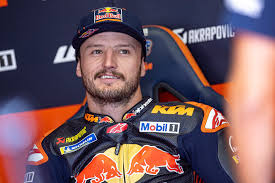
Brad Binder Analyzes KTM’s Performance Issues in the Latest MotoGP Races
Brad Binder, KTM’s lead rider in MotoGP, recently admitted that some of the problems the team has faced in 2024 were unexpected, but he assured that these difficulties should not last long. KTM began the season with high expectations, being touted as the main rival to the dominant Ducati. However, the reality of the races has proven more complicated, with Aprilia surpassing the Austrian manufacturer in several rounds. At the beginning of the year, Binder secured a podium at the Qatar Grand Prix, which seemed to indicate a promising season. However, KTM’s performance began to fluctuate. “We started the year well, which was great,” Binder said about his podium in the season opener. “But after that, we ran into more issues than we expected.” One of the biggest challenges Binder mentioned is the sensitivity of the bike’s front end, which is operating on the edge. “We’ve been playing with a fine line with the front of our bike. It seems that if you can stay on the bike, you can go really fast. But it’s very easy to crash, especially with the front. That’s our biggest challenge,” Binder explained. He also highlighted that the quest for improvements in some areas of the bike has resulted in losses in others. “We have found some margin in certain areas. At the same time, we’ve lost in others,” said the rider, illustrating the complexity of the adjustments needed to keep the bike competitive. Despite these difficulties, Binder remains optimistic about the near future. He believes that small changes could be enough to get KTM back into podium contention. “At the moment, our ultimate setup, to go as fast as we can, leaves us with very little warning at the front. It’s easy to crash. But, while things don’t look amazing right now, they’re not as bad as they seem. We’re small changes away from getting our results back,” Binder revealed. In addition to the technical issues, Binder also mentioned the performance of his teammate at Tech3, Pedro Acosta. Despite shining at the start of the season, the young prodigy has also seen his form dip in recent races, reflecting the challenges faced by the entire team. In conclusion, Brad Binder made it clear that, although the season has been tough so far, he and KTM are determined to overcome these challenges. “We strive to achieve. We want to be up front. Nobody wants to be where we are at the moment,” said the rider, demonstrating his determination to bring KTM back to the top of MotoGP racing.
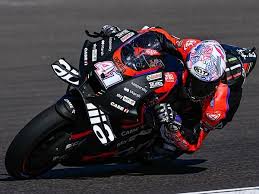
Enea Bastianini’s Insights on Ducati’s Tire Management Challenges at Misano
Enea Bastianini, a rider for the Ducati Lenovo team, has distinguished himself with his tire conservation skills, a competence that led him to victory at Silverstone. However, as he prepares for the Misano Grand Prix, the Italian rider shared his concerns and reflections on the unique challenges that the track presents, particularly in terms of tire management. Misano, with its technical characteristics and specific demands, does not allow riders to adopt a traditional tire conservation approach. The track, known for its fast curves and sharp braking, requires exceptional bike control and careful tire management to avoid excessive wear. Bastianini explained that the Misano circuit presents challenges similar to those faced at the Red Bull Ring in Austria, where the intense nature of the braking zones resulted in accelerated tire wear. “Misano is a track that, as we saw in Austria, demands a lot from the tires. The fast corners and strong braking make tire management a constant challenge,” Bastianini said in a recent interview. “Here, we can’t simply save the tires like on other circuits because the demands are very specific. We need to find the right balance between speed and tire conservation throughout the race.” Bastianini also reflected on the differences between his approach and those of his teammates, Francesco Bagnaia and Jorge Martin. He emphasized that, although each rider has their own riding style, they all face the same challenges regarding tire wear at Misano. “Pecco is incredible at some braking points, while Jorge is very fast in the corners. Each has their strengths, but at Misano, we all need to be attentive to tire wear,” commented Bastianini. Despite the challenges, Bastianini is confident in his ability to compete at a high level. He highlighted that his experience and adaptation to track conditions will be crucial to achieving a good result at Misano. “I am focused on adjusting my riding style to the specific conditions of Misano. I know it will be a tough race, but I am prepared to fight for a good position,” he said. In conclusion, Enea Bastianini emphasized the importance of a well-planned strategy for tire management at Misano. He believes that with proper preparation and a clear understanding of the track’s demands, he can overcome the challenges and secure a place on the podium, just as he did at Silverstone. The upcoming round at Misano promises to be a significant test for Bastianini’s skill and Ducati’s ability to handle challenging race conditions.
Aleix Espargaró Discusses the Impact of Recent Technical Changes on Aprilia’s Race Pace
Saturday, August 17, 2024, was a remarkable day for Aleix Espargaró and the Aprilia Racing team, highlighting the importance of recent technical changes implemented on the RS-GP24. Espargaró, who finished third in the sprint race at the Austrian Grand Prix, discussed how these modifications were crucial to improving his performance on one of the most challenging circuits on the calendar. Espargaró did not hide his satisfaction with the result, stating that it was one of the best Saturdays of his career with Aprilia. “I am very happy; it was one of the best Saturdays since I joined Aprilia and one of the best of my career. At this track, I’ve always had difficulties with the brakes and even crashed twice on Friday, but we worked on the bike’s setup, and from FP2, I started to feel better,” commented the Spanish rider. The Aprilia team focused on improving the bike’s setup, concentrating on aspects such as brake stability and tire behavior, which were crucial for maintaining a competitive race pace. Espargaró highlighted that these improvements were essential for his performance, allowing him to stay with the leading group throughout the race. These technical changes were also reflected in the qualifying sessions, where Espargaró secured an impressive fourth place on the grid, putting him in a strategic position for the sprint race. “I am very proud of my qualifying performance and the result in the sprint,” he said. On the other hand, Espargaró’s teammate, Maverick Viñales, faced significant challenges during the sprint. Despite starting from sixth position, a complicated start and difficulties controlling the bike due to overheating tires and brakes resulted in a modest 11th place finish. However, this does not diminish the impact of the technical changes to the RS-GP24, which proved effective for Espargaró. Meanwhile, wildcard rider Lorenzo Savadori used the sprint to test new technical solutions, gathering valuable data for the bike’s future development. Although he finished in 18th place, Savadori achieved the highest top speed in Q1, reaching 317.1 km/h, a positive sign for Aprilia’s performance on high-speed tracks. Aprilia’s Technical Director, Romano Albesiano, also praised the team’s hard work and Espargaró’s commitment. “It was a good day on a particularly challenging track for us. Aleix delivered an excellent performance in both qualifying and the race. He worked very hard on his performance since Friday, even with used tires, and we are very happy with the results,” he commented. The recent technical changes implemented by Aprilia have not only improved Espargaró’s race pace but have also reinforced the team’s confidence for the upcoming stages of the championship. With a second consecutive podium, Aprilia is showing that they are on the right path to establishing themselves as a force to be reckoned with in the 2024 season.
