The 2002 Austrian Grand Prix Team Orders Controversy
The 2002 Austrian Grand Prix, run on May 12 at the A1 Ring, is better remembered as probably the most debated race in F1 history. Not only this event, but it even raised a sea of anger amongst fans and the media, respectively, and this brought about many changes in rules governing team orders within the sport. The controversy primarily surrounded Ferrari’s instruction to Rubens Barrichello to let his teammate Michael Schumacher pass during the final lap of the race, after having led most of it.
Introduction – The Season leading up to Austria
By the time the F1 circus arrived in Austria for the sixth round of the 2002 season, Michael Schumacher was already well in front of the championship, having won four of the first five races. His Ferrari teammate, Barrichello, had shown flashes of brilliance but struggled for consistency and with reliability problems early in the season.
Barrichello had a brilliant performance during the qualifying rounds of the Austrian Grand Prix, where he won pole position nearly six-tenths clear of his teammate Schumacher. This was a big deal for Barrichello since this was only his second career pole and put him in what looked like a well-deserved win.
The Race: Dominant Performance
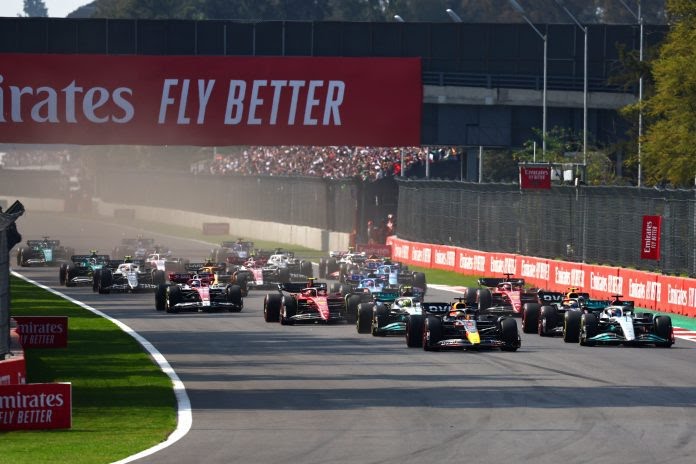
As the race got underway, Barrichello maintained his lead without challenge from Schumacher or indeed any other, then seemingly bound for victory with a well-executed strategy. But on the closing laps, a hitherto uncomplicated race threw up a political bomb when Jean Todt made a contentious decision that would change the course of proceedings.
On lap 69, with only a handful of corners remaining before the checkered flag, Todt instructed Barrichello to let Schumacher pass. This instruction was ostensibly to enable Schumacher to obtain further points in pursuit of his championship. Unhappy at first to do so, Barrichello ultimately complied and let Schumacher pass him just before the finish line. The margin of victory was just 0.182 seconds, one of the closest finishes in F1 history.
Aftermath: Fury and Consequences
The reaction to Ferrari’s actions was instant and universally adverse. The fans at the A1 Ring booed loudly as Schumacher celebrated his victory, and many showed their dissatisfaction with Barrichello’s forced compliance. The podium ceremony was somewhat awkward; Schumacher made Barrichello take the top step on the podium and handed him the winner’s trophy, adding to the farce.
This incident indeed compelled the FIA to look into the actions of Ferrari. Although there was no straightforward rule banning team orders at the time, according to the FIA, it also fined Ferrari and both drivers a total of US$1 million for a podium protocol breach—specifically, Schumacher’s behavior in forcing Barrichello to stay on the top step when he wasn’t the winner.
The controversy from this incident initiated a major change in regulations: with effect from the 2003 season, Formula One officially banned the use of any team orders believed to interfere with race results; this was on account of maintaining competitive integrity so that teams themselves do not manipulate the F1 race for their own business interests.
Analysis of F1 Team Orders
Team orders have been the most contentious issue in Formula One for decades. Though they often appear necessary in managing driver relationships inside teams while trying to maximize points scored towards championships, they can also provide the perception of unfairness both to and between competitors.
In the aftermath of Austria 2002, many observers felt that this was an utterly unnecessary move on Ferrari’s part given the dominance of their season. But in allowing Schumacher to win this race, they not only robbed Barrichello of a hard-earned victory but also eroded public confidence in Formula One as a sport where competition above all else is valued.
Historical Context: Past Occurrences of Team Orders
Ferrari’s actions at the Austrian Grand Prix were not an isolated incident within Formula One’s history. Several teams have issued team orders within F1’s illustrious past:
A case regarding the same intent was seen at the 1998 Belgian Grand Prix between McLaren drivers Mika Häkkinen and David Coulthard himself when Coulthard tried to slow up on the lap so Häkkinen could gain a win from his teammate for team orders and help the Finnish win.
2001 Austrian Grand Prix: Only a year before Austria 2002, Ferrari had ordered Barrichello to allow Schumacher through when he was in the lead—an incident that almost preordained what would happen in 2002.
These examples are something of a recurring theme in F1: when teams decide to put championship points and internal harmony above any notion of competitive racing spirit, it tends to backfire with alienating the fans and damaging reputations.
Long-term Effect on the F1 Regulations
But the fallout of Austria 2002 went further than just the immediate fines and penalties; it was a call for greater debate on the legitimacy of team orders within Formula One. The FIA developed an interest in seeing that fans enjoyed races without being manipulated by team strategies that favored internal standings over the spirit of fair competition.
Even after the ban in Austria 2002, the issue of team orders still cropped up during subsequent seasons. There were ways teams could circumvent regulations through coded messages or ambiguous instructions, as most famously illustrated in the 2010 German Grand Prix when Felipe Massa was told, “Fernando is faster than you,” to yield his position to his teammate Fernando Alonso.
Ultimately, following years of spasmodic enforcement and huge public outcry about perceived manipulation of results by means of team orders, the FIA did a complete about-turn in 2011. It was recognition, finally, of the fact that, given modern teams’ communication technologies, enforcing such rules was simply impossible.
Conclusion: Heritage of Austria 2002
The events of the 2002 Austrian Grand Prix have stuck in Formula One lore as a cautionary tale about integrity and competition within sport. This is a reminder that, while teams will always seek ways to maximize their chances with strategic decisions-including team orders-the spirit of racing ultimately has to prevail.
Rubens Barrichello’s experience in this race is not only a case of personal sacrifice but also one that has much wider implications on the dynamics that exist between drivers within teams. As F1 heads into new eras with new regulations and technologies, the fallout from incidents such as those witnessed at Austria 2002 will shape how teams will go about the competition henceforth while continuing to pursue techniques to retain the sport’s fairness and excitement for fans worldwide.